SKILLS HAIR COLOUR METHOD
Men's Hair Colour Service in Dubai
Hair colour should not begin with a shade selected from a chart. It should begin with the person who will wear it. Colour can change how the face is read, how the haircut appears and how a man presents his age, identity and confidence. When the direction is right, colour can support the person naturally. When it is wrong, it can appear heavy, artificial or disconnected from the skin, eyebrows, beard and overall appearance.
The objective is not simply to place colour on the hair. It is to create a tone that belongs to the person, works with the existing hair and remains believable after the first day.
The objective is not simply to place colour on the hair. It is to create a tone that belongs to the person, works with the existing hair and remains believable after the first day.
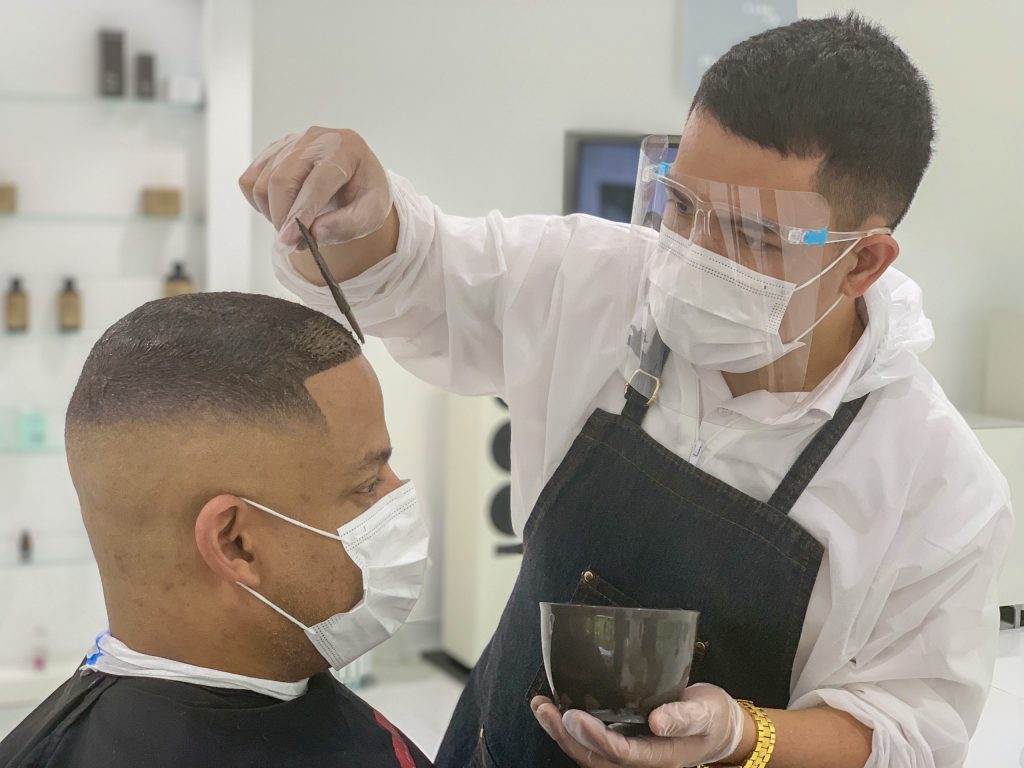
Hair colour is not only for covering grey
Men choose hair colour for many different reasons. Colour may be used to:
• soften or cover visible grey
The reason for colouring matters. A client seeking discreet grey management should not automatically receive the same direction as someone requesting a noticeable transformation. One may require softness and restraint. The other may require greater contrast, stronger tone or a more visible change. The colour should fulfil the reason for choosing it without making the application look separate from the person.
• soften or cover visible grey
• blend grey without creating a fully coloured appearance
• deepen the natural shade
• correct an uneven tone
• refresh a faded colour
• support a new haircut
• create a stronger fashion direction
• balance the hair with the beard and eyebrows
• correct an unsuitable previous result
• change how the face and overall appearance are read
The reason for colouring matters. A client seeking discreet grey management should not automatically receive the same direction as someone requesting a noticeable transformation. One may require softness and restraint. The other may require greater contrast, stronger tone or a more visible change. The colour should fulfil the reason for choosing it without making the application look separate from the person.
What hair colour actually changes
Hair colour works by adding, adjusting, reducing or replacing visible pigment within or around the hair fibre, depending on the product category and the result being created. Some colour systems mainly deposit tone. Others open the outer structure of the hair more significantly so that natural pigment can be adjusted and artificial colour can develop within the fibre. This is why not every colour service has the same effect on the hair. A soft tonal refresh, grey blending, permanent colour and major lightening do not create the same level of change.
The more the natural starting point must be altered, the more the hair's condition and chemical history matter. Colour is common, but it is still a chemical service. It should not be described as harmless simply because many people receive it regularly. The correct approach is to understand what level of change is required and whether the hair can carry that change responsibly.
The more the natural starting point must be altered, the more the hair's condition and chemical history matter. Colour is common, but it is still a chemical service. It should not be described as harmless simply because many people receive it regularly. The correct approach is to understand what level of change is required and whether the hair can carry that change responsibly.
Shade selection is more than choosing light or dark
A colour is not defined only by how light or dark it appears. The final result is also influenced by:
• depth
Two shades that appear similar on a chart may look very different once placed against different skin tones, facial hair and natural hair bases. A tone that looks natural on one person may appear too warm, too flat or too severe on another. The correct shade is therefore not always the shade the client initially names. It is the shade that supports the intended result while remaining connected to the person wearing it.
• depth
• warmth or coolness
• contrast
• intensity
• grey percentage
• natural undertone
• artificial colour already present
• skin tone
• beard and eyebrow colour
• haircut shape
• lighting
• maintenance
Two shades that appear similar on a chart may look very different once placed against different skin tones, facial hair and natural hair bases. A tone that looks natural on one person may appear too warm, too flat or too severe on another. The correct shade is therefore not always the shade the client initially names. It is the shade that supports the intended result while remaining connected to the person wearing it.
Why undertone matters
Hair contains underlying pigment that becomes more visible when the colour is changed. Dark hair often carries warmer underlying tones. As the hair is adjusted, red, orange or yellow warmth may become more noticeable depending on the starting level and the amount of change required. This does not automatically mean that the colour has gone wrong. It is part of how natural pigment behaves.
The desired tone must therefore be planned around both the starting colour and the underlying pigment that may appear during the process. A cooler result may require control of unwanted warmth. A warmer result may need enough richness to look intentional rather than faded or uneven. The tone must be selected for the achieved base. It cannot be chosen independently from what the hair actually becomes during the service.
The desired tone must therefore be planned around both the starting colour and the underlying pigment that may appear during the process. A cooler result may require control of unwanted warmth. A warmer result may need enough richness to look intentional rather than faded or uneven. The tone must be selected for the achieved base. It cannot be chosen independently from what the hair actually becomes during the service.
Grey hair does not behave identically on every person
Grey hair is not simply dark hair that has turned white. The amount, distribution, texture and resistance of grey hair can vary significantly. Some grey hair accepts colour easily. Some may be more resistant. Some clients have concentrated grey around the temples or hairline, while others have a more even distribution throughout the head.
The desired result also changes the approach. Complete grey coverage creates a different appearance from soft blending. Full coverage may produce a stronger, more uniform result. Blending may allow part of the grey to remain visible so the change appears less obvious and grows out more gradually. The right decision depends on whether the client wants to hide the grey, soften it or use it as part of the final appearance.
The desired result also changes the approach. Complete grey coverage creates a different appearance from soft blending. Full coverage may produce a stronger, more uniform result. Blending may allow part of the grey to remain visible so the change appears less obvious and grows out more gradually. The right decision depends on whether the client wants to hide the grey, soften it or use it as part of the final appearance.
A natural result is not the same as a flat result
Natural-looking colour should not appear like one solid block placed over the hair. Real hair contains variation. Light interacts differently with the roots, lengths, texture and haircut. A believable result usually keeps enough dimension to prevent the colour from looking painted or disconnected. This is especially important on short hair, where the colour sits close to the scalp and every mismatch may become more visible. The hairline, temples, beard and eyebrows can quickly expose a shade that is too dark, too flat or too intense. Natural does not mean weak. It means integrated. The result should support the client's features without announcing the product used to create it.
Fashion colour can still remain controlled
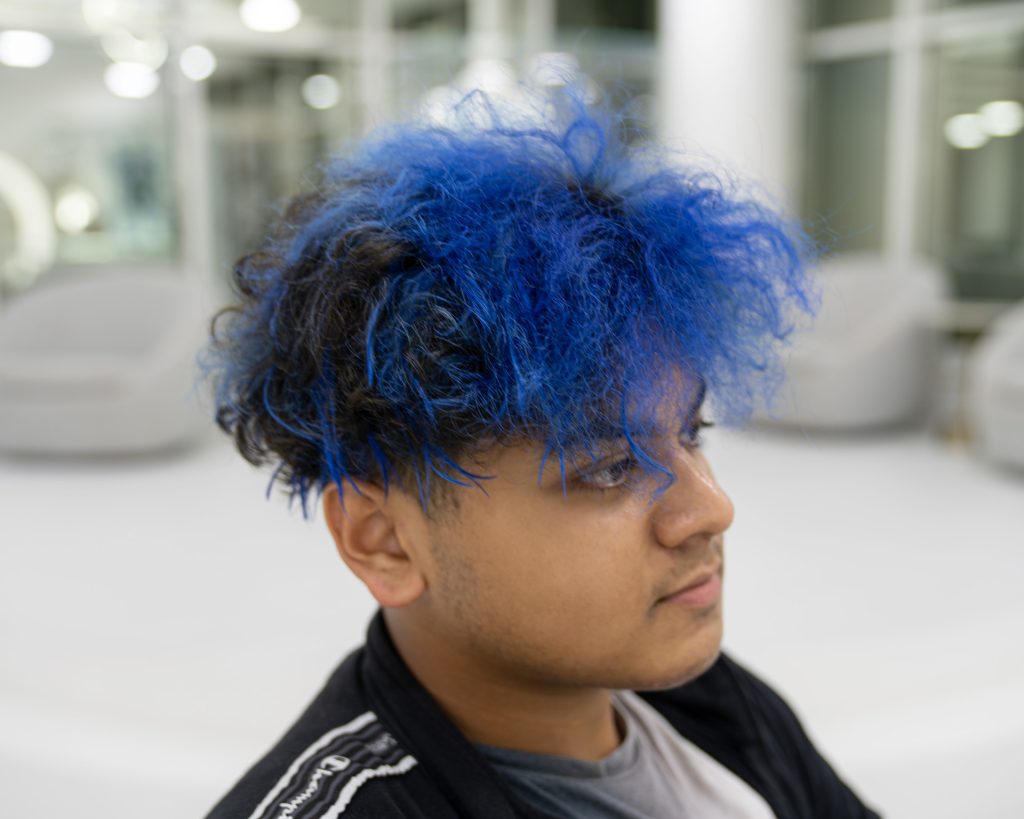
Not every client wants a discreet result. Fashion colour may be brighter, stronger or intentionally visible. The direction can include richer tones, unusual shades, stronger contrast or a complete change in identity. A visible result still requires control. Bold does not mean disconnected. The colour must still work with the haircut, skin tone, beard, eyebrows, wardrobe and level of maintenance the client is willing to carry.
A dramatic result can be successful when the change looks intentional. It becomes unsuccessful when the colour overwhelms the person or requires a level of maintenance the client cannot realistically sustain.
A dramatic result can be successful when the change looks intentional. It becomes unsuccessful when the colour overwhelms the person or requires a level of maintenance the client cannot realistically sustain.
Short, medium and long hair respond differently
Hair length changes both the technical challenge and the visual result. Short hair places the colour close to the scalp and face. Any inconsistency around the hairline, sideburns or temples may become obvious. Because short hair is cut frequently, colour may also disappear more quickly as the hair is trimmed and new growth appears.
Medium-length hair can show more movement and tonal variation. Longer hair may contain several years of colour, heat and environmental exposure through the lengths. The roots may be relatively strong while the ends are more porous, dry or chemically affected. Different areas of the same head can therefore absorb and reflect colour differently. The service must respond to the complete history of the hair rather than treating every section as if it were identical.
Medium-length hair can show more movement and tonal variation. Longer hair may contain several years of colour, heat and environmental exposure through the lengths. The roots may be relatively strong while the ends are more porous, dry or chemically affected. Different areas of the same head can therefore absorb and reflect colour differently. The service must respond to the complete history of the hair rather than treating every section as if it were identical.
Previous colour changes the next colour
Artificial colour already present in the hair affects what can be created afterward. Colour does not always remove colour cleanly. Applying a lighter shade over previously darkened hair does not guarantee that the hair will become lighter. Previous colour deposits may remain inside the fibre and influence the next result.
Repeated applications can also create uneven depth between the roots, middle lengths and ends. This is why colour correction can require patience. An unsuitable result may not be corrected safely or evenly in one appointment. The hair may need a staged plan rather than one aggressive attempt to force it toward the final shade. The most responsible correction is the one that improves the direction while respecting the condition still available.
Repeated applications can also create uneven depth between the roots, middle lengths and ends. This is why colour correction can require patience. An unsuitable result may not be corrected safely or evenly in one appointment. The hair may need a staged plan rather than one aggressive attempt to force it toward the final shade. The most responsible correction is the one that improves the direction while respecting the condition still available.
Chemical history matters
Hair can look healthy from the outside while carrying weakness from earlier services. Important history may include:
• permanent colour
These services can affect porosity, strength, elasticity and the way new colour develops. Chemical history does not automatically mean that colour cannot be performed. It means that the result should not be planned as though the hair were untouched. The more complicated the history becomes, the more important it is to understand what has already happened inside the fibre.
• permanent colour
• repeated root colouring
• bleaching or highlights
• colour correction
• keratin or smoothing treatments
• relaxing
• perming
• excessive heat
• home colour
• henna or difficult-to-identify colour deposits
These services can affect porosity, strength, elasticity and the way new colour develops. Chemical history does not automatically mean that colour cannot be performed. It means that the result should not be planned as though the hair were untouched. The more complicated the history becomes, the more important it is to understand what has already happened inside the fibre.
Porosity affects how colour is absorbed
Porosity describes how easily the hair takes in and releases moisture and colour. Hair with lower porosity may resist colour or take longer to respond. Highly porous hair may absorb colour quickly but lose it more rapidly or take tone unevenly. Porosity can also vary through the same strand. The roots may behave differently from the ends. Previously lightened areas may take darker or cooler tones more strongly.
Damaged sections may appear flat, overly intense or uneven. This is why one formula placed across the entire head does not always create one uniform result. The colour direction must consider how different areas are likely to receive and retain pigment.
Damaged sections may appear flat, overly intense or uneven. This is why one formula placed across the entire head does not always create one uniform result. The colour direction must consider how different areas are likely to receive and retain pigment.
Testing can provide useful information
Some colour services may require an allergy-alert test or skin test according to the product system, manufacturer instructions and the client's history. A strand test may also be useful where the previous colour, chemical history, strength or expected result is uncertain.
Testing does not guarantee the final outcome. It provides additional information. A small section may show how the hair is likely to respond, whether unexpected warmth appears, whether the fibre remains stable and whether the intended direction appears realistic. The complete service still requires observation because the condition may vary across the head.
Testing does not guarantee the final outcome. It provides additional information. A small section may show how the hair is likely to respond, whether unexpected warmth appears, whether the fibre remains stable and whether the intended direction appears realistic. The complete service still requires observation because the condition may vary across the head.
Colour can create sensitivity
Hair colour products can cause irritation or allergic reaction in some people. A person may react even after using colour previously without a problem. Relevant concerns can include:
• previous colour reactions
• previous colour reactions
• known allergies
• scalp irritation
• facial or scalp rashes
• damaged skin
• open cuts
• unusual sensitivity after earlier services
• recent chemical exposure
Marketing terms such as "natural-based" or "ammonia-free" do not automatically mean that a product is suitable for every individual. One absent ingredient does not define the complete formulation. Suitability depends on the product, the person and the condition at the time of the service.
When hair colour should be postponed or avoided
Hair colouring may need to be delayed or reconsidered when the hair or scalp cannot carry the intended process responsibly. General concerns include:
• active scalp irritation
These concerns do not all lead to the same decision. Some may require recovery time. Some may require a gentler colour direction. Some may require testing. Others may need appropriate medical assessment before another cosmetic chemical service is considered. The purpose is not to make colour appear dangerous. It is to separate a well-planned result from a process that should not happen in the current condition.
• active scalp irritation
• open cuts or compromised skin
• visible signs of possible infection
• significant flaking or inflammation
• a previous serious colour reaction
• severely weakened or breaking hair
• unstable elasticity
• recent major chemical work
• an unclear colour history
• heavy buildup that prevents accurate assessment
• a requested result that requires more change than the hair can reasonably support
These concerns do not all lead to the same decision. Some may require recovery time. Some may require a gentler colour direction. Some may require testing. Others may need appropriate medical assessment before another cosmetic chemical service is considered. The purpose is not to make colour appear dangerous. It is to separate a well-planned result from a process that should not happen in the current condition.
General hair colour and bleaching are not the same service
Hair colour can deepen, blend, cover, refresh and adjust tone. Major lightening and platinum work require a different level of chemical change. Bleaching removes or reduces natural and artificial pigment to create a lighter base. This places a different demand on the fibre and often requires separate assessment, testing, staging and maintenance.
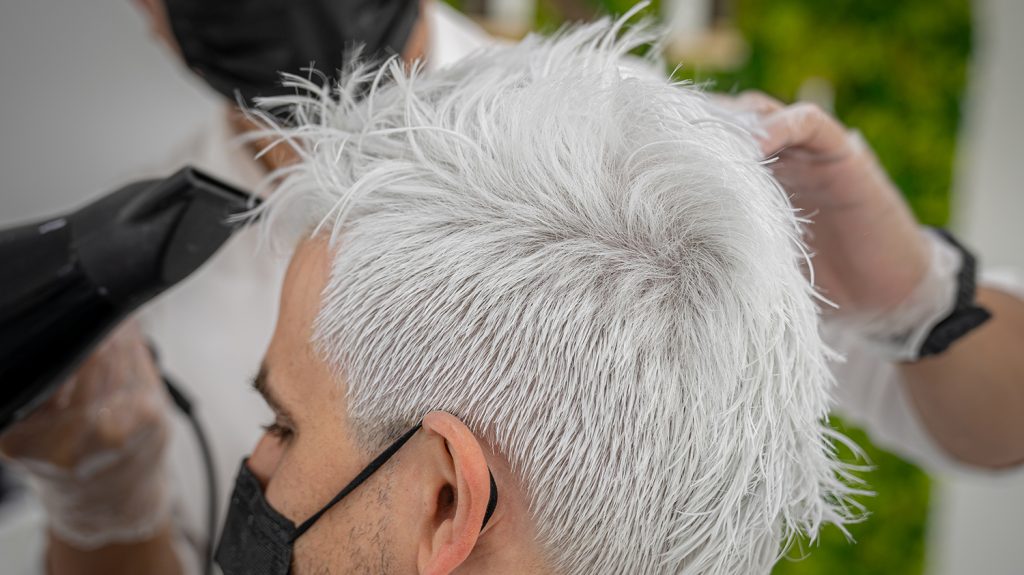
A general Hair Colour service should not be used to simplify major lightening. Clients seeking platinum, substantial lift or full bleaching require the dedicated Platinum and Bleaching pathway.
A general Hair Colour service should not be used to simplify major lightening. Clients seeking platinum, substantial lift or full bleaching require the dedicated Platinum and Bleaching pathway.
The first-day result is only one part of the colour
Hair colour changes after the appointment. Roots grow. Tones fade. Warmth may return. Grey becomes visible again. Sun, heat, swimming, minerals, washing frequency and product choice can all influence how the colour behaves. Some shades require more maintenance than others. Cooler tones may need support to control returning warmth. Fashion colours may fade faster. Grey coverage may require regular root maintenance. A good colour decision considers not only how the client looks when he leaves, but whether he can maintain the result realistically afterward.
Home care affects the colour
Coloured hair may require a more controlled routine. General guidance may include:
• using a suitable colour-care shampoo
Toning products should not be selected only because the label promises to remove warmth. The wrong tone can create dullness, excessive ash, unwanted violet or another result the client did not intend. The product must match the colour that was actually created.
• using a suitable colour-care shampoo
• avoiding overly aggressive cleansing
• maintaining moisture
• controlling excessive heat
• protecting the hair from strong sun
• managing swimming and mineral exposure
• using tone-supporting products only when suitable
• understanding when refreshment is required
Toning products should not be selected only because the label promises to remove warmth. The wrong tone can create dullness, excessive ash, unwanted violet or another result the client did not intend. The product must match the colour that was actually created.
The colour must work with the complete person
Hair colour affects more than the hair. It can change how the skin, beard, eyebrows, haircut, clothing and overall identity are read. A darker result may create strength but can also appear severe. A lighter result may soften the appearance but can reduce contrast. A cooler tone may feel modern and controlled. A warmer tone may create richness and energy.
The correct direction depends on what the client wants the colour to communicate. The colour should not make the person disappear behind the application. It should support the identity the client intends to carry.
The correct direction depends on what the client wants the colour to communicate. The colour should not make the person disappear behind the application. It should support the identity the client intends to carry.
A successful colour begins with the correct expectation
A good result should not be judged only by whether the grey disappeared or whether the shade looks different. It should be judged by whether:
• the tone suits the person
The colour application is one part of the service. The judgement behind the direction determines whether the result makes sense.
• the tone suits the person
• the result remains believable
• the hair can carry the change
• the colour works with the haircut and facial hair
• the maintenance is realistic
• the limitations were understood
• the result continues to look intentional as it fades and grows
The colour application is one part of the service. The judgement behind the direction determines whether the result makes sense.
The SKILLS Perspective
At SKILLS, hair colour is approached as a decision about tone, identity, condition and long-term appearance. The client may arrive with a shade in mind. The final direction must also consider the starting colour, hair history, skin tone, beard, eyebrows and the way the result will be maintained. The objective is not to copy colour mechanically. It is to create a result that belongs to the person wearing it.
The Method Behind SKILLS Hair Colour
The SKILLS colour method was developed by Mo Ebrahim to control more than the shade seen at the end of the appointment. It begins by reading the complete person: skin tone, natural colour, haircut, beard, eyebrows, identity, lifestyle and the level of maintenance the client is prepared to carry. From there, the desired colour is translated into a direction that belongs to the person rather than copied mechanically from a chart or photograph.
Behind that visual decision is a measured colour protocol developed around the chemical service itself. SKILLS uses selected active ingredients, preparation stages, controlled formulation principles and condition-supporting steps according to the starting colour, porosity, strength, previous chemical history and result being pursued.
The method is adjusted because grey coverage, tonal correction, colour refreshment and visible transformation do not place the same demand on the hair or require the same control. These additional steps are designed to reduce avoidable stress, improve control over how the colour develops and support the condition of the hair before, during and after the application.
The result is then considered beyond the first-day shade, including how it will fade, grow, respond to washing and remain connected to the client's overall appearance. No colour method can remove every chemical variable or guarantee that different hair will respond identically.
The difference is that SKILLS does not treat colour as pigment placed over hair. It is a complete method built around selecting the right direction, controlling the process and protecting the quality and believability of the result.
Behind that visual decision is a measured colour protocol developed around the chemical service itself. SKILLS uses selected active ingredients, preparation stages, controlled formulation principles and condition-supporting steps according to the starting colour, porosity, strength, previous chemical history and result being pursued.
The method is adjusted because grey coverage, tonal correction, colour refreshment and visible transformation do not place the same demand on the hair or require the same control. These additional steps are designed to reduce avoidable stress, improve control over how the colour develops and support the condition of the hair before, during and after the application.
The result is then considered beyond the first-day shade, including how it will fade, grow, respond to washing and remain connected to the client's overall appearance. No colour method can remove every chemical variable or guarantee that different hair will respond identically.
The difference is that SKILLS does not treat colour as pigment placed over hair. It is a complete method built around selecting the right direction, controlling the process and protecting the quality and believability of the result.
Arrange your consultation
A consultation allows the current colour, previous chemical history, intended result and realistic maintenance to be understood before the direction is confirmed. Contact the SKILLS concierge team through WhatsApp or call the salon to discuss the colour you are considering.
Founder's Method
For the deeper professional thinking behind suitability, shade selection, identity and long-term colour responsibility, read Mo Ebrahim's Hair Coloring Method.