SKILLS PLATINUM AND BLEACHING METHOD
Men's Platinum Hair Colour and Bleaching Service in Dubai
Bleaching should not begin with the lightest shade a client wants to achieve.
It should begin with understanding the hair that must carry the change.
Platinum, major lightening and bleaching do more than place a new colour over the surface. They reduce natural or
artificial pigment inside the hair so that a lighter base can become visible.
The result depends on the starting colour, previous chemical history, strength, porosity, scalp condition, required level of lift and the client's ability to maintain the hair afterward. The objective is not simply to make the hair as light as possible. It is to identify what level of lightening can be reached, what tone can be created from that base and how the transformation can remain visually strong without forcing the fibre beyond what it can reasonably support.
The result depends on the starting colour, previous chemical history, strength, porosity, scalp condition, required level of lift and the client's ability to maintain the hair afterward. The objective is not simply to make the hair as light as possible. It is to identify what level of lightening can be reached, what tone can be created from that base and how the transformation can remain visually strong without forcing the fibre beyond what it can reasonably support.
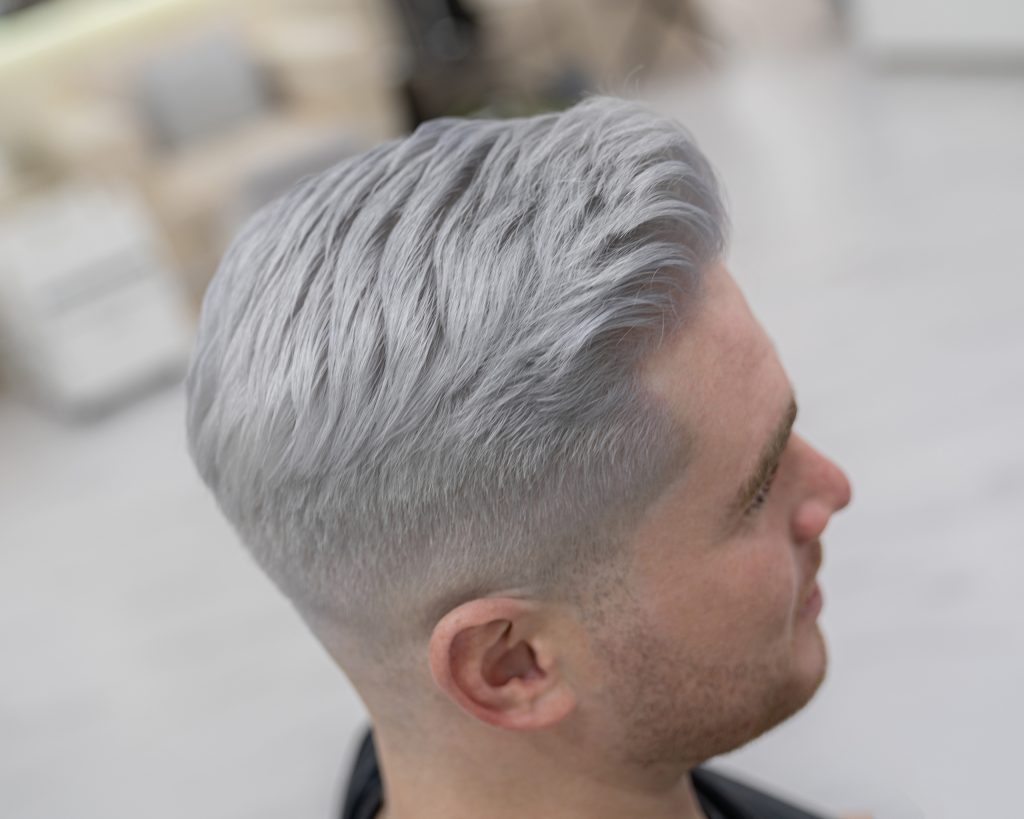
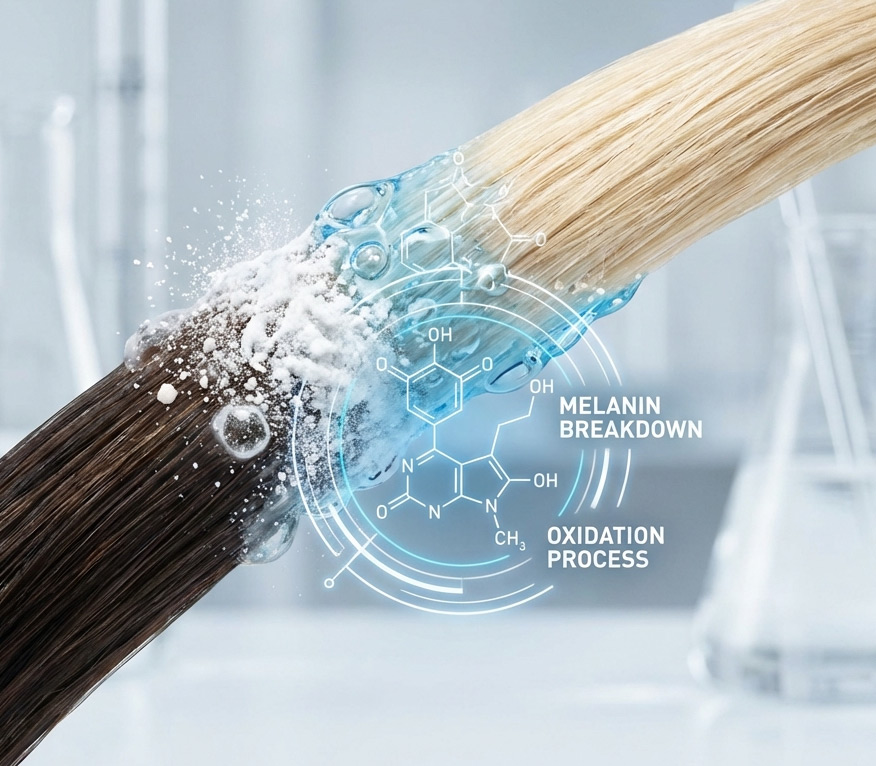
What bleaching actually changes
Natural hair colour is created largely by melanin pigment inside the hair fibre.
Bleaching works by oxidising and reducing visible pigment so the hair appears lighter.
As more pigment is removed, the colour moves through different underlying stages before reaching a pale enough base
for platinum, silver or very light tonal directions.
Bleaching can also affect artificial pigment left by previous colour services. This is why lightening is not simply a matter of applying bleach and waiting for the final shade to appear. The starting colour, pigment history and condition of the fibre determine how the hair moves through the process. The lighter the intended result, the more structural demand may be placed on the hair.
Bleaching can also affect artificial pigment left by previous colour services. This is why lightening is not simply a matter of applying bleach and waiting for the final shade to appear. The starting colour, pigment history and condition of the fibre determine how the hair moves through the process. The lighter the intended result, the more structural demand may be placed on the hair.
Platinum is not one colour
Clients often describe platinum as though it were one universal shade. In reality, platinum can appear:
• clean and neutral
• clean and neutral
• cool and icy
• silver
• soft pearl
• pale beige
• slightly warmer
• highly reflective
• muted and smoky
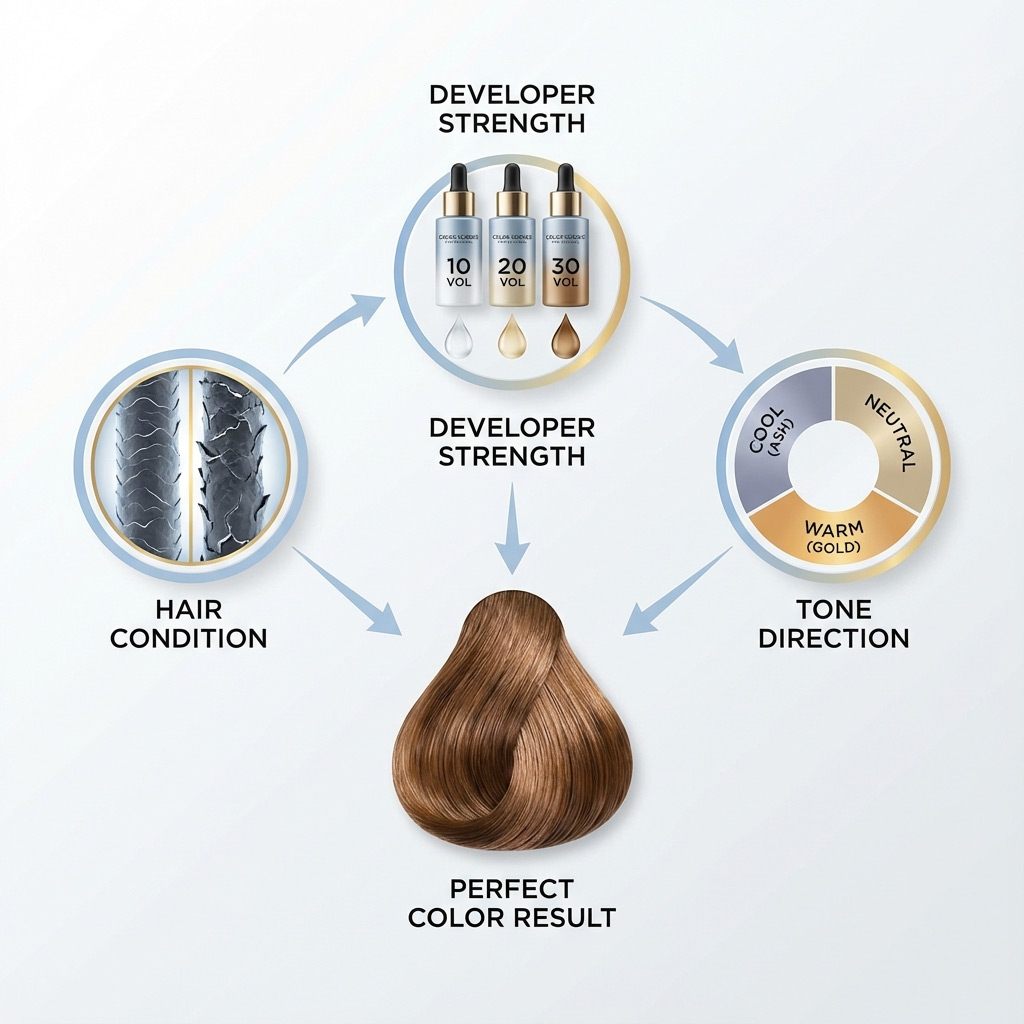
The final direction depends on the level of lift achieved and the tone applied afterward. Hair that has not reached a sufficiently light base cannot be turned into a true pale platinum simply by applying a toner. Toner refines the base that already exists. It does not replace the required lightening. If too much underlying warmth remains, the final result may appear beige, yellow, smoky or uneven rather than clean platinum.
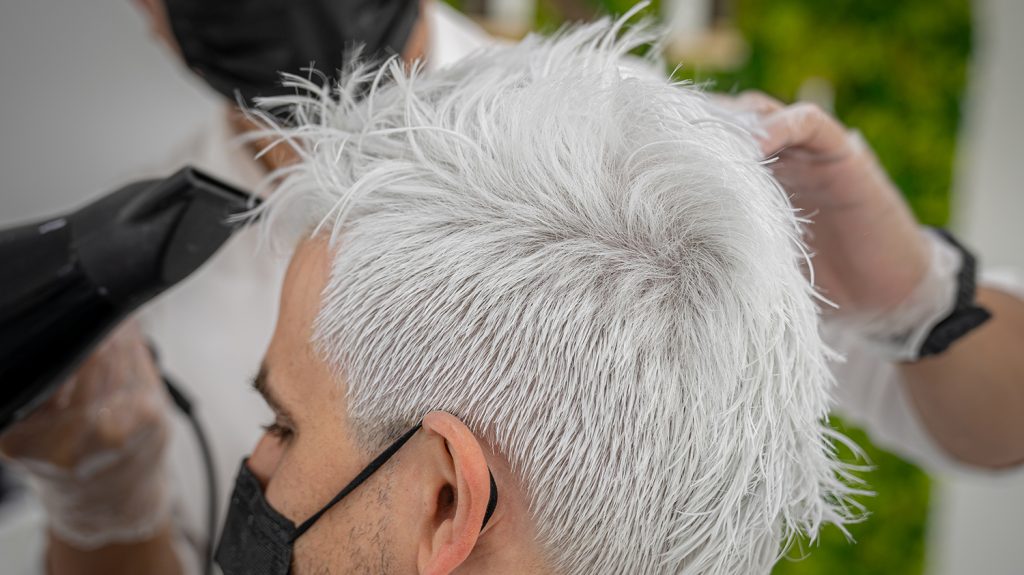
Why dark hair does not move directly to platinum
Dark hair contains a greater concentration of visible pigment.
As the hair is lightened, underlying warmth becomes increasingly visible. The hair may move through red, orange, gold and yellow stages before reaching a pale yellow base suitable for very
light toning.
This warmth is not automatically a sign that something has gone wrong.
It is part of the lightening pathway. The important question is whether the hair can continue lifting responsibly.
Some hair can reach a pale base in one controlled appointment. Other hair may require more than one stage. Previous colour, density, resistance, thickness and condition can all change the pathway. The desired destination may be platinum. The hair decides how quickly and how safely that destination can be approached.
Some hair can reach a pale base in one controlled appointment. Other hair may require more than one stage. Previous colour, density, resistance, thickness and condition can all change the pathway. The desired destination may be platinum. The hair decides how quickly and how safely that destination can be approached.
Natural pigment and artificial colour behave differently
Untreated natural hair normally responds differently from hair containing artificial colour. Artificial colour may remain inside the fibre and resist lightening. Repeated dark colour can create several layers of deposited pigment. Different areas may also contain different colour histories. The roots may be natural while the lengths contain older dye, highlights, correction or previous bleaching. This can cause:
• uneven lift
Applying more bleach does not automatically correct these differences. Sometimes the most responsible pathway is staged correction rather than one aggressive attempt to force the entire head toward one level.
• uneven lift
• stronger warmth in some areas
• darker bands
• lighter porous sections
• unpredictable tone
• different levels of stress through the strand
Applying more bleach does not automatically correct these differences. Sometimes the most responsible pathway is staged correction rather than one aggressive attempt to force the entire head toward one level.
Previous chemical history changes the decision
Hair may appear visually healthy while carrying weakness from earlier chemical services. Relevant history can include:
• previous bleaching
These services may affect strength, elasticity, porosity and the way the hair responds during lightening. Chemical history does not automatically mean that bleaching is impossible. It means that the hair cannot be approached as untouched. Different parts of the same head may also carry different histories. New growth may be stronger while older lengths are more fragile, porous or previously lightened. A successful result depends on understanding the whole strand, not only the colour visible from the outside.
• previous bleaching
• highlights
• permanent colour
• repeated root colour
• colour correction
• relaxing
• perming
• keratin or smoothing treatments
• chemical straightening
• henna or unknown colour deposits
• uncontrolled home colour
• frequent high heat
These services may affect strength, elasticity, porosity and the way the hair responds during lightening. Chemical history does not automatically mean that bleaching is impossible. It means that the hair cannot be approached as untouched. Different parts of the same head may also carry different histories. New growth may be stronger while older lengths are more fragile, porous or previously lightened. A successful result depends on understanding the whole strand, not only the colour visible from the outside.
Bleaching changes the hair fibre
Bleaching is not harmless simply because it is common or professionally performed. The process alters pigment and can also affect the protective and structural organisation of the hair fibre. After bleaching, the hair may become:
• more porous
This does not mean that every bleaching service produces severe damage. It means that the transformation carries a cost to the fibre and must be balanced against the strength available. The best platinum result is not simply the palest result. It is the lightest responsible result the hair can carry while remaining manageable.
• more porous
• drier
• more fragile
• more sensitive to heat
• more vulnerable to breakage
• more affected by friction
• more dependent on moisture support
• more reactive to unsuitable products
• more vulnerable to environmental minerals
• more dependent on consistent maintenance
This does not mean that every bleaching service produces severe damage. It means that the transformation carries a cost to the fibre and must be balanced against the strength available. The best platinum result is not simply the palest result. It is the lightest responsible result the hair can carry while remaining manageable.
Hair thickness and density affect the pathway
Fine hair may lighten quickly but can also have less structural margin for repeated chemical stress.
Thicker or more resistant hair may require greater control, longer processing or multiple stages. Density changes how the result appears across the complete head.
Dense hair may require more careful sectioning and control to achieve even lift. Lower-density hair may show the scalp more strongly once the hair becomes very light. The visual effect must therefore be considered as well as the chemical result. A platinum tone that looks strong on one head may create too much scalp contrast or visual transparency on another.
Dense hair may require more careful sectioning and control to achieve even lift. Lower-density hair may show the scalp more strongly once the hair becomes very light. The visual effect must therefore be considered as well as the chemical result. A platinum tone that looks strong on one head may create too much scalp contrast or visual transparency on another.
Porosity influences lift and tone
Porosity describes how easily the hair absorbs and releases moisture and colour.
Highly porous hair may lighten unevenly, take toner too strongly or lose tone more quickly.
Less porous or resistant hair may take longer to lift.
Porosity can vary from roots to ends.
Previously bleached sections may be far more porous than natural regrowth. This is why applying one identical process across the entire head may not create one identical result. The roots, middle lengths and ends may require different levels of protection, timing or tonal control. The final colour is built around how the hair actually responds, not around the assumption that every section behaves the same way.
Previously bleached sections may be far more porous than natural regrowth. This is why applying one identical process across the entire head may not create one identical result. The roots, middle lengths and ends may require different levels of protection, timing or tonal control. The final colour is built around how the hair actually responds, not around the assumption that every section behaves the same way.
Why testing can matter
A strand or strength test can provide useful information before a major transformation. Testing may help show:
• how the hair begins to lift
A successful test does not guarantee that the entire head will respond identically. Different areas may carry different condition or history. Testing provides evidence. It does not remove every variable.
• how the hair begins to lift
• what underlying warmth appears
• whether artificial pigment resists removal
• whether the hair remains stable
• whether elasticity changes
• whether the intended level appears realistic
• whether the process should be staged
• whether the direction should be changed
A successful test does not guarantee that the entire head will respond identically. Different areas may carry different condition or history. Testing provides evidence. It does not remove every variable.
One appointment is not always the strongest decision
Platinum and major lightening may require more than one appointment. The number of stages depends on:
• the starting colour
Stopping before the final shade is not automatically a failed result. It may mean that the hair has reached the responsible limit for that appointment. The first stage can establish a safer base for later refinement. Forcing the hair through every stage in one day may produce a lighter colour, but it can also create unnecessary dryness, weakness or breakage. A staged transformation respects the difference between reaching the colour and preserving hair that can still be worn.
• the starting colour
• previous artificial pigment
• previous bleach
• the required level of lift
• hair strength
• porosity
• density
• scalp condition
• the response during the process
Stopping before the final shade is not automatically a failed result. It may mean that the hair has reached the responsible limit for that appointment. The first stage can establish a safer base for later refinement. Forcing the hair through every stage in one day may produce a lighter colour, but it can also create unnecessary dryness, weakness or breakage. A staged transformation respects the difference between reaching the colour and preserving hair that can still be worn.
Highlights and partial lightening are different from full platinum
Not every client needs a complete full-scalp transformation. The bleaching family may include:
• full platinum transformation
Full platinum creates a much stronger visual and maintenance commitment. The correct direction depends on whether the client wants brightness, contrast, transformation or a completely different identity.
• full platinum transformation
• full-head bleaching
• highlights
• partial lightening
• controlled placement
• lighter sections around the face
• preparation for fashion colour
• correction of an unsuitable lightened result
Partial lightening can create movement, contrast or brightness without changing every strand.
Highlights can support the haircut and facial structure.
Placement can direct attention, create dimension or soften the overall appearance.
Full platinum creates a much stronger visual and maintenance commitment. The correct direction depends on whether the client wants brightness, contrast, transformation or a completely different identity.
Toning completes the direction
After the required level of lift has been achieved, toner is used to refine the visible tone. Toner can help control remaining warmth and create a more specific direction. The result may become:
• platinum
The toner must match the base created during lightening. Porous areas may absorb tone more deeply. Less porous areas may remain warmer. This can influence how even the final result appears. Toner is also temporary. It gradually fades through washing, heat, sunlight, swimming, minerals and product use. The hair may remain light while the tone changes. This is why platinum maintenance often includes periodic toning rather than repeated full bleaching.
• platinum
• silver
• ash
• pearl
• neutral
• beige
• smoky
• softly warm
The toner must match the base created during lightening. Porous areas may absorb tone more deeply. Less porous areas may remain warmer. This can influence how even the final result appears. Toner is also temporary. It gradually fades through washing, heat, sunlight, swimming, minerals and product use. The hair may remain light while the tone changes. This is why platinum maintenance often includes periodic toning rather than repeated full bleaching.
Why platinum can become warm again
A cool platinum result may gradually reveal warmer tones. This can happen because:
• toner fades
Warmth returning does not always mean the bleaching has failed. It often means that the tonal layer has changed while the lightened base remains. The correct maintenance depends on the actual colour visible at that time. Using the strongest purple or blue product is not automatically the right solution. Excessive toning can make the hair dull, grey, violet or uneven.
• toner fades
• the underlying base remains visible
• washing removes deposited tone
• heat accelerates fading
• sunlight affects the colour
• swimming exposes the hair to minerals or chlorine
• water quality changes the tone
• unsuitable products create buildup
• porous areas lose colour quickly
Warmth returning does not always mean the bleaching has failed. It often means that the tonal layer has changed while the lightened base remains. The correct maintenance depends on the actual colour visible at that time. Using the strongest purple or blue product is not automatically the right solution. Excessive toning can make the hair dull, grey, violet or uneven.
The scalp is part of the service
Full-scalp bleaching brings the lightening product into close contact with the skin. The scalp may respond differently from the hair. Some clients may experience temporary warmth, tightness, dryness, redness or sensitivity. The scalp should be considered carefully when there is:
• active irritation
A visible scalp concern should not be hidden beneath a colour transformation. Where the skin appears unstable, the cosmetic service may need to wait until the condition has been appropriately understood.
• active irritation
• significant flaking
• broken skin
• cuts or lesions
• visible inflammation
• previous strong sensitivity
• a history of difficult reactions
• a current scalp condition
A visible scalp concern should not be hidden beneath a colour transformation. Where the skin appears unstable, the cosmetic service may need to wait until the condition has been appropriately understood.
When bleaching should be postponed or avoided
Bleaching may be unsuitable when the hair or scalp cannot reasonably carry the required process. General concerns include:
• severe dryness
These concerns do not all lead to the same conclusion. Some may require recovery time. Some may require partial lightening instead of full platinum. Some may require testing. Some may require several stages. Others may require an alternative colour direction entirely. The purpose is not to make bleaching sound frightening. It is to separate a strong transformation from a process that should not happen in the current condition.
• severe dryness
• active breakage
• unstable elasticity
• heavily overprocessed hair
• repeated recent bleaching
• recent relaxing
• recent perming
• recent chemical straightening
• recent colour correction
• unclear chemical history
• henna or unknown pigment deposits
• excessive shedding
• active scalp irritation
• significant flaking or inflammation
• open cuts or compromised skin
• visible signs of possible infection
• a requested result requiring more lift than the hair can support
These concerns do not all lead to the same conclusion. Some may require recovery time. Some may require partial lightening instead of full platinum. Some may require testing. Some may require several stages. Others may require an alternative colour direction entirely. The purpose is not to make bleaching sound frightening. It is to separate a strong transformation from a process that should not happen in the current condition.
Platinum is a maintenance commitment
Platinum hair does not remain unchanged after the appointment. The roots grow in the natural colour. Toner fades. Warmth may reappear. The hair may require more moisture and gentler handling. Maintenance may include:
• suitable colour-care shampoo
The lighter the result, the more visible the regrowth may become. A client choosing platinum is not choosing only one appointment. He is choosing the ongoing appearance and maintenance that follow it.
• suitable colour-care shampoo
• controlled use of toning products
• moisture support
• careful conditioning
• reduced excessive heat
• protection from strong sun
• controlled washing frequency
• protection during swimming
• rinsing after chlorine or saltwater
• avoiding uncontrolled home bleach
• periodic toner refresh
• managing the contrast of new growth
The lighter the result, the more visible the regrowth may become. A client choosing platinum is not choosing only one appointment. He is choosing the ongoing appearance and maintenance that follow it.
Platinum changes the complete identity
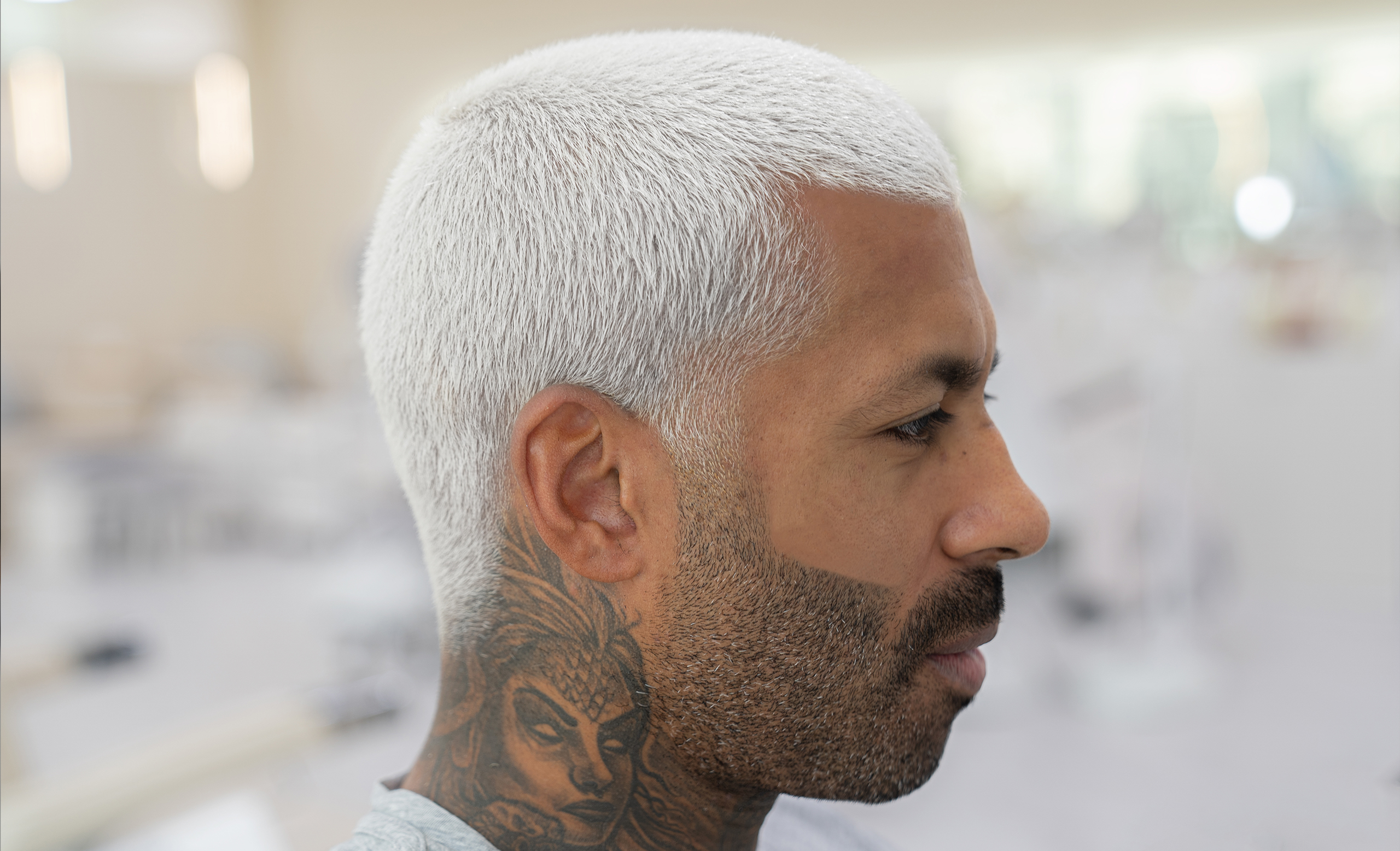
Very light hair can change how the face, skin, beard and eyebrows are read.
It may increase contrast.
It may soften the appearance.
It may make facial hair appear darker.
It may change how clothing colours, accessories and styling finishes work with the client.
A cool platinum direction can feel sharp and modern.
A softer pale tone may feel more natural. Silver can create a stronger fashion statement. The correct result should be considered as part of the complete person. The hair colour should not become so disconnected that the client disappears behind the transformation.
A softer pale tone may feel more natural. Silver can create a stronger fashion statement. The correct result should be considered as part of the complete person. The hair colour should not become so disconnected that the client disappears behind the transformation.
A successful platinum result begins with the correct expectation
A strong result should not be judged only by how light the hair looks when the client leaves. It should be judged by whether:
The bleaching is one part of the service. The judgement behind the direction determines whether the transformation remains successful.
• the hair could responsibly carry the process
• the level of lift was selected honestly
• the tone suits the person
• the hair remains manageable
• the result works with the haircut and facial hair
• the required maintenance is realistic
• the required maintenance is realistic
• the client understands fading and regrowth
• the process stopped at the correct point
The bleaching is one part of the service. The judgement behind the direction determines whether the transformation remains successful.
The SKILLS Perspective
At SKILLS, platinum and bleaching are approached as decisions about integrity, colour, condition and identity.
The intended shade matters.
So do the starting colour, previous history, scalp, available strength and the way the client intends to carry the result
afterward.
The objective is not to force every client toward the palest possible shade. It is to create the strongest responsible lightening direction the hair and person can support.
The objective is not to force every client toward the palest possible shade. It is to create the strongest responsible lightening direction the hair and person can support.
The Method Behind SKILLS Platinum and Bleaching
The SKILLS Platinum and Bleaching method was developed by Mo Ebrahim around one essential principle:
The palest result is not automatically the strongest result.
The method begins by reading the complete starting position, including the natural colour, artificial pigment, chemical
history, porosity, strength, scalp condition, intended tone and the identity the client wants to carry.
But selecting the right platinum direction is only the first layer.
SKILLS has built its own measured lightening protocol around the chemical process itself, combining selected active ingredients, preparation stages, condition-supporting measures and controlled application steps according to the hair being treated. The approach is adjusted because untouched hair, previously coloured hair, fragile lengths, resistant pigment and earlier bleached sections cannot be managed through one mechanical routine.
SKILLS has built its own measured lightening protocol around the chemical process itself, combining selected active ingredients, preparation stages, condition-supporting measures and controlled application steps according to the hair being treated. The approach is adjusted because untouched hair, previously coloured hair, fragile lengths, resistant pigment and earlier bleached sections cannot be managed through one mechanical routine.
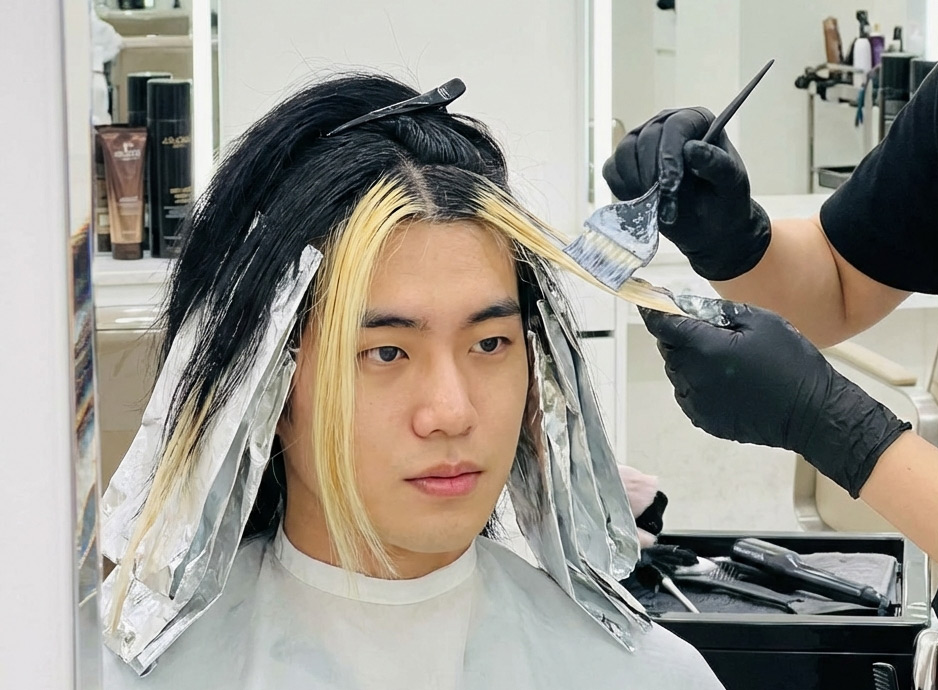
Each stage is studied around how the hair is lifting, how the fibre is responding, where unnecessary overlap must be avoided and whether the process should continue, pause or stop. These additional controls are designed to reduce avoidable stress, support a gentler lightening experience and give greater command over the condition, lift and tonal direction of the hair.
The method continues beyond bleaching through considered toning, condition-focused finishing, personalised maintenance guidance and appropriate aftercare support. No protocol can remove the chemical reality of bleaching or guarantee that every head of hair will reach the same level in the same appointment.
The difference is that SKILLS does not pursue platinum through colour ambition alone. It applies a complete method built around controlled lift, selected support, fibre integrity and the professional discipline to stop at the point the hair can responsibly carry. Many places can make hair lighter. The SKILLS difference is knowing how far the transformation should go, how carefully it should be built and how the result should be protected after the lightening is complete.
Arrange your consultation
A consultation allows the current colour, previous chemical history, hair condition, scalp and intended level of lightening
to be understood before the direction is confirmed.
Contact the SKILLS concierge team through WhatsApp or call the salon to discuss the platinum or lightening result you
are considering.
Founder's Method
For the deeper professional thinking behind integrity, chemical history, controlled lift and knowing when to stop, read Mo
Ebrahim's Hair Bleaching Method.