SKILLS SMP AND SPMU METHOD
Scalp Micropigmentation and Semi-Permanent Make-Up in Dubai
Scalp Micropigmentation and Semi-Permanent Make-Up both use cosmetic pigment.
That is where the similarity ends.
The result depends on where the pigment is placed, how it is placed, the colour selected, the skin carrying it and the
judgement of the practitioner creating the design.
When these decisions are correct, pigment can reduce the appearance of hair loss, complete a sparse feature and return visual balance to the face. When they are wrong, the client is left explaining the result instead of enjoying it.
When these decisions are correct, pigment can reduce the appearance of hair loss, complete a sparse feature and return visual balance to the face. When they are wrong, the client is left explaining the result instead of enjoying it.
What Is Scalp Micropigmentation?
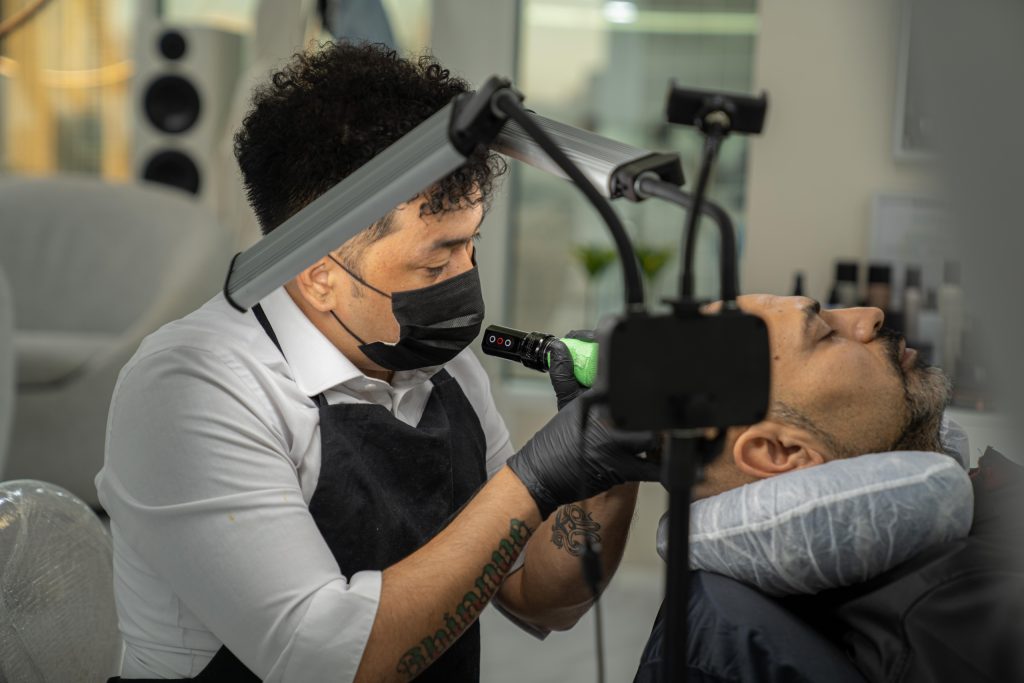
Scalp Micropigmentation, commonly known as SMP, is a non-surgical cosmetic pigmentation service designed to reduce the contrast between the scalp and the hair. Controlled micro-impressions are placed into the scalp to create the appearance of very short hair or improve the look of density between existing strands. SMP may support:
• receding hairlines
• thinning frontal areas
• visible scalp between existing hair
• crown thinning
• extensive or complete baldness
• gaps around a fully healed hair transplant
• mature transplant scars
• suitable trauma scars
• medically assessed and stable alopecia patterns
• previous SMP requiring correction or refinement
SMP does not create new hair. It changes how the eye reads the relationship between the scalp, existing hair and surrounding density. For a shaved scalp, it may create the appearance of very short hair. Where hair remains, it may reduce visible scalp contrast and make the area appear more complete.
Scalp Micropigmentation (SMP) Is Not an Ordinary Tattoo
Many clients only understand this difference after the wrong work has already been completed.
Traditional tattooing is created to appear as a tattoo.
SMP is created to resemble the visual texture and rhythm of short hair.
The pigment, equipment, depth, pressure, impression size, distribution and final density all influence how the work heals
and settles.
If the work is too deep, too dark, too heavy or too uniform, the impressions can spread and become flat. Instead of blending with the hair, the pigment becomes the first thing people notice. The correct SMP result is not the darkest result. It is the result that reduces the visibility of hair loss without creating a new feature the client must explain.
If the work is too deep, too dark, too heavy or too uniform, the impressions can spread and become flat. Instead of blending with the hair, the pigment becomes the first thing people notice. The correct SMP result is not the darkest result. It is the result that reduces the visibility of hair loss without creating a new feature the client must explain.
What Is Semi-Permanent Make-Up (SPMU)?
Semi-Permanent Make-Up, commonly called SPMU, is controlled cosmetic pigmentation used to enhance, balance or
visually support selected facial features.
SPMU may support:
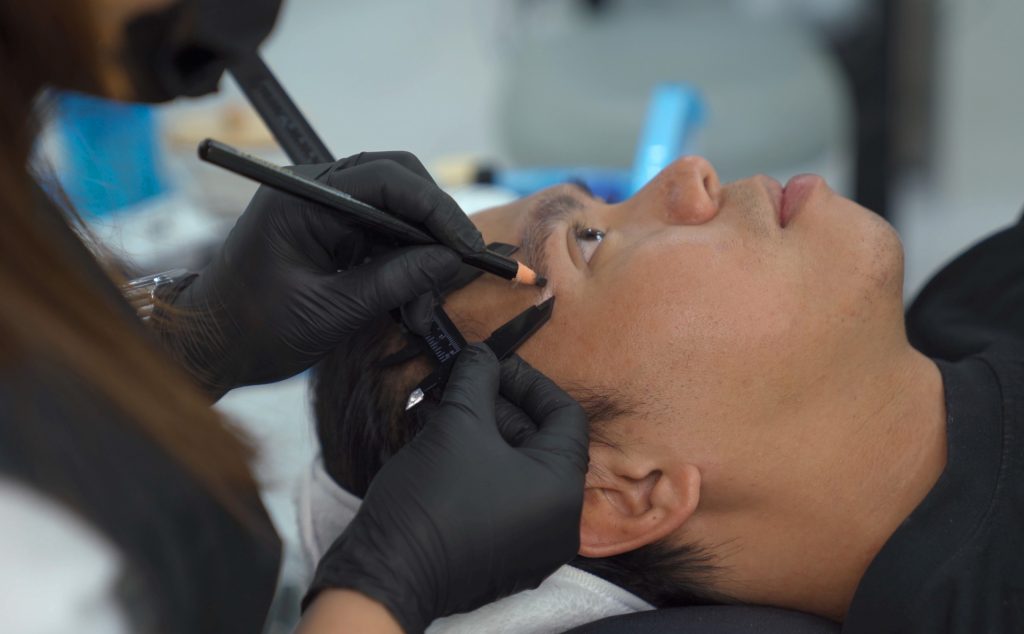
• fuller-looking eyebrows
• fuller-looking eyebrows
• sparse eyebrow areas
• improved brow definition
• better visual balance between the brows
• softer or more structured brow direction
• suitable beard, moustache or goatee gaps
• selected facial-hair density concerns
• suitable lip-colour enhancement
• lash-line definition
• previous SPMU requiring correction or refinement
SPMU is not ordinary make-up that disappears when the face is washed. The pigment may soften and fade over time, but the design remains a long-term decision. This is why SPMU should never begin with a trending shape or a photograph of somebody else. It begins with the face.
Why SKILLS Chose to Enter SMP and SPMU
SKILLS did not add these services because pigmentation became popular.
The decision came from what the founder repeatedly saw from the barber chair.
Men arrived after poorly completed scalp tattooing that looked too dark, too solid or disconnected from their natural hair.
Some had lost confidence completely because the hairline looked drawn onto the skin instead of belonging to the face.
Some had invested in hair transplants but remained disappointed by visible gaps, crown contrast or scars the transplant could not completely conceal. Others had lost eyebrow density and did not realise how much the missing structure had changed their expression. The face looked older. The eyes appeared more tired. The balance of the forehead changed.
Men with beard gaps often reshaped the beard repeatedly, trying to hide the same empty areas without finding a result that felt complete. Mo Ebrahim saw that these concerns could not always be solved through another haircut, beard design or styling product. He also saw the emotional reaction when the correct visual structure was returned. The client did not only see pigment. He saw himself differently.
That was the point where SMP and SPMU stopped being additional services and became serious fields of study inside SKILLS. The work developed through professional training, certification, observation, pigment education, skin understanding, healing behaviour, colour selection and the relationship between pigmentation and men's grooming.
Some had invested in hair transplants but remained disappointed by visible gaps, crown contrast or scars the transplant could not completely conceal. Others had lost eyebrow density and did not realise how much the missing structure had changed their expression. The face looked older. The eyes appeared more tired. The balance of the forehead changed.
Men with beard gaps often reshaped the beard repeatedly, trying to hide the same empty areas without finding a result that felt complete. Mo Ebrahim saw that these concerns could not always be solved through another haircut, beard design or styling product. He also saw the emotional reaction when the correct visual structure was returned. The client did not only see pigment. He saw himself differently.
That was the point where SMP and SPMU stopped being additional services and became serious fields of study inside SKILLS. The work developed through professional training, certification, observation, pigment education, skin understanding, healing behaviour, colour selection and the relationship between pigmentation and men's grooming.
The SKILLS Perspective
At SKILLS, pigment is never the first decision.
The person is.
For SMP, the scalp cannot be separated from the face, skull, remaining hair, haircut, beard, age and future appearance.
For SPMU, the eyebrow, beard or selected feature cannot be separated from facial proportion, expression, skin tone
and natural movement.
A lower hairline does not automatically make the client look younger.
A darker scalp does not automatically look denser.
A perfectly symmetrical eyebrow does not automatically look natural. A sharply filled beard gap does not automatically blend with the existing facial hair. The result must belong to the person carrying it. The objective is not to create the most visible transformation. It is to create a transformation that people accept without stopping to question it.
A perfectly symmetrical eyebrow does not automatically look natural. A sharply filled beard gap does not automatically blend with the existing facial hair. The result must belong to the person carrying it. The objective is not to create the most visible transformation. It is to create a transformation that people accept without stopping to question it.
Hairline Design Must Belong to the Man
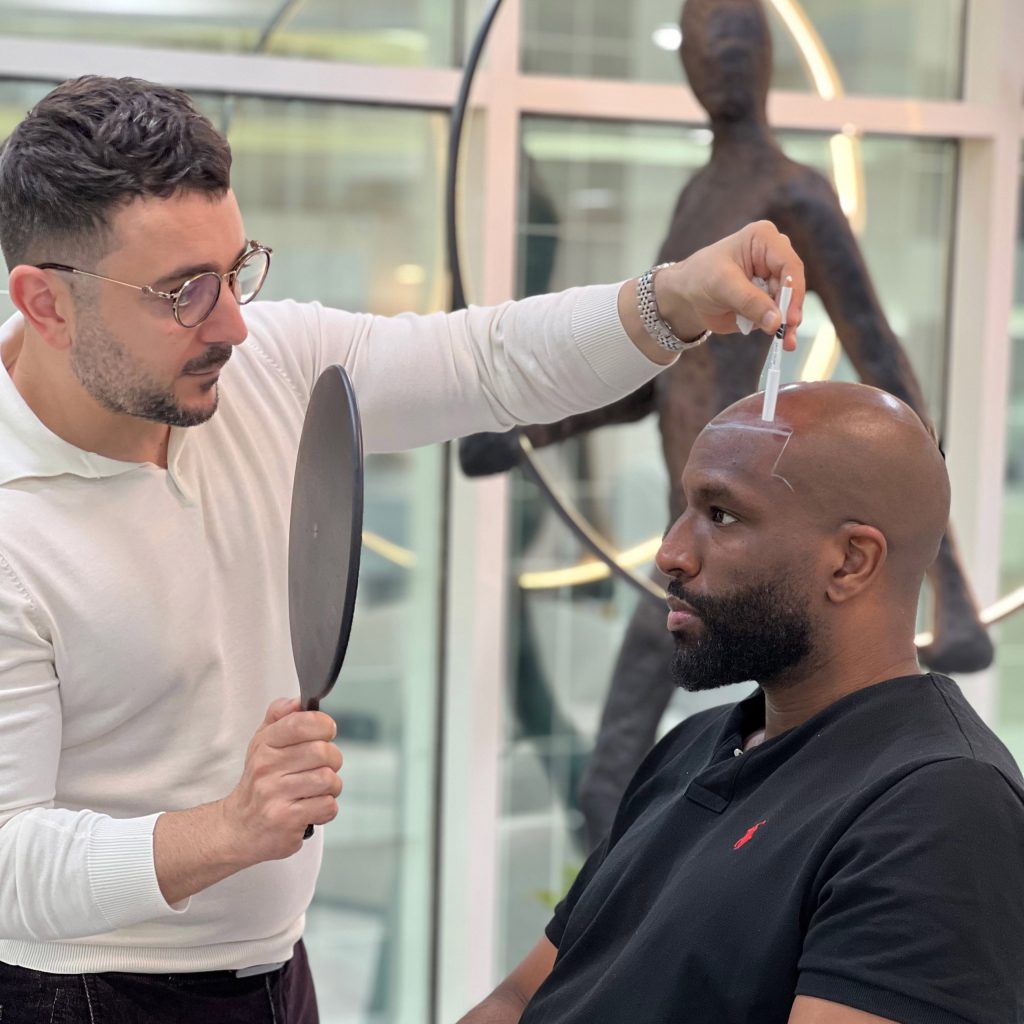
A hairline is not selected from a template.
SKILLS considers the forehead, facial length, temple structure, skull shape, natural recession, remaining hair, haircut,
beard balance, age, profession and personal identity.
Some men require a soft and naturally broken hairline.
Others can carry a more structured result.
Some do not need a new hairline at all.
They need controlled density support beneath existing hair. The work must also make sense from every direction. The front. Both sides. The crown. Different lighting. Different viewing distances. SMP is not a flat line drawn across the forehead. It is a three-dimensional grooming decision.
They need controlled density support beneath existing hair. The work must also make sense from every direction. The front. Both sides. The crown. Different lighting. Different viewing distances. SMP is not a flat line drawn across the forehead. It is a three-dimensional grooming decision.
SMP After Hair Transplant
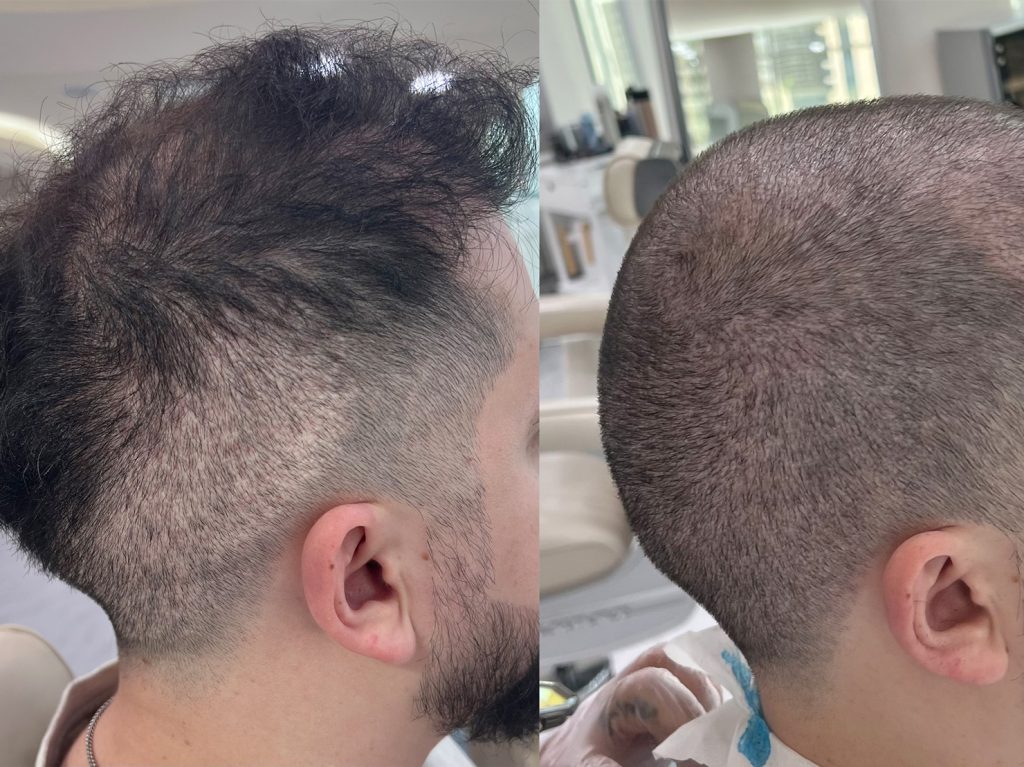
A hair transplant can provide physical hair, but it cannot always provide complete visual density in every area. The available donor hair, transplant method, future hair loss and distribution of grafts all influence the final result.
After full healing and confirmation from the treating doctor, SMP may help reduce visible contrast around transplanted hair, support thinning areas or soften the appearance of a mature transplant scar. The transplant creates physical growth. SMP may help the available growth look more visually complete. The two services perform different jobs.
After full healing and confirmation from the treating doctor, SMP may help reduce visible contrast around transplanted hair, support thinning areas or soften the appearance of a mature transplant scar. The transplant creates physical growth. SMP may help the available growth look more visually complete. The two services perform different jobs.
Eyebrows, Beard Gaps and Facial Balance
Eyebrows hold more influence over the face than many people realise.
When density reduces, the face may appear older, more tired or less defined.
SPMU can support sparse areas, improve visual balance and return structure without creating a brow that looks drawn
over the face.
Beard and moustache gaps require the same level of control.
The direction of the existing hair, density, skin tone, shaving habits, facial movement and viewing distance all affect the result. Pigmentation should blend into the existing beard. It should not sit beneath it as a separate design. For clients affected by stable alopecia or permanent hair loss, SMP or SPMU may also provide cosmetic camouflage after the appropriate assessment. The service does not treat the biological cause. It restores visual structure where suitable.
The direction of the existing hair, density, skin tone, shaving habits, facial movement and viewing distance all affect the result. Pigmentation should blend into the existing beard. It should not sit beneath it as a separate design. For clients affected by stable alopecia or permanent hair loss, SMP or SPMU may also provide cosmetic camouflage after the appropriate assessment. The service does not treat the biological cause. It restores visual structure where suitable.
Colour Is Different on Every Person
Pigment is not selected because it looked good on another client.
Natural hair colour, beard colour, skin tone, undertone, scalp tone, oil behaviour, previous pigment, healing and light all
change the way colour is seen.
A pigment that appears correct before application may settle differently once it enters the skin.
The correct shade is not always the darkest match.
It is the shade that can settle, soften and remain connected to the surrounding hair or feature.
Colour selection requires professional judgement before, during and after healing.
Safety, Depth and Practitioner Certification
The quality of the design cannot be separated from the safety of the procedure.
Pigment quality, hygiene, sterile single-use materials, equipment control, skin preparation and application depth all
influence the finished result.
Pigment placed at the wrong depth may spread, change appearance or remain more heavily visible than intended.
At SKILLS, SMP and SPMU are provided only by selected trained, certified and internally approved practitioners for the procedures they perform. The client sees the final result. SKILLS carries responsibility for everything required to produce it.
At SKILLS, SMP and SPMU are provided only by selected trained, certified and internally approved practitioners for the procedures they perform. The client sees the final result. SKILLS carries responsibility for everything required to produce it.
The SKILLS SMP and SPMU Method
The SKILLS method begins with consultation, not application.
The scalp or facial feature is assessed in person.
The existing hair, skin, previous work, healing history, colour direction and expected result are considered before a
design is approved.
No pigment is placed before the client understands the proposed direction.
The service is then built in controlled stages.
SKILLS does not rush to create maximum darkness or density in one appointment. The skin must heal. The colour must settle. The work must be reviewed before more pigment is added. A full SMP direction may include consultation, design approval, several staged sessions and a later touch-up where required. SPMU may also require more than one visit depending on the feature, skin and healing response. The number of visits is customised. The purpose is not to complete the work quickly. The purpose is to complete it correctly.
SKILLS does not rush to create maximum darkness or density in one appointment. The skin must heal. The colour must settle. The work must be reviewed before more pigment is added. A full SMP direction may include consultation, design approval, several staged sessions and a later touch-up where required. SPMU may also require more than one visit depending on the feature, skin and healing response. The number of visits is customised. The purpose is not to complete the work quickly. The purpose is to complete it correctly.
More Than Pigmentation
SMP and SPMU create visual density.
They do not create new follicles.
However, where suitable natural hair remains, SKILLS may combine the pigmentation direction with its wider trichology,
scalp or skin-support work.
Selected professional care may support the scalp environment, maintain existing hair and improve the appearance and
condition of responsive natural density.
For eyebrow or beard concerns, suitable skin and hair-support directions may also be considered. One side creates the appearance of density through pigment. The other supports the condition of the hair and skin that naturally remain. This allows SKILLS to look beyond the pigmentation appointment and build a more complete direction around the client.
For eyebrow or beard concerns, suitable skin and hair-support directions may also be considered. One side creates the appearance of density through pigment. The other supports the condition of the hair and skin that naturally remain. This allows SKILLS to look beyond the pigmentation appointment and build a more complete direction around the client.
The Difference Is in What We Do Not Rush
Many providers can place pigment into the skin. The SKILLS difference is knowing:
• where it should be placed
The pigment is the visible service. The decisions surrounding it are the method.
• where it should be placed
• where it should remain soft
• which colour belongs to the person
• how the design should age
• when another session is required
• when the work has reached enough
• when existing hair and scalp care should support the result
• when previous work should be corrected rather than covered
• when the service should not proceed
The pigment is the visible service. The decisions surrounding it are the method.
Arrange Your Consultation
SMP and SPMU cannot be confirmed responsibly through photographs or messages alone.
An in-person consultation allows SKILLS to assess the scalp or facial feature, existing hair, skin, previous pigmentation,
colour direction, healing history and realistic result before the service begins.
The design is explained and approved before pigment is placed.
Contact the SKILLS concierge team through WhatsApp or call the salon to arrange your SMP or SPMU consultation.
Founder's Method
For deeper reading on designing density with restraint and creating a hairline that belongs to the man, read Mo
Ebrahim's Scalp Micropigmentation Method.
For deeper reading on facial proportion, movement, colour and long-term design responsibility, read Mo Ebrahim's Semi-Permanent Make-Up Method.
For deeper reading on facial proportion, movement, colour and long-term design responsibility, read Mo Ebrahim's Semi-Permanent Make-Up Method.