SKILLS BEARD METHOD
Men's Beard Trim, Shaving and Beard Colour Service in Dubai
Beard work should not begin with a line drawn around the face. It should begin with the face itself. A beard can strengthen the jaw, balance facial proportion, soften an angular structure or create definition where the natural outline appears less pronounced. It can also work against the person when the length, weight, lines or colour are selected without considering the face, haircut, density and natural growth.
The objective is not simply to make the beard shorter or sharper. It is to create a beard direction that belongs to the person, supports his complete appearance and remains manageable after he leaves the chair.
The objective is not simply to make the beard shorter or sharper. It is to create a beard direction that belongs to the person, supports his complete appearance and remains manageable after he leaves the chair.
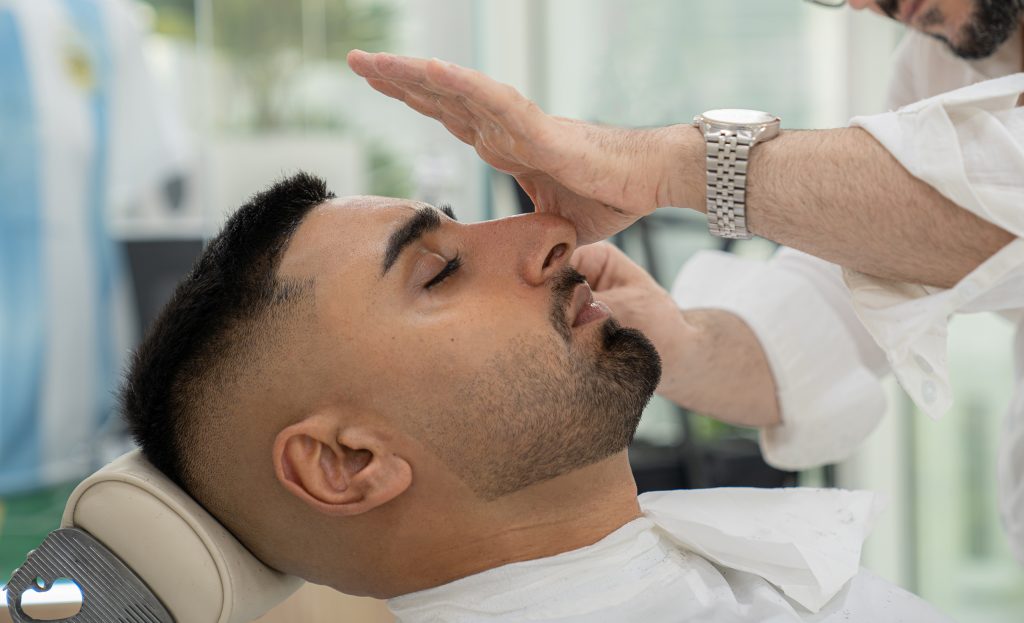
What beard shaping changes
A beard changes how the lower part of the face is read. Its shape can influence:
• the apparent width of the jaw
Removing too much weight can expose uneven density. Leaving too much can make the lower face appear wider or heavier. A stronger line may support one client while looking artificial on another. The beard is therefore not designed through one outline repeated around every face. It is built through connected decisions about proportion, growth, density and identity.
• the apparent width of the jaw
• the length of the face
• the strength of the chin
• the balance between the cheeks and lower face
• how mature, sharp, soft or natural the client appears
• how the beard connects with the haircut
Removing too much weight can expose uneven density. Leaving too much can make the lower face appear wider or heavier. A stronger line may support one client while looking artificial on another. The beard is therefore not designed through one outline repeated around every face. It is built through connected decisions about proportion, growth, density and identity.
Why the same beard photograph will not work identically on everyone
A reference photograph can communicate the intended direction. It may show natural fullness, sharper lines, short texture, a defined moustache or a particular relationship between the beard and haircut. What it cannot show is how that same shape will behave on another person. The result may change because of differences in:
• facial structure
• facial structure
• jawline and chin
• natural density
• patchy growth
• hair texture
• growth direction
• cheek-line height
• moustache density
• skin condition
• haircut shape
• maintenance ability
The photograph provides the idea. The beard and face determine how that idea should be translated.
The photograph provides the idea. The beard and face determine how that idea should be translated.
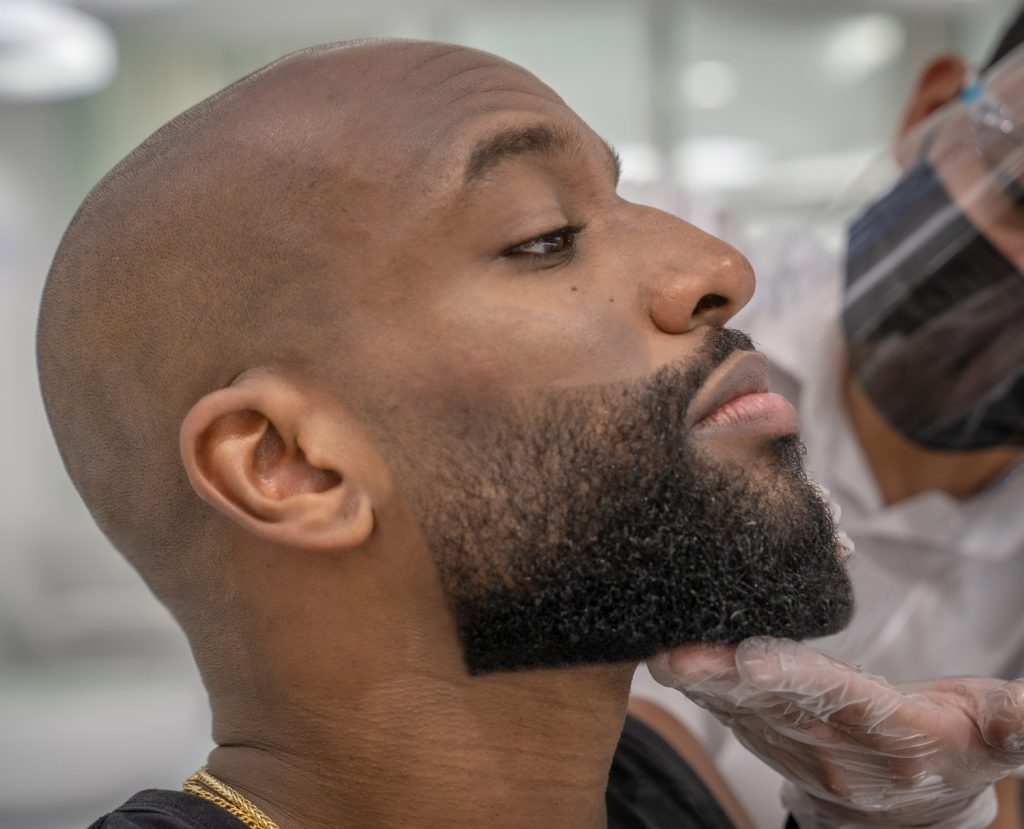
Density and growth establish the direction
Not every part of the beard carries the same amount of growth. Some men have stronger density through the jaw and chin but lighter growth across the cheeks. Others have a strong moustache with limited connection around the mouth. The correct shape uses the strongest areas intelligently. Shorter lengths may expose uneven growth. Additional length may improve coverage, but too much weight can also make the beard look heavy or uncontrolled.
Growth direction matters as well. Facial hair may grow downward in one area, outward in another and rotate around the jaw or neckline. Cutting without respecting that behaviour can create sections that stand away from the face or become difficult to manage at home. The strongest beard is not necessarily the fullest or sharpest beard possible. It is the shape that makes the best use of the growth available.
Growth direction matters as well. Facial hair may grow downward in one area, outward in another and rotate around the jaw or neckline. Cutting without respecting that behaviour can create sections that stand away from the face or become difficult to manage at home. The strongest beard is not necessarily the fullest or sharpest beard possible. It is the shape that makes the best use of the growth available.
The cheek line and neckline complete the structure
The cheek line and neckline create the visible boundaries of the beard. They should not be positioned by habit. A cheek line placed too low can remove useful density and make the beard appear unnecessarily narrow. A neckline taken too high can weaken the lower frame and expose fullness beneath the chin. A neckline left too low may make the beard appear unfinished. The correct line should support the facial structure without looking drawn on simply for the sake of sharpness.
The haircut and beard are one complete frame
The haircut shapes the upper frame of the face. The beard completes the lower frame. The sideburn connection, temple transition, jaw weight, moustache and haircut shape should be considered together. When the haircut and beard are selected separately, each may look technically clean while the complete appearance still feels unfinished.
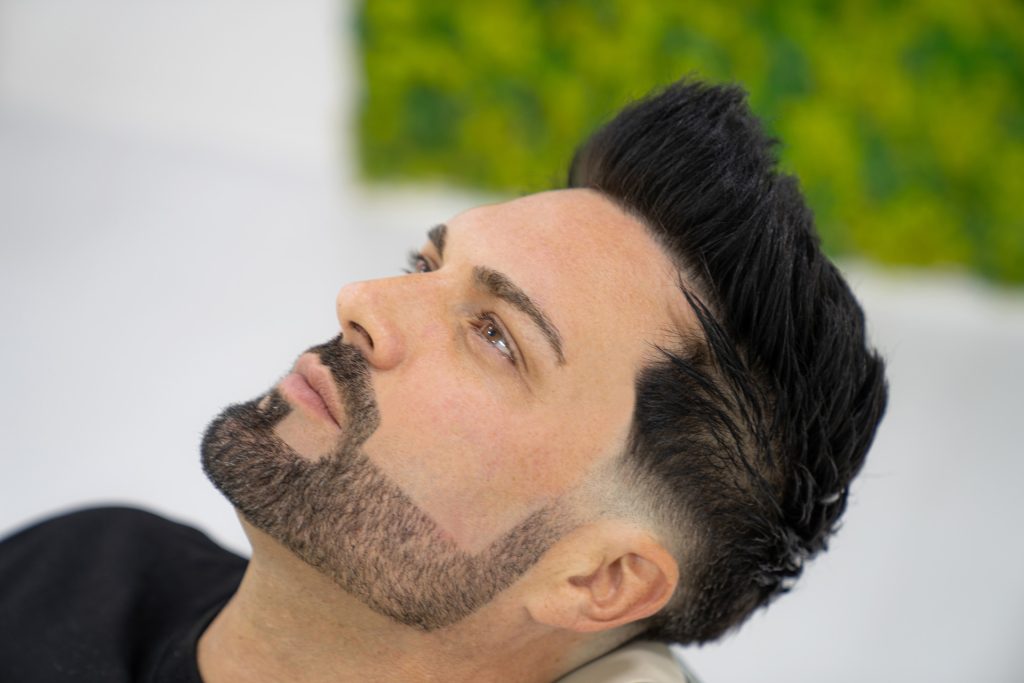
A Beard Is Not the Full Outfit Either
A sharp beard with the wrong haircut is like wearing a tailored jacket with whatever trousers were nearest to the bed. Each piece may survive alone. Together, the mirror still says: Almost. At SKILLS, haircut and beard are considered as one complete frame because the top and bottom of your face should not look like they met for the first time after the service.
Different beard services require different control
The SKILLS beard service may include:
• beard trimming and shaping
• moustache and goatee control
• cheek-line and neckline refinement
• razor line-up
• razor line-up
• natural or sharper finishing
• full clean shaving
• hot-towel shaving
• beard cleansing and styling
• beard colouring
These services belong to the same area of the face, but they are not the same procedure. A full natural beard should not be handled like a short structured beard. A clean shave requires greater attention to skin preparation. A coloured beard requires consideration of tone, facial skin and how closely the colour will sit against the face. The service must follow the result being created rather than repeating one routine with a different guard number.
A beard trim is not measured only by the hair removed
A successful trim may involve removing very little hair. The value is in deciding where length should remain and where weight should be reduced. The shape may need to strengthen the jaw, soften excessive width, preserve useful density, control the moustache or connect more cleanly with the haircut.
The shortest result is not automatically the cleanest result. The sharpest line is not automatically the most suitable line. A beard can remain masculine and controlled without being forced into a shape that does not belong to the person.
The shortest result is not automatically the cleanest result. The sharpest line is not automatically the most suitable line. A beard can remain masculine and controlled without being forced into a shape that does not belong to the person.
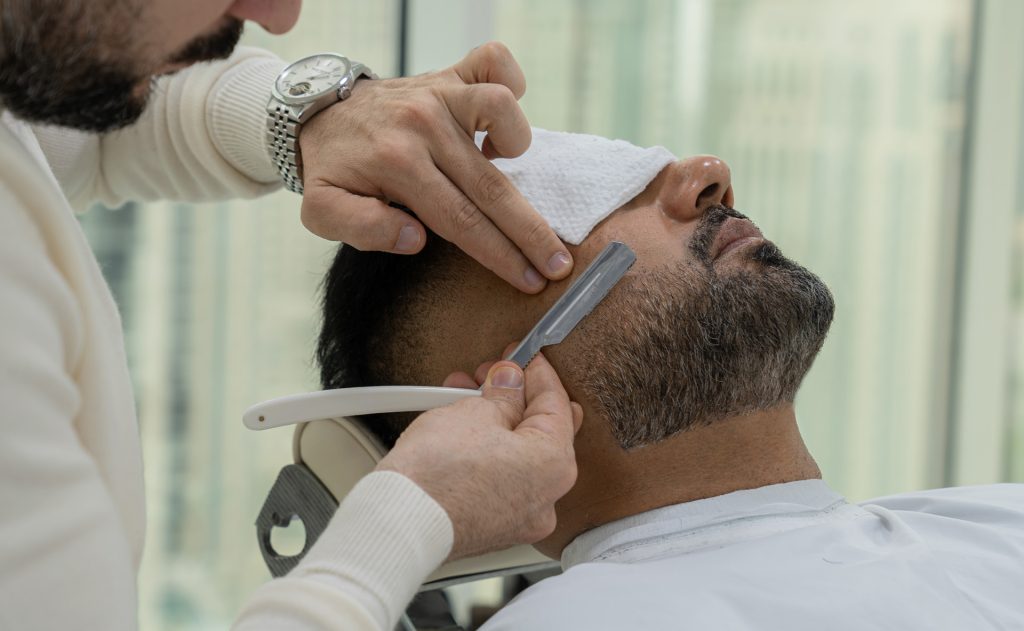
Full shaving begins with the skin
A close shave is not created by applying more pressure or repeatedly shaving against the growth. The skin and facial hair must first be prepared. Cleansing helps remove sweat, oil and buildup. Warmth and moisture help soften the hair and support smoother razor movement. The first shaving direction normally follows the natural growth. A closer second direction may be considered where the skin can tolerate it, but a closer shave is not always a better shave. Excessive aggression can increase redness, irritation, dryness, razor burn and ingrown-hair risk. The objective is to create a clean result while respecting the condition of the skin.
Beard care includes the skin beneath it
The skin beneath a beard continues producing oil, shedding cells and responding to heat, sweat and product buildup. Longer or denser beards can retain moisture, food residue and environmental debris more easily. Regular cleansing helps keep both the facial hair and the skin in a cleaner condition.
Products should also be selected according to the person. Heavy oil or balm can become uncomfortable when applied excessively. Ordinary hair shampoo may be too aggressive for frequent use on facial skin. The product should support the beard rather than coat it unnecessarily.
Products should also be selected according to the person. Heavy oil or balm can become uncomfortable when applied excessively. Ordinary hair shampoo may be too aggressive for frequent use on facial skin. The product should support the beard rather than coat it unnecessarily.
Beard colour should remain believable
Beard colouring can soften grey, deepen the natural tone, balance uneven colour or connect the beard more closely
with the hair. It should not make the beard appear painted onto the face. The direction is influenced by:
• natural beard colour
• natural beard colour
• grey distribution
• beard length and density
• scalp hair colour
• eyebrow colour
• skin tone
• the intended level of change
Very short facial hair places colour close to the skin and can make an unsuitable shade more visible. Complete coverage creates a stronger change. Blending allows some natural variation to remain and often creates a softer result as the beard grows. The beard and scalp hair also do not need to match perfectly. Connection is important. Exact duplication can look artificial.
When beard work may need to wait or change
Certain skin or beard conditions may require the direction to be reconsidered. General concerns can include:
• active irritation
These concerns do not all require the same response. A trim may remain suitable when colour or close shaving is not. A softer natural line may be more appropriate than an aggressive razor finish. A different beard shape may use the strongest areas of growth more successfully. The correct direction depends on the condition and the result being considered.
• active irritation
• open cuts or lesions
• inflamed acne
• severe ingrown hairs
• visible signs of possible infection
• damaged or highly sensitive skin
• a previous significant colour reaction
• beard growth that cannot support the requested shape
These concerns do not all require the same response. A trim may remain suitable when colour or close shaving is not. A softer natural line may be more appropriate than an aggressive razor finish. A different beard shape may use the strongest areas of growth more successfully. The correct direction depends on the condition and the result being considered.
Home care protects the result
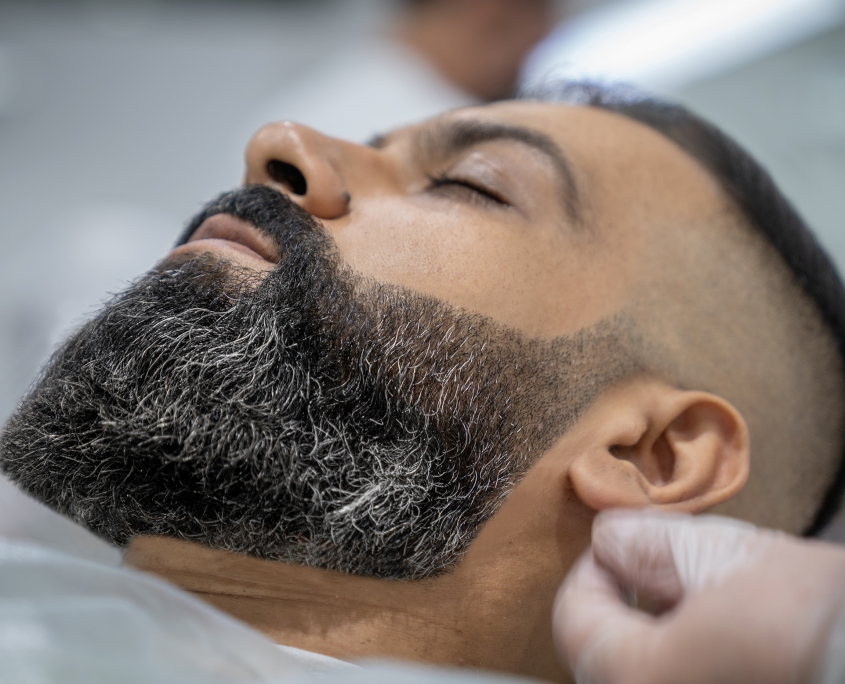
A beard continues changing after the service. Hair grows, lines soften, the moustache becomes longer and the skin condition may change. Useful care may include:
• regular cleansing
• regular cleansing
• drying the beard correctly
• moisturising the skin when required
• using oil or balm selectively
• brushing or directing longer hair
• keeping home tools clean and dry
• avoiding repeated aggressive shaving
• maintaining the original cheek and neckline direction
The client does not need an unnecessary collection of products.
He needs the correct routine for his beard length, skin and intended finish.The Method Behind the SKILLS Beard
The SKILLS Beard Method was developed by Mo Ebrahim around the relationship between facial structure, natural growth, haircut direction, skin condition and the identity the client intends to carry. That thinking is translated into a measured service system rather than left as theory.
The method connects assessment, cleansing, structural planning, tool selection, controlled trimming, line refinement, shaving preparation, skin support, beard colouring where required and practical home guidance. The process is adjusted around the beard's length, density, growth direction, skin condition, desired sharpness and relationship with the haircut. For shaving, beard colouring and other skin-contact services, SKILLS uses its own controlled protocols, selected active ingredients, preparation stages and supporting measures according to the service being performed.
These additional steps are designed to reduce avoidable irritation, improve control over the skin and facial hair and create a cleaner, more considered result. No method removes every variable or guarantees that different skin and beard types will respond identically. The difference is that SKILLS does not treat the beard as hair placed below the face. It is approached as part of the face itself. Many places can shorten a beard, draw a sharp line or apply colour.
The SKILLS difference is knowing what shape should be created, how the skin and facial hair should be supported and how the beard should connect with the complete appearance. The tools create the finish. The method behind them determines whether that finish truly belongs to the person.
The method connects assessment, cleansing, structural planning, tool selection, controlled trimming, line refinement, shaving preparation, skin support, beard colouring where required and practical home guidance. The process is adjusted around the beard's length, density, growth direction, skin condition, desired sharpness and relationship with the haircut. For shaving, beard colouring and other skin-contact services, SKILLS uses its own controlled protocols, selected active ingredients, preparation stages and supporting measures according to the service being performed.
These additional steps are designed to reduce avoidable irritation, improve control over the skin and facial hair and create a cleaner, more considered result. No method removes every variable or guarantees that different skin and beard types will respond identically. The difference is that SKILLS does not treat the beard as hair placed below the face. It is approached as part of the face itself. Many places can shorten a beard, draw a sharp line or apply colour.
The SKILLS difference is knowing what shape should be created, how the skin and facial hair should be supported and how the beard should connect with the complete appearance. The tools create the finish. The method behind them determines whether that finish truly belongs to the person.
Arrange your consultation
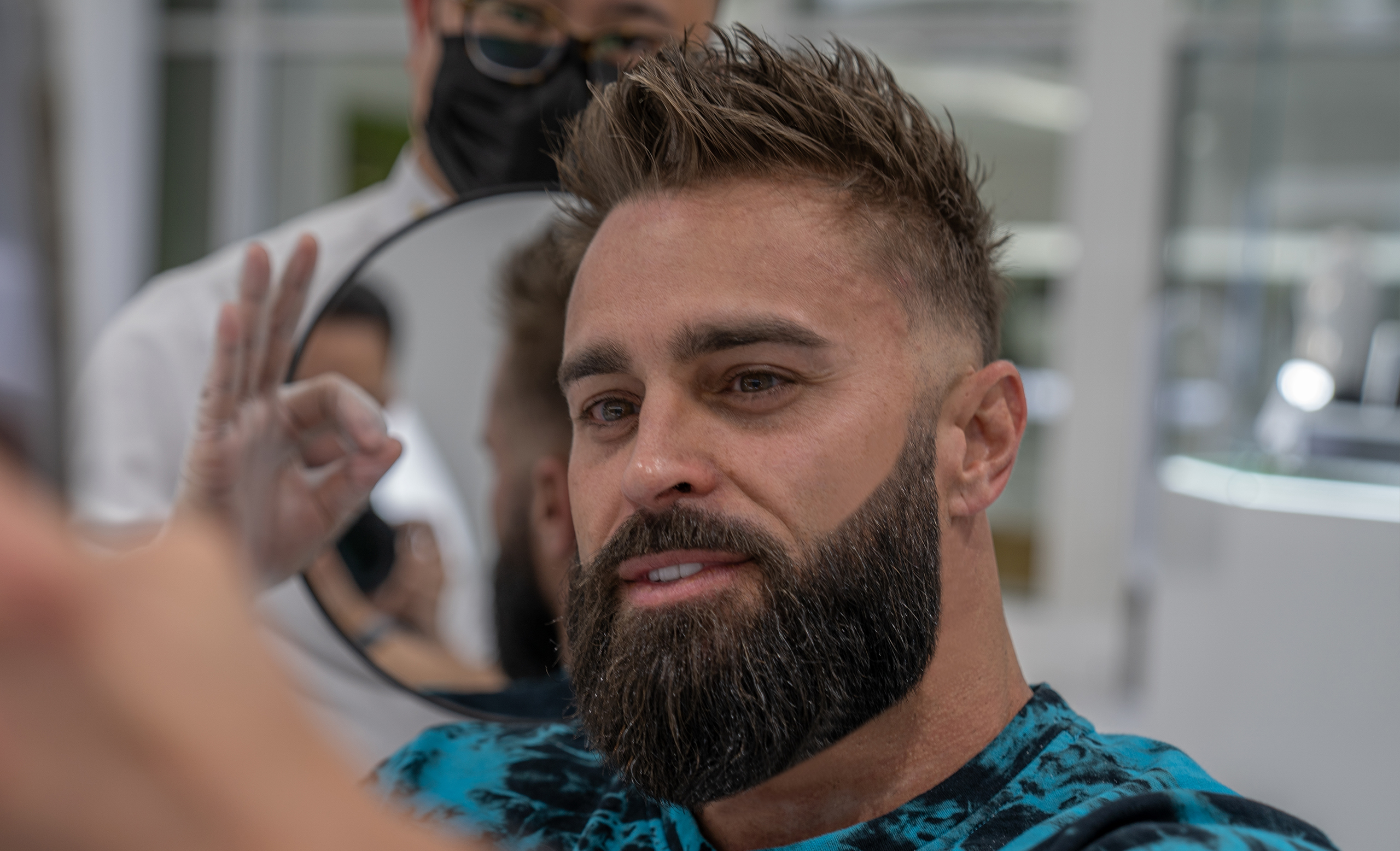
A consultation allows the beard, skin, facial structure, haircut and intended direction to be understood before the service begins. Contact the SKILLS concierge team through WhatsApp or call the salon to arrange your visit.
Founder's Method
For the deeper professional thinking behind facial proportion, beard structure, identity and shape direction, read Mo Ebrahim's Beard Method.
For the deeper thinking behind believable tone, facial integration and controlled beard colour, read Mo Ebrahim's Beard Coloring Method.
For the deeper thinking behind believable tone, facial integration and controlled beard colour, read Mo Ebrahim's Beard Coloring Method.