SKILLS KERATIN TREATMENT METHOD
Men's Keratin Hair Treatment in Dubai
Keratin should not begin with a promise of straight hair. It should begin with the problem the client is actually trying to solve. Some men want less frizz. Some want easier styling. Some want the hair to sit with more discipline in humidity. Others want softer movement without losing the natural character of their hair. Those are not the same request.
At SKILLS, keratin is treated as a controlled cosmetic smoothing service, not an automatic answer for every difficult texture and not a disguised form of permanent straightening. The objective is to reduce unnecessary struggle with the hair while keeping the result believable, wearable and connected to the person.
At SKILLS, keratin is treated as a controlled cosmetic smoothing service, not an automatic answer for every difficult texture and not a disguised form of permanent straightening. The objective is to reduce unnecessary struggle with the hair while keeping the result believable, wearable and connected to the person.
What Keratin Hair Treatment Is Designed to Do
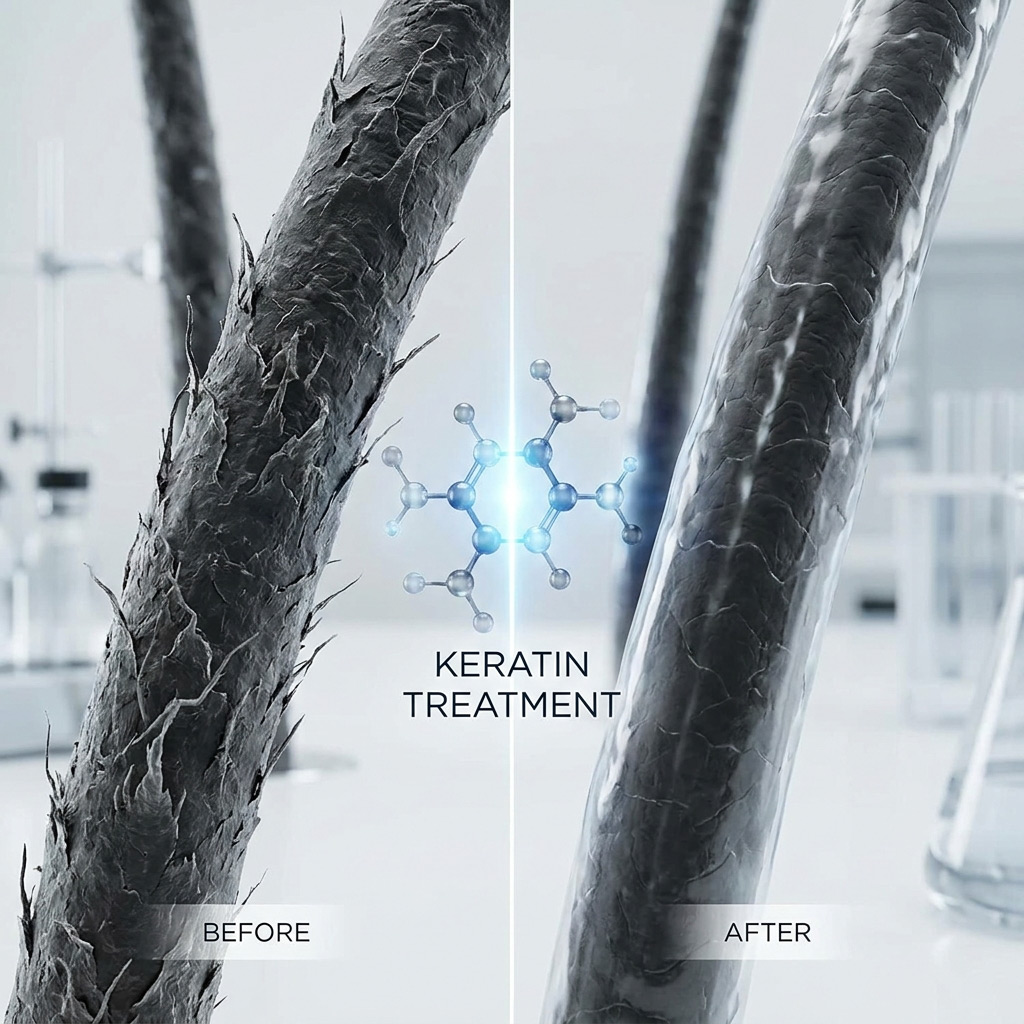
Keratin treatments are generally used to improve surface control and manageability. Depending on the hair and the selected direction, the treatment may support:
• reduced frizz
The strongest result is not always the flattest result. A successful treatment should make the hair easier to live with without removing more movement, body or identity than the client actually wanted to lose.
• reduced frizz
• less puffiness
• smoother movement
• easier blow-drying
• improved softness
• better light reflection
• more controlled response to humidity
• easier daily styling
• a cleaner finish through the lengths and ends
The strongest result is not always the flattest result. A successful treatment should make the hair easier to live with without removing more movement, body or identity than the client actually wanted to lose.
Keratin Is Not Permanent Hair Straightening
This distinction must remain clear. Keratin and cosmetic smoothing treatments are designed primarily to improve control, surface behaviour and manageability. Permanent straightening, relaxing and rebonding change the internal structure of the treated hair more aggressively and belong to a separate chemical service family.
A client who wants softer movement and less frizz does not automatically need structural straightening. A client who wants permanently straight treated lengths may not be asking for keratin at all. Confusing these two directions creates the wrong expectation before the service has even begun.
Keratin may make the hair appear straighter because frizz is reduced, the surface is smoother and the blow-dry becomes easier. That visible change should not be sold as permanent structural straightening.
A client who wants softer movement and less frizz does not automatically need structural straightening. A client who wants permanently straight treated lengths may not be asking for keratin at all. Confusing these two directions creates the wrong expectation before the service has even begun.
Keratin may make the hair appear straighter because frizz is reduced, the surface is smoother and the blow-dry becomes easier. That visible change should not be sold as permanent structural straightening.
The Name "Keratin" Does Not Describe One Identical Service
Different systems can contain different active ingredients, supporting ingredients, heat requirements and finishing instructions. The word on the bottle does not tell the full story. One system may be designed for lighter control. Another may produce stronger smoothing. One may preserve more volume. Another may reduce movement more noticeably.
The result also changes according to the amount applied, the condition of the hair, the sectioning, heat control and the way the treatment is finished. This is why keratin should not be selected only by brand name, trend or the result seen on another person. The direction must be built around the hair receiving it.
The result also changes according to the amount applied, the condition of the hair, the sectioning, heat control and the way the treatment is finished. This is why keratin should not be selected only by brand name, trend or the result seen on another person. The direction must be built around the hair receiving it.
Why the Same Keratin Treatment Looks Different on Different Hair
Two clients can receive the same product and still leave with different results. The outcome may be influenced by:
• natural texture
Fine hair may lose volume quickly if the treatment is too heavy. Dense, coarse hair may require stronger control to achieve the same visible softness. Curly hair may become looser. Wavy hair may appear straighter. Very resistant hair may remain textured while becoming easier to manage. The treatment does not erase the starting point. It works through it.
• natural texture
• curl or wave pattern
• density
• strand thickness
• porosity
• previous colour
• previous bleaching
• earlier smoothing or straightening
• heat exposure
• dryness
• existing damage
• product buildup
• haircut shape
• home maintenance
Fine hair may lose volume quickly if the treatment is too heavy. Dense, coarse hair may require stronger control to achieve the same visible softness. Curly hair may become looser. Wavy hair may appear straighter. Very resistant hair may remain textured while becoming easier to manage. The treatment does not erase the starting point. It works through it.
Frizz Is Not Always the Real Problem
A client may describe the hair as frizzy when the real issue is dryness, buildup, an unsuitable haircut, damaged ends or poor drying technique. Applying a smoothing treatment without understanding the cause may improve the appearance temporarily while leaving the real problem untouched. Frizz can come from:
• humidity
• humidity
• high porosity
• repeated heat
• chemical history
• rough handling
• dry ends
• dry ends
• unsuitable cleansing
• excessive product
• natural texture
• lack of correct styling direction
The answer is not always stronger smoothing. Sometimes the hair needs moisture, controlled cutting, lighter product use or a better routine. The treatment should solve the right problem, not simply silence the word "frizz."
Texture Must Be Respected Before It Is Reduced
Natural movement is not automatically a defect. Some clients want to keep their wave or curl while making the hair easier to control. Others want a noticeably smoother result. The treatment direction should be clear before the application begins. Keratin may:
• soften a curl pattern
These changes can be useful when they are chosen. They become disappointing when the client expected to keep the same movement and discovers afterward that the texture has been reduced more than intended. The correct result begins with deciding how much control is wanted, not simply whether keratin should be applied.
• soften a curl pattern
• reduce volume
• lower puffiness
• change how the hair reacts to humidity
• shorten blow-dry time
• make the hair appear straighter
• alter the way the haircut sits
These changes can be useful when they are chosen. They become disappointing when the client expected to keep the same movement and discovers afterward that the texture has been reduced more than intended. The correct result begins with deciding how much control is wanted, not simply whether keratin should be applied.
Hair Length, Density and Haircut Shape Change the Result
Short hair places the treatment close to the scalp and can reveal volume loss quickly. Medium hair may show the smoothing effect more clearly through movement and styling. Longer hair may carry different conditions from roots to ends, especially where previous colour, heat or older smoothing services remain through the lengths. The haircut also matters. A shape built around natural volume may collapse if too much movement is removed. A haircut that expands excessively may become more balanced when the correct amount of control is added. Keratin should support the haircut. It should not accidentally redesign it.
Previous Chemical History Matters
Hair that has been coloured, bleached, permed, relaxed or previously smoothed cannot be treated as untouched. Earlier chemical work may change:
• porosity
Previously lightened ends may react differently from natural roots. Hair carrying several chemical histories may not respond evenly across the head. A smooth first-day finish does not prove that the fibre was suitable for the process. The condition beneath the finish still matters.
• porosity
• elasticity
• strength
• heat tolerance
• absorption
• absorption
• texture response
• how evenly the treatment develops
Previously lightened ends may react differently from natural roots. Hair carrying several chemical histories may not respond evenly across the head. A smooth first-day finish does not prove that the fibre was suitable for the process. The condition beneath the finish still matters.
Heat Is Part of the Service, Not a Shortcut
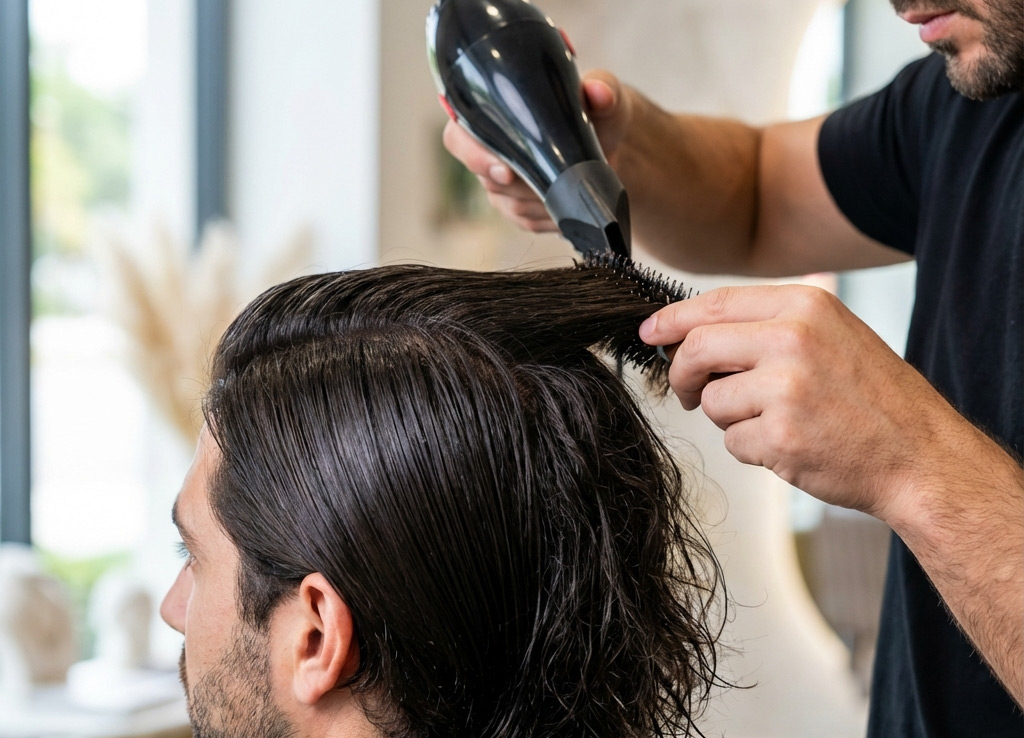
Many keratin systems rely on heat to support the smoothing and finishing process. Heat must not be treated as a race toward the highest temperature. The correct level depends on the product system, strand thickness, porosity, previous chemical history and the condition of the hair. Too little control may leave the result incomplete. Too much heat may place avoidable stress on the fibre.
Professional keratin work is not measured by how much smoke appears or how many times the iron passes over the hair. It is measured by how accurately the system, heat and hair condition are matched.
Professional keratin work is not measured by how much smoke appears or how many times the iron passes over the hair. It is measured by how accurately the system, heat and hair condition are matched.
A Smooth Finish Can Hide an Unsuitable Decision
Keratin can produce a polished result immediately after the service. That does not mean every application was the right decision. The hair may look reflective and controlled because it has been professionally dried and finished. The real result appears after the client begins washing, drying and living with it.
A responsible assessment considers what the hair will feel like later, how much movement will return, whether the ends will remain manageable and whether the client can maintain the new behaviour. The first photograph matters. The weeks after it matter more.
A responsible assessment considers what the hair will feel like later, how much movement will return, whether the ends will remain manageable and whether the client can maintain the new behaviour. The first photograph matters. The weeks after it matter more.
When Keratin May Be the Wrong Direction
Keratin may need to be reconsidered where the hair or scalp is not in a suitable condition for the intended process. General concerns include:
• active breakage
• active breakage
• unstable elasticity
• severely overprocessed hair
• extreme porosity
• heavy product buildup
• very recent major chemical work
• an unclear chemical history
• active scalp irritation
• open or compromised skin
• a previous significant reaction
• respiratory sensitivity to strong treatment vapour
• an expectation of permanent straightening
• hair that cannot responsibly tolerate the required heat
These concerns do not all lead to the same answer.
Some may require recovery time.
Some may need a lighter smoothing direction.
Some may require testing.
Others may belong to deep conditioning, structural straightening or another treatment family entirely.
The purpose is not to make keratin sound difficult.
It is to stop one familiar treatment name from being used as the answer to every hair problem.What Keratin Can Realistically Improve
A suitable keratin treatment may support:
• smoother surface behaviour
It cannot honestly promise:
• permanent straightness
The value of keratin is not in pretending it can do everything. Its value is in doing the right job for the right hair.
• smoother surface behaviour
• less frizz
• reduced puffiness
• easier blow-drying
• improved manageability
• softer movement
• better shine
• a cleaner finish
• more control in humidity
• reduced daily styling effort
It cannot honestly promise:
• permanent straightness
• permanent repair of damaged hair
• zero texture change
• zero volume change
• identical results for every client
• complete protection from future damage
• one fixed lifespan for every head of hair
• that unsuitable hair becomes healthy because it looks smooth
The value of keratin is not in pretending it can do everything. Its value is in doing the right job for the right hair.
Longevity Is Influenced by Daily Life
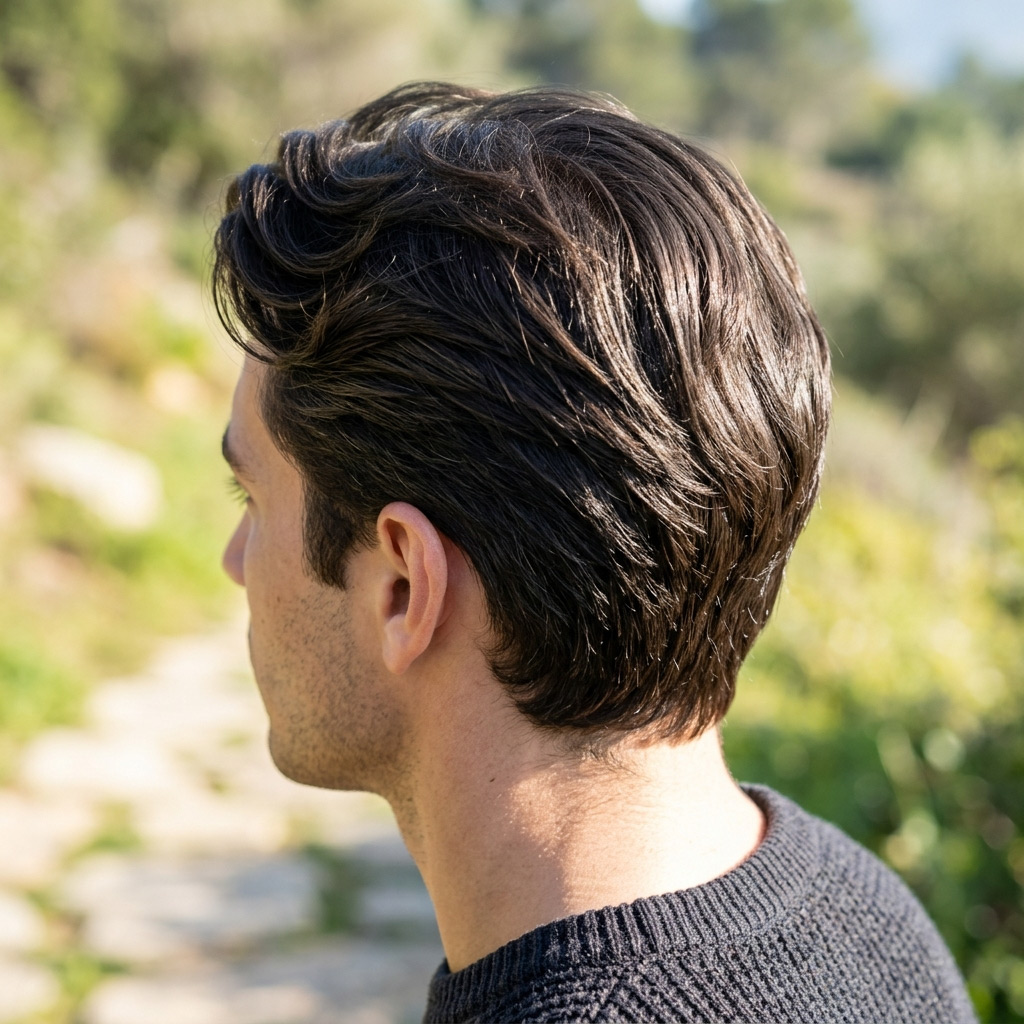
Keratin results gradually change. The effect may soften as the hair is washed, exposed to heat, humidity, swimming, minerals and everyday styling. Longevity may be influenced by:
• the selected system
• natural texture
• porosity
• washing frequency
• shampoo choice
• heat exposure
• swimming
• water quality
• previous chemical history
• home care
There is no honest universal lifespan that applies to every client.
A stronger smoothing result may remain noticeable longer than a lighter control treatment.
New growth will also emerge in the natural texture.
The treatment should therefore be chosen around the level of maintenance the client is prepared to carry.Aftercare Should Protect the Result Without Becoming a Full-Time Job
The client should understand how to maintain the treatment without being handed an unnecessary shelf of products. Guidance may include:
• when the hair may be washed
The exact instruction depends on the system used and the hair treated. The correct routine is not the most complicated one. It is the one that protects the result and can be followed consistently.
• when the hair may be washed
• suitable shampoo and conditioner
• controlled washing frequency
• reduced excessive heat
• careful swimming habits
• gentler drying
• avoiding uncontrolled home chemicals
• maintaining moisture where required
• recognising unusual dryness or stiffness
The exact instruction depends on the system used and the hair treated. The correct routine is not the most complicated one. It is the one that protects the result and can be followed consistently.
The SKILLS Perspective
At SKILLS, keratin is not sold as a fashionable bottle, a shortcut to straight hair or an automatic upgrade added to every service. It is selected only when smoother behaviour, easier styling and controlled texture genuinely improve the client's hair and daily life. The decision includes the person as well as the strand. Haircut, face, natural movement, profession, routine and the amount of volume the client wants to keep all influence the direction.
A successful treatment should make the hair easier to carry without making the person feel that his own texture has been erased by accident. The application creates the visible change. The judgement behind the degree of change is what makes the result belong to the client.
A successful treatment should make the hair easier to carry without making the person feel that his own texture has been erased by accident. The application creates the visible change. The judgement behind the degree of change is what makes the result belong to the client.
The Method Behind SKILLS Keratin Hair Treatment
The SKILLS Keratin Method was developed by Mo Ebrahim around one principle: Smoothing should be measured, not maximised. That thinking is translated into a treatment protocol created exclusively for SKILLS. The method connects hair-history reading, texture assessment, porosity, elasticity, density, selected active ingredients, supporting ingredients, preparation, controlled application, measured heat and treatment-specific finishing.
The protocol is adjusted because fine hair, dense hair, coloured hair, bleached hair, resistant texture and previously smoothed lengths cannot be handled through one mechanical routine. SKILLS uses its own studied steps and supporting combinations to improve control over softness, frizz, movement and manageability while reducing avoidable heaviness, unnecessary texture loss and excess stress as far as reasonably possible.
The formula is not applied first and justified afterward. The hair is read first. Then the treatment is built around what should change, what should remain and how the result must behave after the client leaves. No method can remove every chemical variable or guarantee that different hair will respond identically.
The difference is that SKILLS does not measure keratin by how flat the hair becomes. It measures the service by how intelligently the hair becomes easier to live with. Many places can apply a smoothing product and create shine under salon lights. The SKILLS difference is knowing how much control the hair needs, how much identity it should keep and how to build the treatment between those two decisions.
The protocol is adjusted because fine hair, dense hair, coloured hair, bleached hair, resistant texture and previously smoothed lengths cannot be handled through one mechanical routine. SKILLS uses its own studied steps and supporting combinations to improve control over softness, frizz, movement and manageability while reducing avoidable heaviness, unnecessary texture loss and excess stress as far as reasonably possible.
The formula is not applied first and justified afterward. The hair is read first. Then the treatment is built around what should change, what should remain and how the result must behave after the client leaves. No method can remove every chemical variable or guarantee that different hair will respond identically.
The difference is that SKILLS does not measure keratin by how flat the hair becomes. It measures the service by how intelligently the hair becomes easier to live with. Many places can apply a smoothing product and create shine under salon lights. The SKILLS difference is knowing how much control the hair needs, how much identity it should keep and how to build the treatment between those two decisions.
Arrange your consultation
A consultation allows the natural texture, chemical history, current condition, intended level of smoothing and maintenance expectations to be understood before the treatment is selected. Contact the SKILLS concierge team through WhatsApp or call the salon to arrange the assessment.
Founder's Method
For the deeper professional thinking behind treatment selection, fibre condition and choosing strength support only after the hair is understood, read Mo Ebrahim's Hair Treatment Method.