SKILLS HAIRCUT METHOD
Men's Haircut Service in Dubai
A haircut should not begin with a clipper number or a photograph.
It should begin with the person.
The same haircut can strengthen one man's appearance and work against another.
Hair texture, density, growth direction, head structure, facial proportion, hairline, lifestyle and maintenance ability all
influence whether a shape will continue to work after the client leaves the salon.
The objective is not simply to shorten the hair or reproduce a style seen on someone else. It is to create a haircut that belongs to the client, supports his appearance and remains manageable in daily life.
The objective is not simply to shorten the hair or reproduce a style seen on someone else. It is to create a haircut that belongs to the client, supports his appearance and remains manageable in daily life.
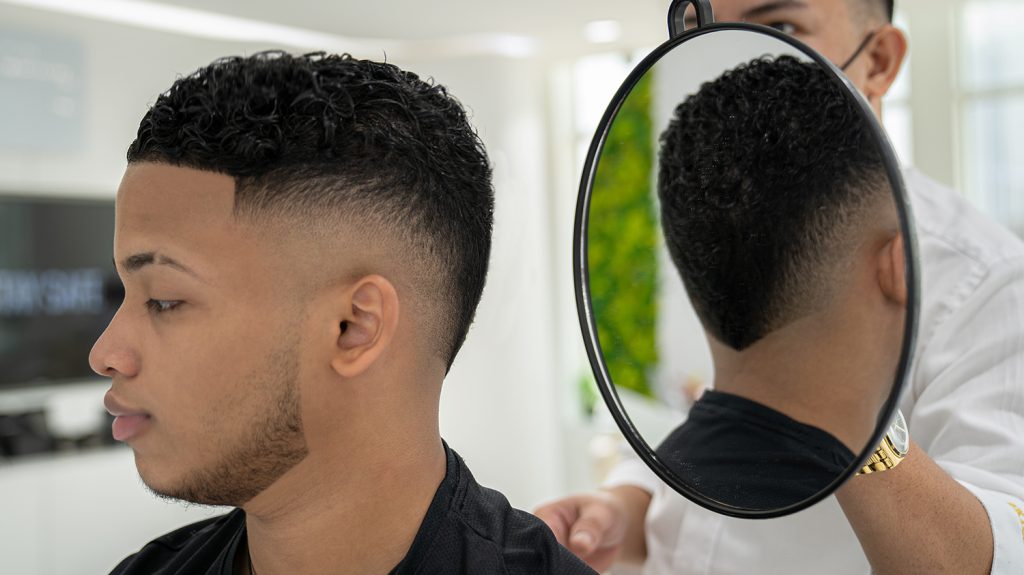
What a haircut actually changes
A haircut changes more than length. It changes:
• the shape surrounding the face
Removing hair from one area can make another area appear wider, narrower, stronger or more exposed. A shorter side can sharpen the outline of the face. Additional weight around the temples may soften it. Volume at the top can change the apparent proportion of the head. A fringe can alter how the forehead and hairline are seen. The visible haircut is therefore created through a series of connected decisions, not through one guard number or one cutting technique.
• the shape surrounding the face
• the balance between the top and sides
• how much weight the hair carries
• where volume appears
• how the hairline is presented
• how the head structure is read
• how the beard connects with the haircut
• how easily the hair can be styled
• how the result behaves as it grows
Removing hair from one area can make another area appear wider, narrower, stronger or more exposed. A shorter side can sharpen the outline of the face. Additional weight around the temples may soften it. Volume at the top can change the apparent proportion of the head. A fringe can alter how the forehead and hairline are seen. The visible haircut is therefore created through a series of connected decisions, not through one guard number or one cutting technique.
Why the same reference photograph cannot work identically on everyone
A photograph can communicate the client's intention. It may show the desired length, movement, sharpness, texture or overall mood. What it cannot show is how the same haircut will behave on another person. The model in the photograph may have different:
• hair thickness
• hair thickness
• density
• natural movement
• growth direction
• hairline
• head shape
• facial structure
• styling routine
• product use
• maintenance commitment
• maintenance commitment
A haircut can be inspired by the photograph without being copied mechanically. The useful part of the reference is the intention behind it. That intention must then be translated into a shape that works with the client's actual hair and appearance.
Hair texture controls how the shape behaves
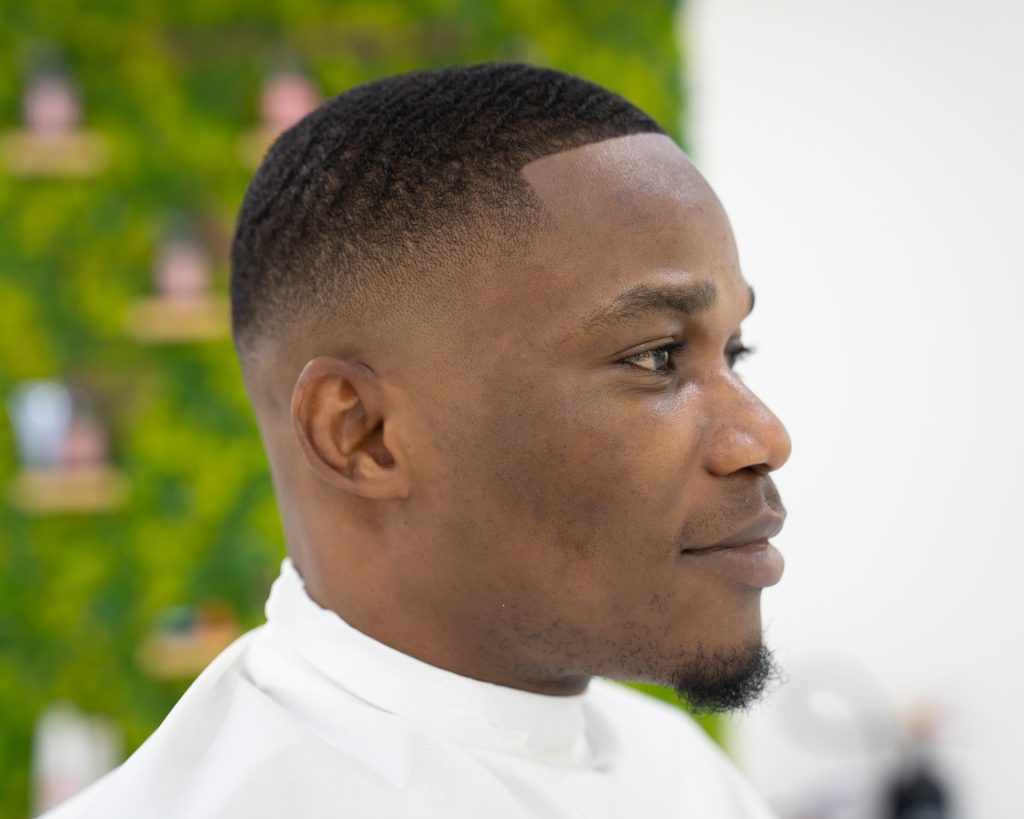
Straight, wavy, curly and tightly textured hair do not respond to cutting in the same way.
Straight hair may reveal every line, weight difference and irregularity clearly.
Wavy hair can create movement but may change direction as it dries.
Curly hair can contract significantly and appear shorter once tension is released.
Thicker textured hair may require controlled weight removal without disturbing the pattern or creating unnecessary
expansion.
The same length can therefore look and behave very differently depending on the natural structure. The haircut must account for how the hair sits when wet, how it returns when dry and how it behaves without professional styling.
The same length can therefore look and behave very differently depending on the natural structure. The haircut must account for how the hair sits when wet, how it returns when dry and how it behaves without professional styling.
Density and thickness are different
Density describes how much hair is present across an area.
Thickness describes the size of the individual strand.
A client may have fine individual strands but high overall density.
Another may have thick strands with lower density.
These differences influence how much weight can be removed and how much scalp may become visible.
Excessive removal from lower-density hair can expose the scalp and weaken the appearance. Insufficient weight control in very dense hair can create unnecessary width, bulk or difficulty in styling. A strong haircut uses the available density intelligently rather than treating every area as though it contains the same amount of hair.
Excessive removal from lower-density hair can expose the scalp and weaken the appearance. Insufficient weight control in very dense hair can create unnecessary width, bulk or difficulty in styling. A strong haircut uses the available density intelligently rather than treating every area as though it contains the same amount of hair.
Growth direction must be respected
Hair does not grow straight outward in one predictable pattern.
The crown may rotate.
The front may rise, split or fall to one side.
The temples may grow backward or outward.
The neckline can contain several conflicting directions.
These patterns affect how short the hair can be taken and where additional length may be required.
Cutting against the natural behaviour without a clear reason can create areas that stand up, separate or become difficult to control once the client washes the hair at home. The strongest result does not always fight the growth pattern. Often, it uses that pattern to create movement and reduce unnecessary daily effort.
Cutting against the natural behaviour without a clear reason can create areas that stand up, separate or become difficult to control once the client washes the hair at home. The strongest result does not always fight the growth pattern. Often, it uses that pattern to create movement and reduce unnecessary daily effort.
Head and facial structure influence the direction
The haircut creates a frame around the face and changes how the complete head is perceived. The direction may be influenced by:
• forehead proportion
• temple width
The objective is not to force every face into one idealised category. It is to understand what the haircut should strengthen, balance, soften or leave undisturbed. A shape that creates authority for one client may appear severe on another. A softer direction may support one face while removing needed definition from another. The correct haircut is the one that works with the individual rather than competing with him.
• forehead proportion
• temple width
• cheekbone structure
• jawline
• facial length
• head width
• crown shape
• occipital structure
• hairline position
• beard shape
The objective is not to force every face into one idealised category. It is to understand what the haircut should strengthen, balance, soften or leave undisturbed. A shape that creates authority for one client may appear severe on another. A softer direction may support one face while removing needed definition from another. The correct haircut is the one that works with the individual rather than competing with him.
A Haircut Is Not the Full Outfit
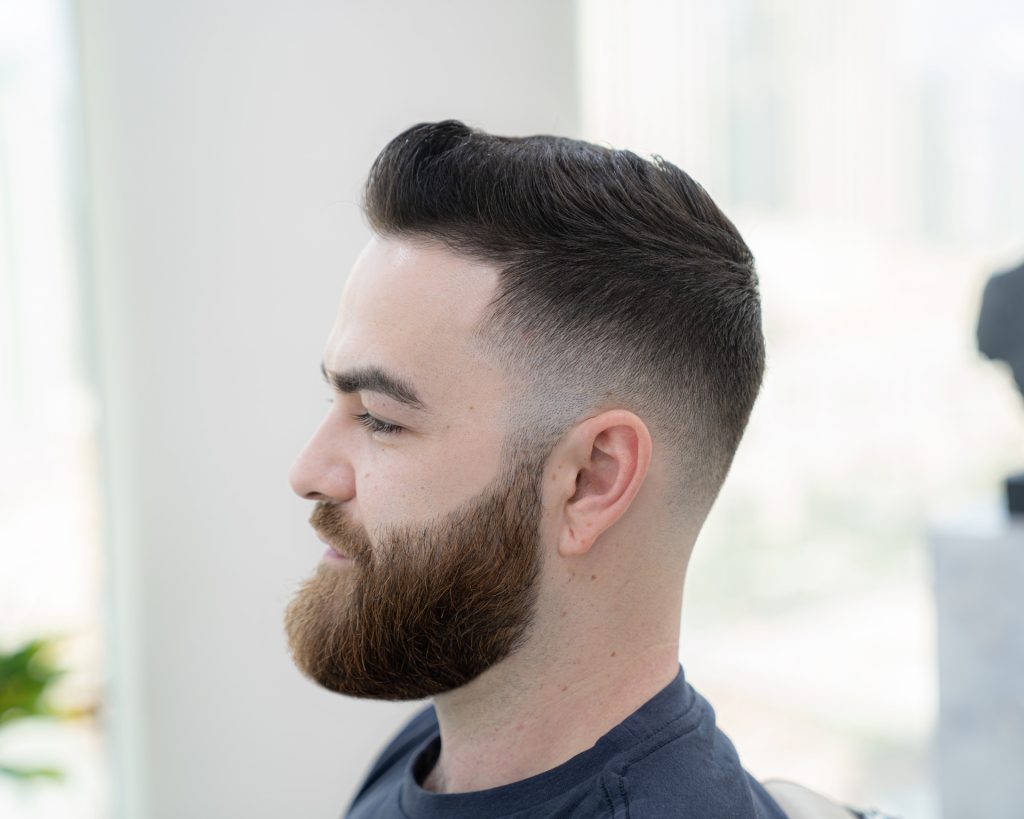
A haircut alone is like choosing a great T-shirt and calling yourself fully dressed.
It may look good, but the beard is what completes the frame.
When the haircut and beard are not selected together, the mirror usually has one word left:
Almost.
At SKILLS, both are designed as one complete appearance, because your face should not look like two different
decisions met by accident.
Every haircut family requires its own control
SKILLS provides the full range of men's haircut work, including:
• classic haircuts
These categories describe the visible direction. They do not replace assessment. A fade must still connect correctly with the top, hairline, head structure and beard. A longer haircut must still manage weight, movement and shape. A classic haircut must still respond to the person's texture, age, profession and maintenance habits. The name of the haircut does not determine the quality. The decisions within it do.
• classic haircuts
• short structured cuts
• fades
• gradual transitions
• scissor-led haircuts
• clipper-led haircuts
• longer hairstyles
• textured cuts
• restyling
• complete transformations
These categories describe the visible direction. They do not replace assessment. A fade must still connect correctly with the top, hairline, head structure and beard. A longer haircut must still manage weight, movement and shape. A classic haircut must still respond to the person's texture, age, profession and maintenance habits. The name of the haircut does not determine the quality. The decisions within it do.
A fade is not only a number
Clients often describe a fade through the shortest guard number. That number explains only one part of the service. The final result is also influenced by:
• where the fade begins
A very high or highly contrasted fade can lengthen or narrow the appearance of the head. A lower transition may preserve more weight and create a softer outline. The cleanest fade is not automatically the most suitable fade. The direction must support the complete haircut and the person carrying it.
• where the fade begins
• how high it travels
• the shape of the transition
• the amount of contrast
• the connection with the top
• the density around the temples
• the hairline
• scalp visibility
• head structure
• beard connection
A very high or highly contrasted fade can lengthen or narrow the appearance of the head. A lower transition may preserve more weight and create a softer outline. The cleanest fade is not automatically the most suitable fade. The direction must support the complete haircut and the person carrying it.
Longer hair requires structure, not only length
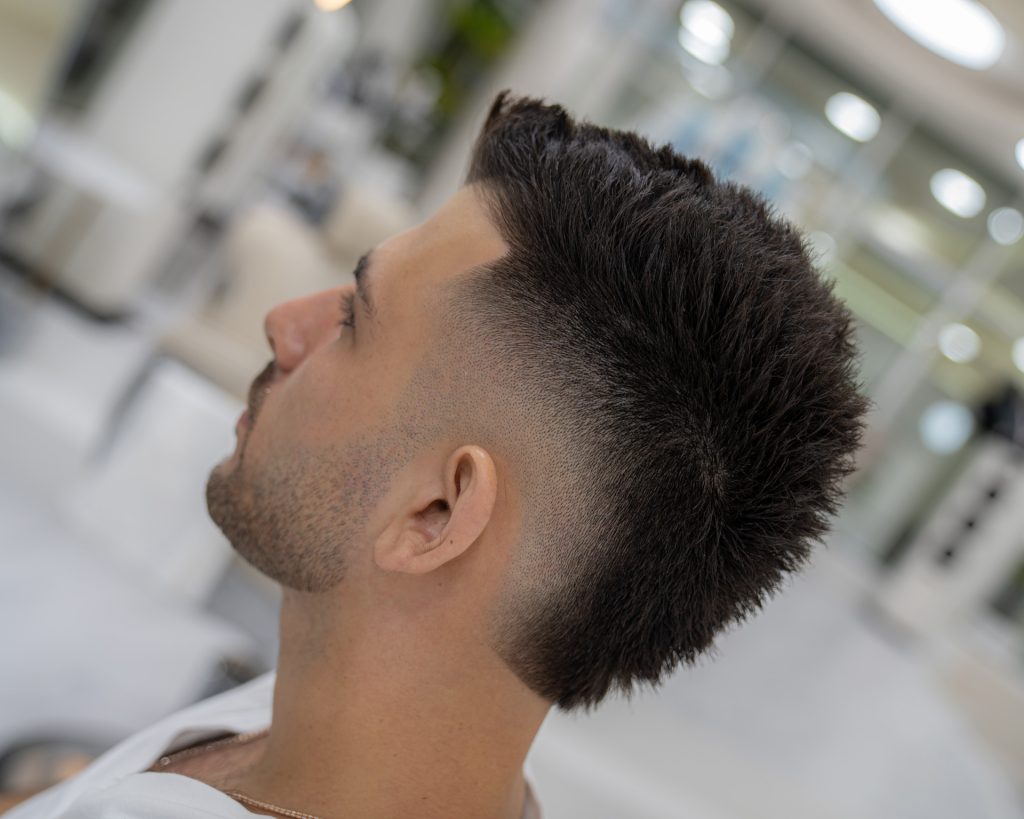
Keeping the hair longer does not mean leaving it without control. Longer styles require decisions about:
• internal weight
Removing too much weight can weaken the shape or create unwanted expansion. Leaving too much can make the hair heavy, flat or difficult to manage. The purpose is to preserve the length the client values while creating enough structure for the hair to move and settle correctly.
• internal weight
• external shape
• movement
• layering
• balance
• connection
• natural fall
• styling direction
• how the hair will grow between visits
Removing too much weight can weaken the shape or create unwanted expansion. Leaving too much can make the hair heavy, flat or difficult to manage. The purpose is to preserve the length the client values while creating enough structure for the hair to move and settle correctly.
Restyling requires a transition plan
A major haircut change should be considered beyond the first appointment.
Moving from long to short hair, changing the parting, exposing the hairline or rebuilding an unsuitable shape can change
how the client sees himself.
The new direction may also require different products, styling habits and maintenance timing.
Where the current haircut contains imbalance, excessive removal or disconnected areas, the ideal result may require
growth before the complete correction can be achieved.
A transformation is strongest when the client understands both the immediate change and the way the shape will
develop afterward.
Haircut and hairstyle are not the same thing
The haircut is the structure. The hairstyle is the way that structure is dried, directed and finished.
Styling can temporarily create volume, smoothness, separation or control.
It cannot permanently correct a weak foundation.
A haircut may look successful in the chair because it has been professionally dried and supported with product, then
lose its direction after the first wash.
The structure must work before styling is used to present it.
The final appearance will still be influenced by:
• natural texture
The purpose of styling is to reveal the haircut and show the client how it can be worn. It should not be used to disguise a shape that will fail without professional assistance.
• natural texture
• density
• drying direction
• product choice
• washing routine
• humidity
• heat
• daily maintenance
The purpose of styling is to reveal the haircut and show the client how it can be worn. It should not be used to disguise a shape that will fail without professional assistance.
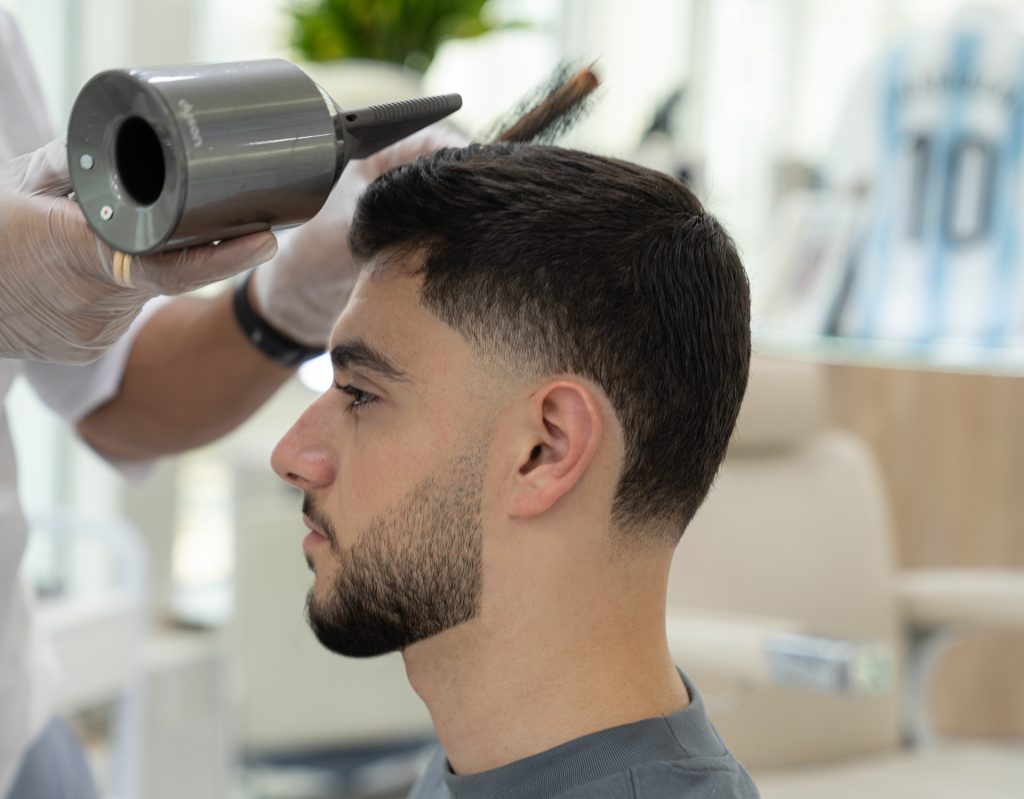
Cleansing supports the accuracy of the haircut
Hair behaves differently when it is clean and free from previous product, oil and environmental buildup.
Cleansing before the haircut allows the natural texture, density and movement to be observed more accurately.
It also helps reveal how the hair sits when it is no longer controlled by the client's earlier styling direction.
After the main technical work, cleansing removes loose hair and residue before the result is reviewed again. This creates an important second reading of the haircut. The shape can be checked when the hair is clean, settled and no longer carrying the remains of the cutting process. The client should not leave covered in loose hair. He should leave clean, refreshed and able to return to his day confidently.
After the main technical work, cleansing removes loose hair and residue before the result is reviewed again. This creates an important second reading of the haircut. The shape can be checked when the hair is clean, settled and no longer carrying the remains of the cutting process. The client should not leave covered in loose hair. He should leave clean, refreshed and able to return to his day confidently.
Quality control happens before the final styling
The service is not considered complete when the main cutting has finished. The haircut is reviewed for:
• overall shape
Where refinement is required, it should happen before the final styling creates a polished surface. Product is then selected according to the hair, scalp, haircut and intended finish. The purpose is to support the result without making the client dependent on an excessive amount of product to hold the structure together.
• overall shape
• balance
• weight
• transitions
• movement
• hairline connection
• crown behaviour
• relationship with the face and beard
• how the hair settles after cleansing
Where refinement is required, it should happen before the final styling creates a polished surface. Product is then selected according to the hair, scalp, haircut and intended finish. The purpose is to support the result without making the client dependent on an excessive amount of product to hold the structure together.
The haircut should work beyond the salon
A strong haircut must continue working after the client washes and styles it himself. The client should understand:
• how the haircut is intended to sit
The objective is not to turn every client into a professional stylist. It is to give him enough understanding to reproduce a controlled version of the result within his own routine.
• how the haircut is intended to sit
• where the natural direction begins
• how to dry the hair
• how much product is required
• what product category supports the finish
• what may cause the shape to collapse
• how the haircut will change as it grows
• when refinement is likely to be required
The objective is not to turn every client into a professional stylist. It is to give him enough understanding to reproduce a controlled version of the result within his own routine.
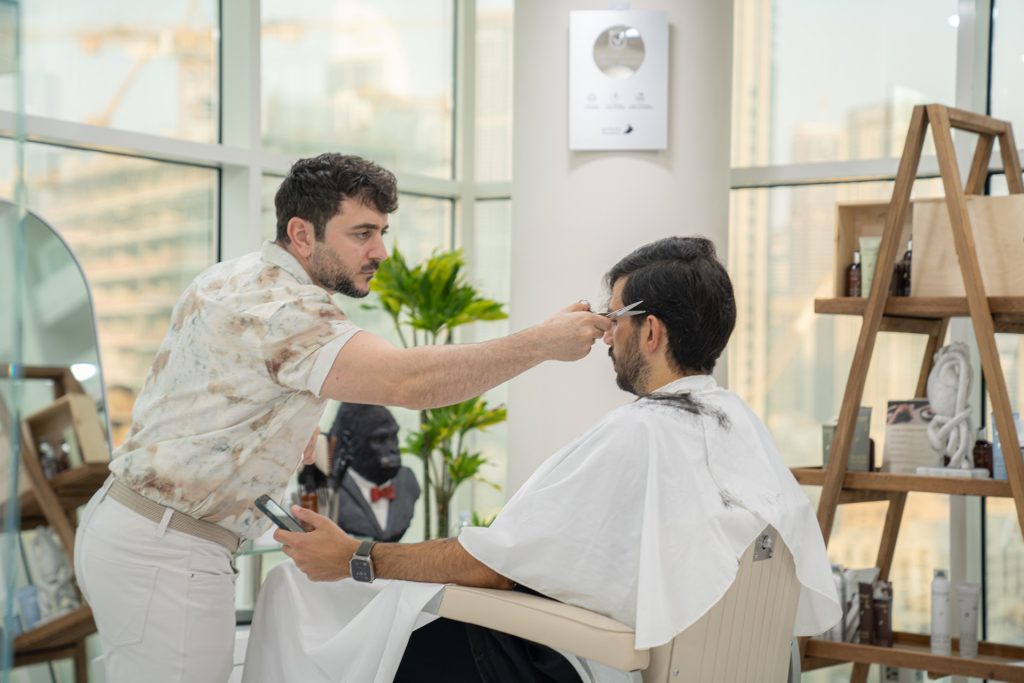
The Method Behind the SKILLS Haircut
The SKILLS haircut service is built from a methodology developed by Mo Ebrahim and translated into a controlled
service sequence that can be delivered consistently.
It begins with assessment, but it does not end with selecting a flattering style.
The method connects consultation, cleansing, structural planning, tool selection, weight control, technical execution, second cleansing, quality review, final styling and home guidance. Each stage is used to answer a different part of the haircut decision. The process is not repeated mechanically for every client. It is adjusted around the person's texture, density, growth, head and facial structure, current haircut, intended identity and ability to maintain the result. Scissors, clippers and finishing tools are selected only after the shape has been understood. No tool determines the method by itself. This is what separates a routine haircut from the SKILLS approach.
Many places can remove length, create a fade or reproduce the outline of a photograph. The SKILLS difference is the complete system used to decide what should be created, control how it is executed and ensure that the client understands how to carry it afterward. The cutting creates the visible shape. The method behind it is what makes that shape belong to the person.
The method connects consultation, cleansing, structural planning, tool selection, weight control, technical execution, second cleansing, quality review, final styling and home guidance. Each stage is used to answer a different part of the haircut decision. The process is not repeated mechanically for every client. It is adjusted around the person's texture, density, growth, head and facial structure, current haircut, intended identity and ability to maintain the result. Scissors, clippers and finishing tools are selected only after the shape has been understood. No tool determines the method by itself. This is what separates a routine haircut from the SKILLS approach.
Many places can remove length, create a fade or reproduce the outline of a photograph. The SKILLS difference is the complete system used to decide what should be created, control how it is executed and ensure that the client understands how to carry it afterward. The cutting creates the visible shape. The method behind it is what makes that shape belong to the person.
Arrange your consultation
A consultation allows the requested haircut, current shape, hair behaviour, intended direction and maintenance needs to
be understood before the service begins.
Contact the SKILLS concierge team through WhatsApp or call the salon to arrange your visit.
Founder's Method
For the deeper professional thinking behind identity, facial proportion, structure and haircut direction, read Mo Ebrahim's
Haircut Method.