SKILLS CHEMICAL STRAIGHTENING METHOD
Men's Hair Straightening and Chemical Texture Control in Dubai
Wanting straighter hair is not enough reason to chemically change it. The first decision is whether the hair can responsibly carry that change. Structural straightening, relaxing and rebonding are not styling tricks. They alter the treated fibre so that its natural pattern is reduced or replaced.
New growth will still emerge with the client's natural texture, but the chemically changed lengths do not simply return to their original pattern. That makes the consultation more important than the procedure. At SKILLS, preference opens the conversation. Suitability decides whether the service happens.
New growth will still emerge with the client's natural texture, but the chemically changed lengths do not simply return to their original pattern. That makes the consultation more important than the procedure. At SKILLS, preference opens the conversation. Suitability decides whether the service happens.
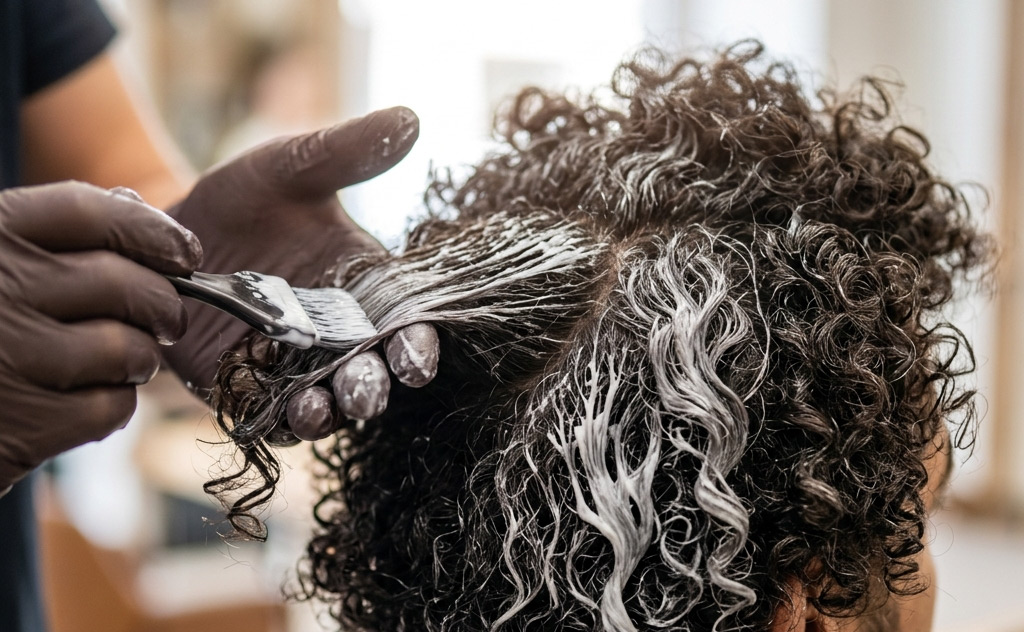
Structural Straightening Is Not Keratin
Keratin and cosmetic smoothing are mainly selected to improve frizz control, surface discipline and manageability where suitable. Structural straightening belongs to a different category. Its purpose is to create a stronger and more lasting change in the treated hair pattern. Depending on the approved direction, that may mean reducing curl, controlling resistant volume, relaxing selected areas or creating a straighter result through the full length.
A client who wants easier styling may not need structural change. A client who wants completely straight hair may not have hair capable of carrying it responsibly. The correct service begins by separating the result the client wants from the chemistry required to create it.
A client who wants easier styling may not need structural change. A client who wants completely straight hair may not have hair capable of carrying it responsibly. The correct service begins by separating the result the client wants from the chemistry required to create it.
"Smoothing" Is Not One Clear Treatment
The word smoothing is used across the market for very different services. Some treatments mainly condition the surface and reduce frizz. Others use heat and chemical action to produce a much stronger texture change. Some are temporary. Others permanently alter the treated section. The name alone does not explain:
• how strongly the fibre will be changed
• how strongly the fibre will be changed
• whether the result is temporary or structural
• how much heat is required
• whether the formula is compatible with previous work
• what risks exist for the hair, scalp and shared environment
At SKILLS, the treatment is classified by what it actually does, not by the softer name used to sell it.
The Degree of Straightness Must Be Chosen
Chemical straightening is not only a choice between curly and completely straight. The client may want:
These are different outcomes. Removing every trace of movement may not improve the haircut, face or daily styling. Short hair can lose useful body quickly. Medium and longer hair may reveal uneven history through roots, lengths and ends. The best result is not automatically the flattest result. It is the degree of change that improves the client without taking the hair further than it can responsibly go.
• less curl
• lower volume
• softer movement
• easier control through resistant areas
• straighter sides or fringe
• a more uniform pattern
• full structural straightening
These are different outcomes. Removing every trace of movement may not improve the haircut, face or daily styling. Short hair can lose useful body quickly. Medium and longer hair may reveal uneven history through roots, lengths and ends. The best result is not automatically the flattest result. It is the degree of change that improves the client without taking the hair further than it can responsibly go.
Partial Straightening Still Carries Full Responsibility
A small section does not mean a small decision. Straightening only the fringe, sides, crown, roots or another selected area can create a visible difference between treated and untreated hair. It can also create a joining line that must be maintained carefully as the natural texture grows. The selected area must connect with the remaining haircut.
The future retouch must be possible without repeatedly covering previously changed hair. Partial work is valuable when it solves a specific problem. It becomes poor work when one section is chemically forced without considering how the entire head will behave afterward.
The future retouch must be possible without repeatedly covering previously changed hair. Partial work is valuable when it solves a specific problem. It becomes poor work when one section is chemically forced without considering how the entire head will behave afterward.
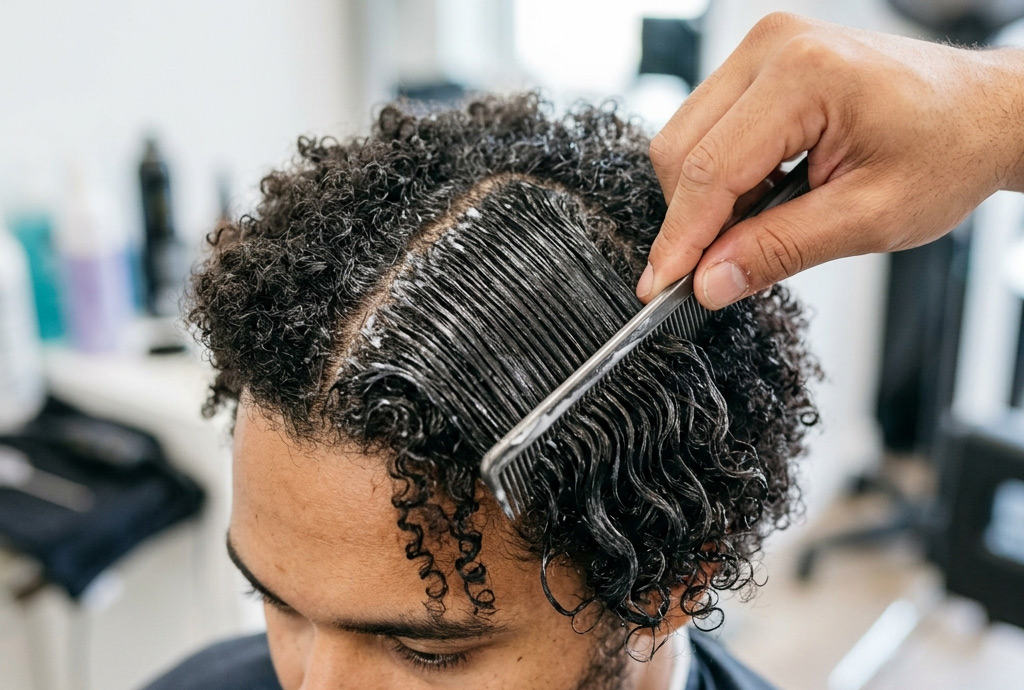
Previous Chemical History Changes Everything
Hair may look strong while carrying several different histories. Natural roots may meet coloured mid-lengths. Older ends may carry bleach, previous straightening, perming, heat or home treatments. Those areas do not share the same resistance. Relevant history may include:
• colour and colour correction
• colour and colour correction
• bleaching or highlights
• previous relaxing or rebonding
• keratin or stronger smoothing
• perming
• repeated high heat
• compound henna or unclear home chemicals
• earlier overlap
• breakage that has been cut and hidden
The history determines what may be compatible, what may require testing and what should not be combined. Silence about a previous service does not protect the result. It removes the information needed to protect the hair.
Resistant Hair Is Not Invincible Hair
Coarse, dense or strongly curled hair may require a more demanding approach to create visible change. That does not mean it can tolerate unlimited strength, time or repetition. Resistance describes how difficult the pattern is to change. It does not guarantee that the fibre, scalp or previously treated ends can carry the strongest process. The service must balance the resistance of the natural texture against the vulnerability created by history. Forcing the most resistant area can sacrifice the weakest area on the same head.
Preparation Can Change the Starting Position
Before selected high-impact straightening services, SKILLS may introduce its proprietary Bond Repair preparation. This stage is used to reinforce vulnerable areas, improve fibre resistance and place the hair in a better condition for the process ahead. It can help reduce avoidable damage and give the chemical service greater control from the beginning.
Preparation does not make unsuitable hair suitable. It does not erase the limits created by bleach, overlap or severe weakness. Its purpose is to improve the starting position where the planned transformation remains responsible.
Preparation does not make unsuitable hair suitable. It does not erase the limits created by bleach, overlap or severe weakness. Its purpose is to improve the starting position where the planned transformation remains responsible.
The Joining Area Is Where Future Problems Begin
Retouching structural straightening requires precision. The natural regrowth needs change. The previously straightened lengths usually do not need the same process again. When the application overlaps unnecessarily, the joining area can become progressively weaker.
That weakness may not appear immediately. It can reveal itself later through breakage, reduced elasticity or a visible line between old and new work. Maintenance is therefore not simply repeating the original service. It is controlling the border between two different structures.
That weakness may not appear immediately. It can reveal itself later through breakage, reduced elasticity or a visible line between old and new work. Maintenance is therefore not simply repeating the original service. It is controlling the border between two different structures.
The Scalp Is Part of the Decision
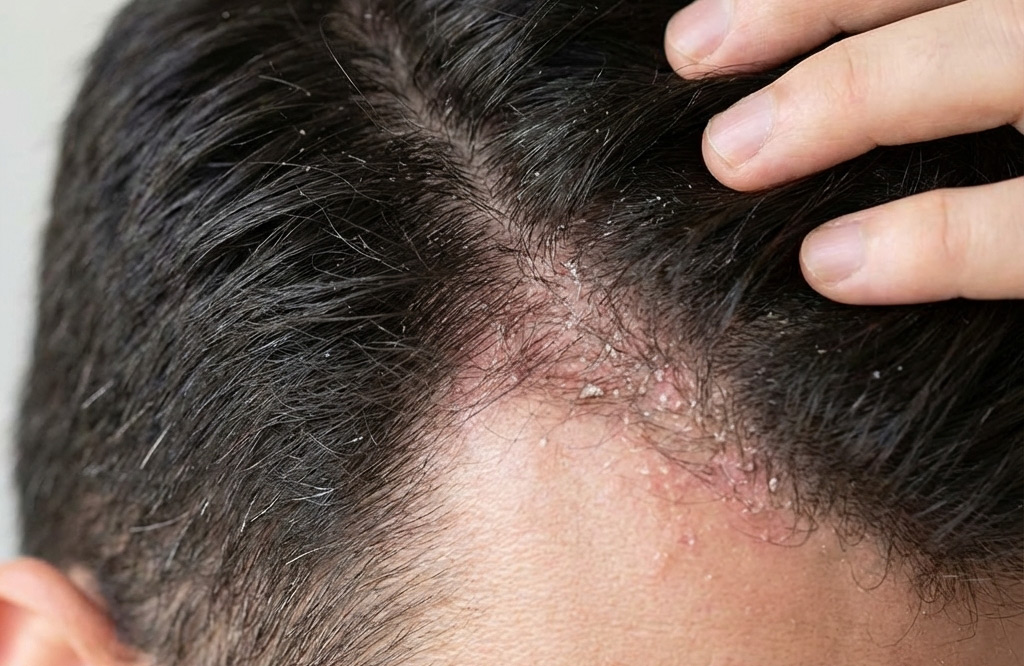
Chemical straightening does not concern only the hair fibre. The scalp may be unsuitable where there is irritation, active inflammation, cuts, lesions, sensitivity or another visible concern. Discomfort should not be treated as proof that the product is working. The service also requires attention to product safety information, ventilation and exposure during use.
Health authorities have warned that certain heated smoothing products can release formaldehyde, including some marketed without clear formaldehyde labelling. Authorities have also linked glyoxylic-acid straightening products with cases of acute kidney injury. A professional service must know what category of product is being used and what controls that category requires.
Health authorities have warned that certain heated smoothing products can release formaldehyde, including some marketed without clear formaldehyde labelling. Authorities have also linked glyoxylic-acid straightening products with cases of acute kidney injury. A professional service must know what category of product is being used and what controls that category requires.
When Straightening May Need to Change or Stop
The requested service may be modified, delayed or declined where there is:
• severe or active breakage
Refusal is not the absence of a service. It is the decision that prevents an unsuitable one.
• severe or active breakage
• unstable elasticity
• extreme porosity
• weakened hairline or joining areas
• recent bleaching or major colour correction
• repeated straightening or visible overlap
• recent perming
• unclear chemical history
• uncertain compound henna or home treatment use
• active scalp irritation or compromised skin
• inability to tolerate the required process
• an expectation the hair cannot responsibly deliver
Refusal is not the absence of a service. It is the decision that prevents an unsuitable one.
What Chemical Straightening Can Honestly Deliver
A suitable service may create:
It cannot guarantee:
The result is permanent in the treated section, but the complete appearance changes as natural regrowth develops.
• permanently straighter treated lengths
• reduced curl or resistant volume
• reduced curl or resistant volume
• easier daily styling
• a more controlled silhouette
• selected-area correction
• more predictable movement through approved sections
It cannot guarantee:
• zero damage
• zero scalp reaction
• identical straightness across uneven chemical history
• that every resistant texture can reach every requested result
• that damaged hair becomes healthy
• that new growth will emerge straight
• that future bleach, colour, perming or straightening will remain possible
• that treated hair can return to its untouched natural pattern
The result is permanent in the treated section, but the complete appearance changes as natural regrowth develops.
Aftercare Protects the Decision Already Made
The aftercare direction depends on the exact system, the completed service and the condition that remains. It may include controlled cleansing, conditioning, heat management, careful handling, moisture support and instructions for the first days after treatment.
The client also needs to understand when future colour, bleach or another chemical service should not be attempted without reassessment. Aftercare does not reverse the chemistry. It protects the hair living with it.
The client also needs to understand when future colour, bleach or another chemical service should not be attempted without reassessment. Aftercare does not reverse the chemistry. It protects the hair living with it.
The SKILLS Perspective
At SKILLS, chemical straightening is not measured by whether the hair became as flat as possible. It is measured by whether the change should have happened, whether the correct degree was chosen and whether the result can be maintained without repeatedly sacrificing the same areas.
The client sees straighter hair. We must see the natural texture, the previous chemistry, the joining lines, the vulnerable ends and the next service that may be requested months later. The procedure creates today's result. Judgement protects what remains tomorrow.
The client sees straighter hair. We must see the natural texture, the previous chemistry, the joining lines, the vulnerable ends and the next service that may be requested months later. The procedure creates today's result. Judgement protects what remains tomorrow.
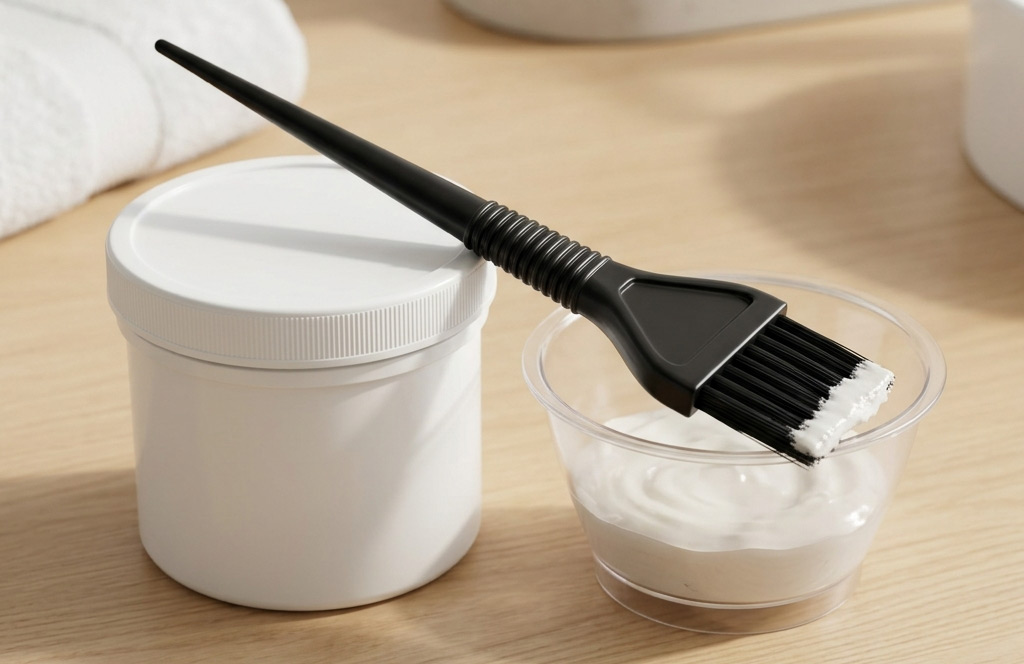
The Method Behind SKILLS Chemical Straightening
The SKILLS Chemical Straightening Method was developed by Mo Ebrahim around one principle: Permanent change deserves permanent responsibility.
The method reads the head as several connected structures rather than one uniform surface. Natural growth, resistant areas, previous chemical work, joining zones and weakened ends are each given their own limit. The intended degree of change is then connected to the haircut, facial structure, daily routine and the way the result will grow out.
Where the condition allows it, SKILLS may integrate its proprietary Bond Repair preparation to strengthen the starting position before the structural process begins. Where the condition does not allow responsible change, the method does not use preparation as an excuse to continue. The formulas, controls and internal sequence remain protected.
What the client receives is the value created by that knowledge: a straighter result designed around suitability, proportion, compatibility and future maintenance rather than one chemical application copied across every head. Many places can make hair straighter. The SKILLS difference is deciding how straight it should become, whether it should be changed at all and how to complete that change without losing sight of the hair the client must continue living with.
The method reads the head as several connected structures rather than one uniform surface. Natural growth, resistant areas, previous chemical work, joining zones and weakened ends are each given their own limit. The intended degree of change is then connected to the haircut, facial structure, daily routine and the way the result will grow out.
Where the condition allows it, SKILLS may integrate its proprietary Bond Repair preparation to strengthen the starting position before the structural process begins. Where the condition does not allow responsible change, the method does not use preparation as an excuse to continue. The formulas, controls and internal sequence remain protected.
What the client receives is the value created by that knowledge: a straighter result designed around suitability, proportion, compatibility and future maintenance rather than one chemical application copied across every head. Many places can make hair straighter. The SKILLS difference is deciding how straight it should become, whether it should be changed at all and how to complete that change without losing sight of the hair the client must continue living with.
Arrange your consultation
An in-person consultation is required before structural Hair Straightening or another Chemical Treatment can be confirmed. Contact the SKILLS concierge team through WhatsApp or call the salon to arrange the assessment.
Founder's Method
For the deeper professional judgement behind structural chemical change, compatibility, suitability and knowing when not to proceed, read Mo Ebrahim's Chemical Treatments Method.