SKILLS BRAIDING AND DREADLOCK METHOD
Men's Hair Braiding, Cornrows and Dreadlock Services in Dubai
A braid should not begin with a reference picture.
It should begin with the person who will carry it.
Some men want clean straight-back cornrows. Some want a stronger pattern, added length or a design connected to the
haircut. Others are beginning dreadlocks, maintaining an existing set or correcting work completed elsewhere.
Those are not the same request.
At SKILLS, braiding is treated as a complete design service built around the hairline, head shape, density, scalp condition and maintenance responsibility. The objective is not simply to reproduce a picture. It is to create a result that looks intentional, sits correctly and still belongs to the person after the first photograph has been taken.
The SKILLS service may include cornrows, box braids, patterned braids, twists, full or partial braiding, added hair, dreadlock creation, maintenance, repair and controlled removal.
At SKILLS, braiding is treated as a complete design service built around the hairline, head shape, density, scalp condition and maintenance responsibility. The objective is not simply to reproduce a picture. It is to create a result that looks intentional, sits correctly and still belongs to the person after the first photograph has been taken.
The SKILLS service may include cornrows, box braids, patterned braids, twists, full or partial braiding, added hair, dreadlock creation, maintenance, repair and controlled removal.
A Reference Picture Is a Direction
A reference image can show the pattern, length or mood the client likes.
It cannot show whether the same design will suit another head shape, hairline, density or natural growth direction.
The result may change according to hair length, texture, haircut structure, section size, extension weight and the amount
of responsible tension the hairline can carry.
SKILLS uses the picture to understand the intention.
Then the design is rebuilt around the client.
Design Should Strengthen the Person
Braids and dreadlocks can change the entire balance of the face and head.
A pattern can sharpen the head shape or overpower it.
SKILLS considers facial proportion, head shape, haircut, hairline, personal style and daily routine before confirming the
direction.
The strongest result is not always the most complicated pattern.
It is the one that looks as though it belongs there.
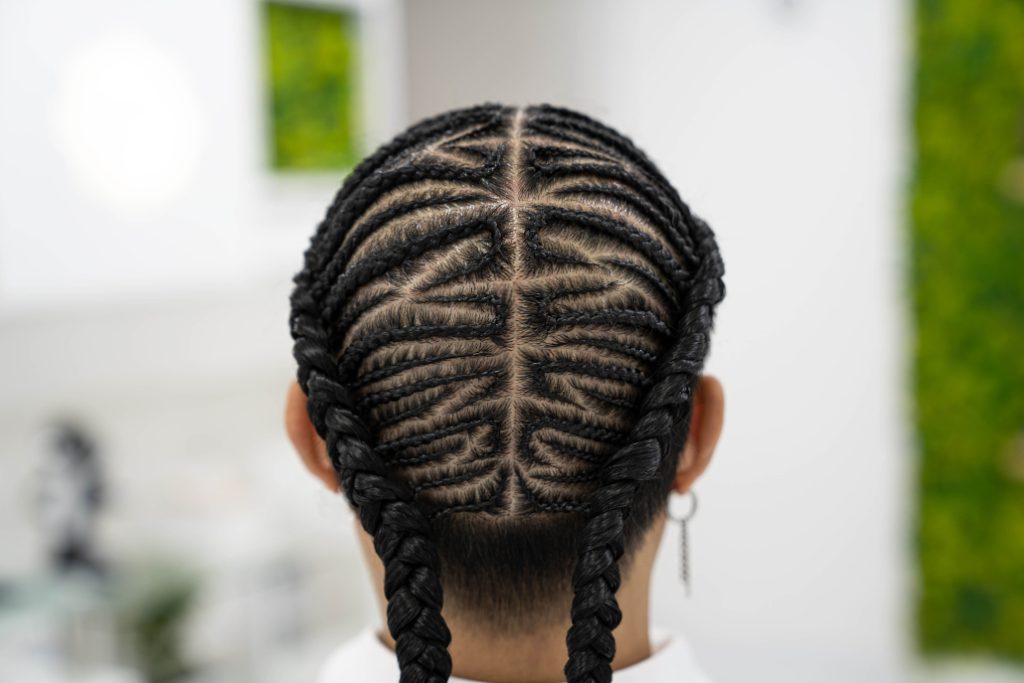
Tension Is Not a Measure of Quality
A braid does not become better because it is tighter.
The style must hold without asking the scalp and hairline to carry unnecessary pressure.
Section size, hair strength, edge density, braid direction and added weight all influence how the result should be built.
Pain is not proof that the style will last.
Where one area cannot support the intended design responsibly, the pattern, sectioning or weight may be adjusted.
The client sees the finished style.
SKILLS controls what the hairline is required to carry.
Braiding Is Not Automatically Protective
Braiding can reduce daily manipulation and make the hair easier to organise.
That does not mean every braid protects every head of hair. Excessive tension, heavy extensions, weak edges, repeated installation, poor cleansing and incorrect removal can work
against the hair.
Where the hair has been coloured, bleached, permed or straightened, its condition is considered before sectioning
begins.
The style should work with the hair that exists.
It should not disguise hair that first needs recovery.
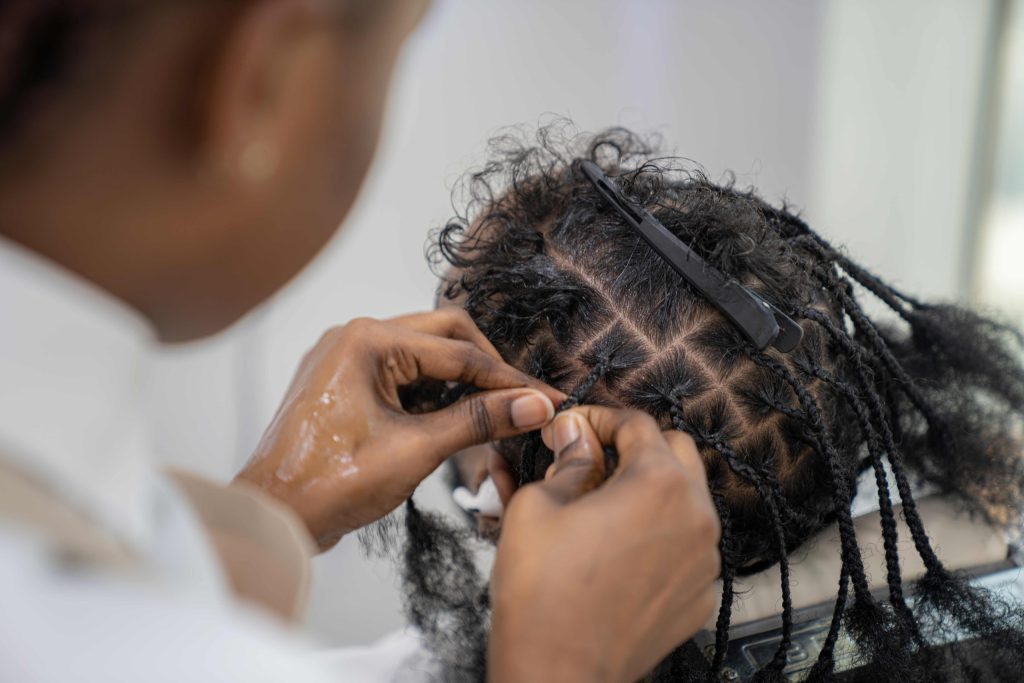
Scalp Preparation Is Part of the Result
Braiding and dreadlock work begin from the scalp as much as the hair.
SKILLS uses its own controlled washing and preparation approach to remove unnecessary oil, sweat, residue and
buildup while preparing the hair for clean sectioning.
The purpose is to create a cleaner foundation that allows the style to sit and age more responsibly. Where the scalp shows heavy flaking, irritation, dehydration, congestion or unusual shedding, SKILLS may advise scalp treatment or a deeper trichology direction alongside or before the braiding service. A finished pattern should not hide a scalp concern that still needs attention.
The purpose is to create a cleaner foundation that allows the style to sit and age more responsibly. Where the scalp shows heavy flaking, irritation, dehydration, congestion or unusual shedding, SKILLS may advise scalp treatment or a deeper trichology direction alongside or before the braiding service. A finished pattern should not hide a scalp concern that still needs attention.
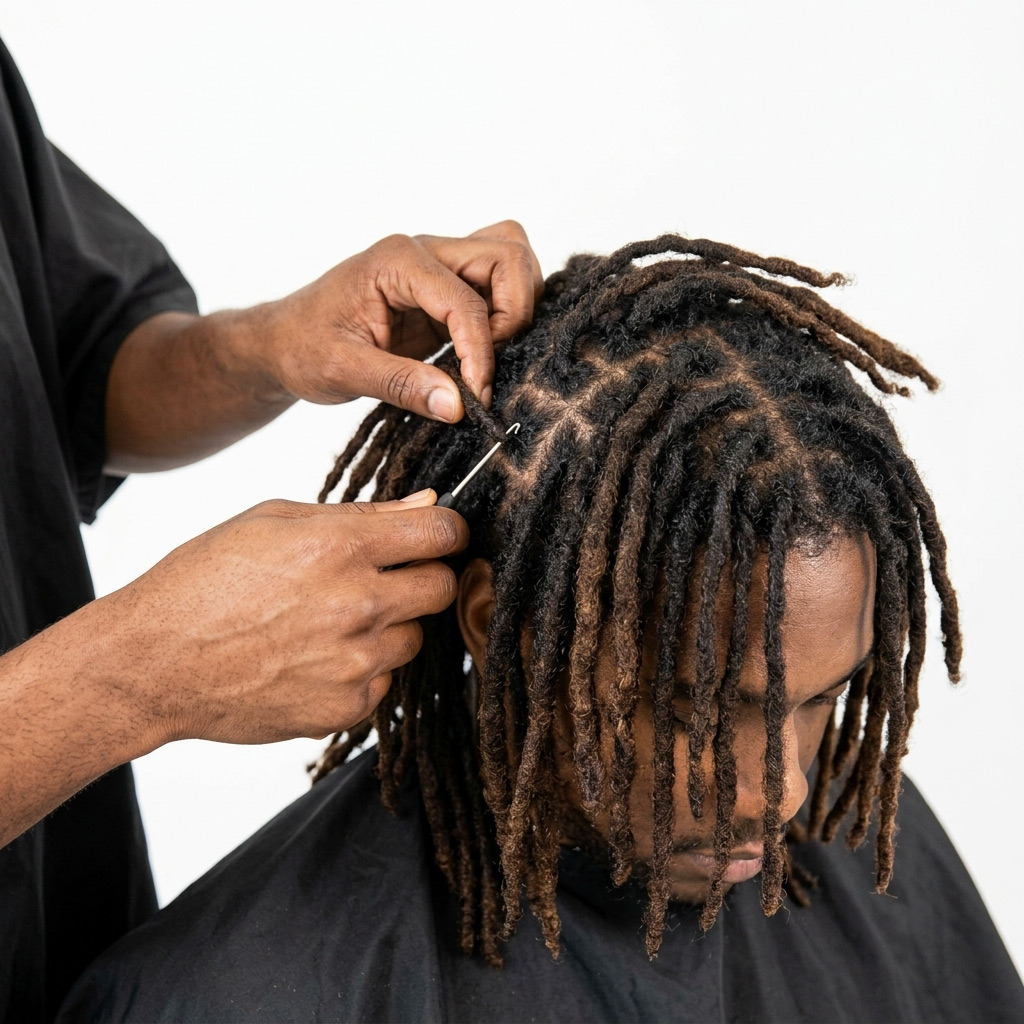
Dreadlocks Are a Long-Term Direction
Dreadlock creation is not treated as a temporary braid with a different name.
The sectioning, size and starting direction influence how the dreadlocks develop, how the scalp is cleaned, how new
growth is maintained and how the style may later be repaired or removed.
New dreadlocks change with time. They may loosen, tighten, develop surface frizz or require maintenance as the hair grows. SKILLS may also assess dreadlocks created elsewhere for tightening, repair, reconstruction or controlled removal where possible. The objective is to improve what can be improved and rebuild only where the hair can support it.
New dreadlocks change with time. They may loosen, tighten, develop surface frizz or require maintenance as the hair grows. SKILLS may also assess dreadlocks created elsewhere for tightening, repair, reconstruction or controlled removal where possible. The objective is to improve what can be improved and rebuild only where the hair can support it.
Aftercare Should Protect the Style and the Scalp
The client should understand how to wash, dry, sleep and manage the finished style.
Guidance may include scalp cleansing, drying, product quantity, sleeping protection, hairline care and the right time for
maintenance or removal.
The goal is not to avoid washing.
It is to keep the scalp clean without destroying the structure or trapping unnecessary moisture.
The SKILLS Perspective
At SKILLS, braiding is not treated as pattern work separated from the person.
The haircut, face, hairline, scalp, density and daily life all influence the final direction.
A successful result should give the client stronger identity and easier control without making the design feel borrowed
from someone else.
The pattern creates the visible result.
The judgement behind the pattern is what makes it belong to the client.
The Method Behind SKILLS Braiding and Dreadlocks
The method connects consultation, head-shape reading, haircut integration, scalp preparation, hairline protection,
section planning, controlled tension and maintenance direction.
The style is not copied first and explained afterward.
The person is read first. Then the design is built around what should stand out, what should remain protected and how the result must behave after the client leaves. Many places can reproduce a pattern from a photograph. The SKILLS difference is knowing how to make the pattern belong to the person wearing it.
The person is read first. Then the design is built around what should stand out, what should remain protected and how the result must behave after the client leaves. Many places can reproduce a pattern from a photograph. The SKILLS difference is knowing how to make the pattern belong to the person wearing it.
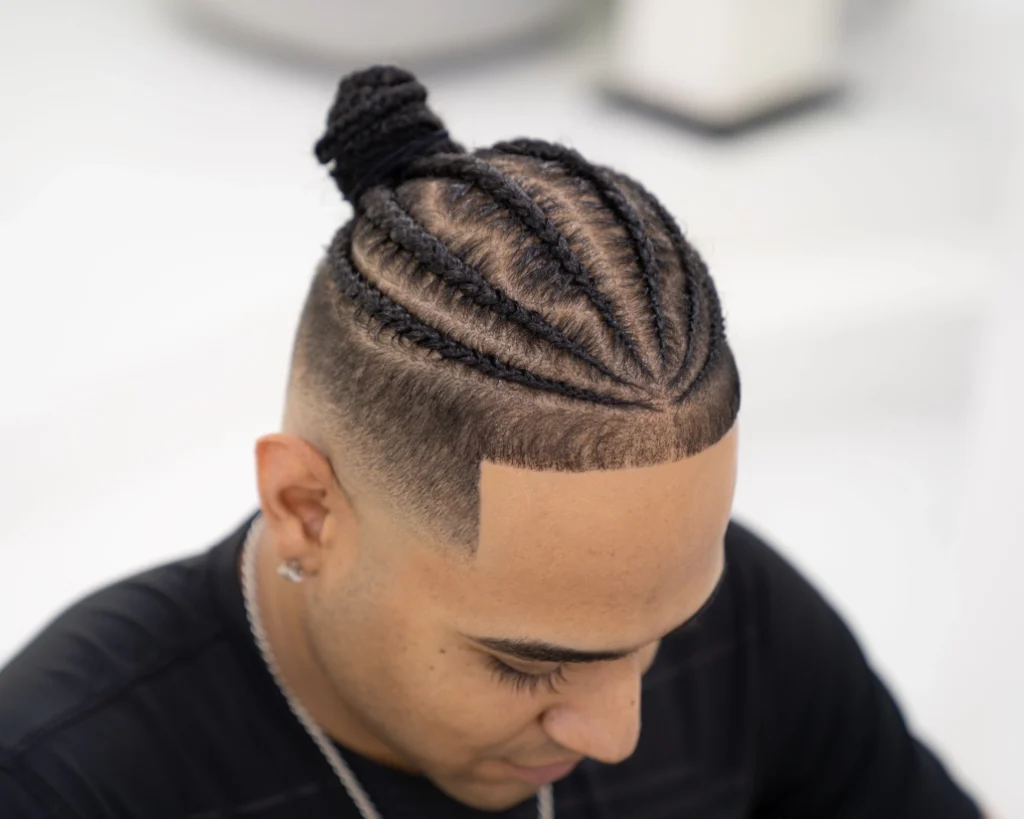
Arrange your consultation
A consultation allows the design, natural hair, scalp condition, hairline, extensions and maintenance expectations to be
understood before the service is confirmed.
Contact the SKILLS concierge team through WhatsApp or call the salon to arrange your braiding or dreadlock
consultation.
Founder's Method
For the deeper professional thinking behind design selection, tension control, hairline protection and long-term
maintenance, read Mo Ebrahim's Hair Braiding and Dreadlocks Method.