SKILLS HAIR PERM METHOD
Men's Hair Perming Service in Dubai
A perm should not begin with a curl photograph or the tightness of a rod.
It should begin with understanding what the hair is being asked to become.
A professional perm changes the internal structure that allows the hair to hold its existing shape. That change can
create movement, waves, volume or defined curls, but the visible result depends on far more than the chemical process
alone.
Hair length, density, natural texture, previous treatments, curl direction, haircut shape, styling ability and daily maintenance all influence how the final result will look and behave. The objective is not simply to make straight hair curly. It is to create a curl direction that belongs to the person, works with the available hair and remains manageable after the first styled photograph has been taken.
Hair length, density, natural texture, previous treatments, curl direction, haircut shape, styling ability and daily maintenance all influence how the final result will look and behave. The objective is not simply to make straight hair curly. It is to create a curl direction that belongs to the person, works with the available hair and remains manageable after the first styled photograph has been taken.
What a perm actually changes
Hair is largely formed from keratin proteins held together by different types of bonds.
Among the strongest are disulfide bonds. They help stabilise the shape and strength of the hair fibre.
During a traditional permanent-wave process, part of this bond structure is temporarily reduced while the hair is
positioned into a new shape. The hair is then neutralised so that part of the structure reforms around the new direction.
This is why a perm is different from curling the hair with heat.
Heat styling temporarily changes the visible shape and normally disappears after washing or exposure to moisture.
A perm changes the foundation of the treated hair. The result is considered permanent because the chemically changed lengths do not simply return to their original structure after the next shampoo. However, the appearance of the curl can still soften over time as the hair grows, is washed, styled and exposed to daily wear. New hair will also continue growing in its natural pattern.
A perm changes the foundation of the treated hair. The result is considered permanent because the chemically changed lengths do not simply return to their original structure after the next shampoo. However, the appearance of the curl can still soften over time as the hair grows, is washed, styled and exposed to daily wear. New hair will also continue growing in its natural pattern.
One chemical principle, many possible outcomes
A perm does not always mean a tight traditional curl. Depending on the hair and intended result, perming may be used to create:
• soft movement
These outcomes do not come from changing only one product or choosing a curl name from a photograph. The shape is influenced by the relationship between the hair and the complete technical design. A loose wave requires a different foundation from a compact curl. Root movement requires a different direction from full-length definition. A partial perm must connect naturally with the untreated hair around it. The desired appearance therefore has to be translated into a curl structure that the client's actual hair can support.
• soft movement
• loose waves
• defined curls
• tighter curl patterns
• controlled texture
• root lift
• added body and volume
• partial texture through selected areas
• a fuller transformation across the head
• improved consistency in an uneven natural curl pattern
These outcomes do not come from changing only one product or choosing a curl name from a photograph. The shape is influenced by the relationship between the hair and the complete technical design. A loose wave requires a different foundation from a compact curl. Root movement requires a different direction from full-length definition. A partial perm must connect naturally with the untreated hair around it. The desired appearance therefore has to be translated into a curl structure that the client's actual hair can support.
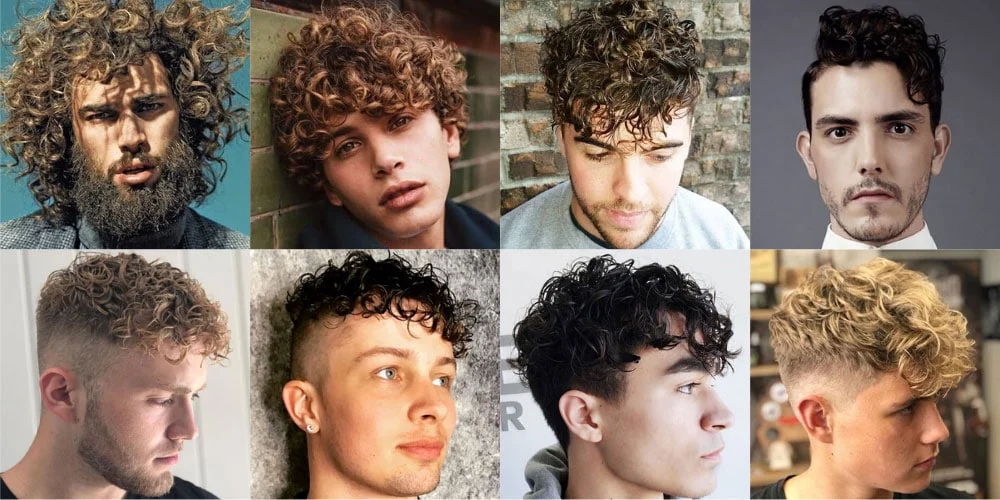
Why the same photograph cannot produce the same curl on everyone
A reference photograph is useful because it communicates mood, movement and visual intention. It does not guarantee that another person's hair will produce the same result. Two men may request the same curl and receive very different outcomes because of differences in:
• natural hair structure
• natural hair structure
• hair thickness
• density
• length
• existing movement
• porosity
• chemical history
• haircut shape
• head structure
• growth direction
• daily styling
• humidity exposure
The photograph shows the destination. It does not show the starting position. A believable perm begins by translating the desired idea into a result that can work with the person receiving it.
Hair length changes what the curl can become
Short, medium and long hair can all be considered for perming, but they cannot all carry the same curl in the same way.
Very short hair may create controlled texture, movement or root lift, but it may not contain enough length to wrap around
a larger rod and form a loose flowing wave.
Medium-length hair may support a wider range of wave and curl directions because there is enough length to create
movement without excessive weight.
Longer hair can create a fuller, more visible curl pattern, but its weight may pull the curl downward. The lengths may also carry years of colour, heat or chemical history that affect the way different areas respond. The important question is not simply whether the hair is long enough for a perm. The question is whether the available length can support the specific curl being requested.
Longer hair can create a fuller, more visible curl pattern, but its weight may pull the curl downward. The lengths may also carry years of colour, heat or chemical history that affect the way different areas respond. The important question is not simply whether the hair is long enough for a perm. The question is whether the available length can support the specific curl being requested.
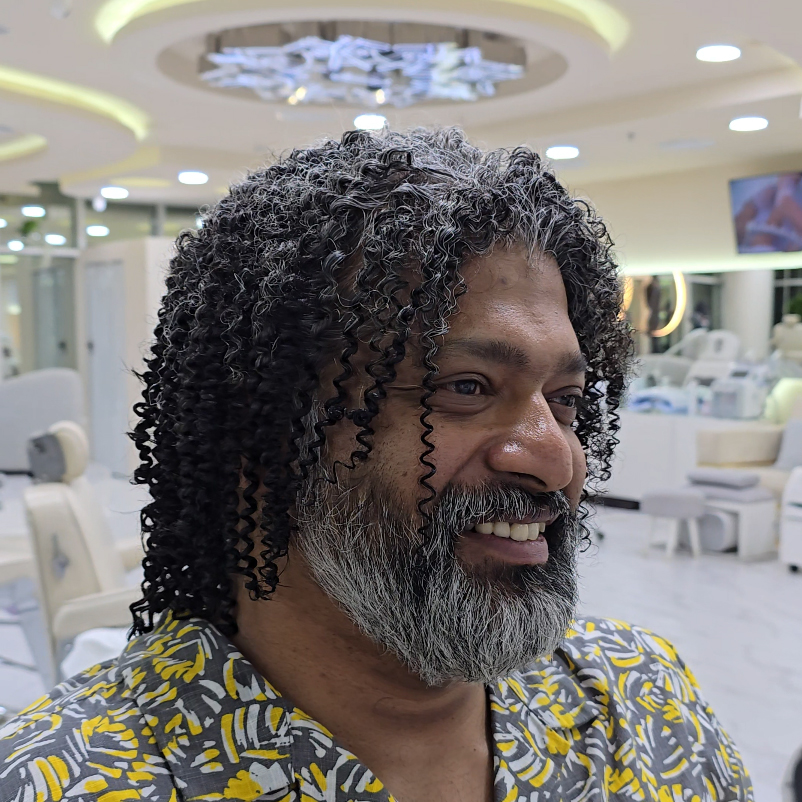
Natural texture remains part of the result
A perm does not work on an empty surface.
The natural structure of the hair remains part of the foundation.
Very straight, resistant hair may respond differently from fine, flexible hair. Naturally wavy hair may require
enhancement rather than complete reconstruction. Uneven natural curl patterns may require different control in different
areas.
Density also changes the visual result.
A curl created on dense hair can produce strong fullness and width. The same curl on lower-density hair may appear lighter, softer or more separated. The design must therefore consider where volume should be created and where excessive weight should be avoided. The correct curl is not only about what happens to each strand. It is about what the complete shape does to the head, face and haircut.
A curl created on dense hair can produce strong fullness and width. The same curl on lower-density hair may appear lighter, softer or more separated. The design must therefore consider where volume should be created and where excessive weight should be avoided. The correct curl is not only about what happens to each strand. It is about what the complete shape does to the head, face and haircut.
Rod size does not work alone
Clients often believe that a larger rod automatically creates a loose curl and a smaller rod automatically creates a tight curl. Rod size matters, but it is only one part of the result. The final direction can also be influenced by:
• section size
Different areas of the head may not require the same approach. The crown may need support without unnecessary width. The front may require movement that works with the hairline and face. The sides may need control so that the new texture does not distort the intended silhouette. The curl design should work as one complete structure rather than a repeated pattern placed across every area without adjustment.
• section size
• wrapping direction
• placement
• tension
• hair length
• density
• natural movement
• processing response
• haircut structure
• styling after the service
Different areas of the head may not require the same approach. The crown may need support without unnecessary width. The front may require movement that works with the hairline and face. The sides may need control so that the new texture does not distort the intended silhouette. The curl design should work as one complete structure rather than a repeated pattern placed across every area without adjustment.
Previous chemical history matters
Hair can look strong from the outside while carrying weakness inside the fibre. Previous services may change how the hair responds to another chemical process. Important history can include:
• earlier perming
Chemical history does not automatically mean that a perm is impossible. It means that the hair cannot be treated as untouched. The more complex the history becomes, the more difficult it may be to predict how evenly the hair will respond. Different parts of the same head may also carry different histories. New growth may be relatively strong while older lengths are more porous, dry or fragile. This is one reason why the complete condition matters more than the appearance of one small section.
• earlier perming
• bleaching or highlights
• colour correction
• repeated artificial colour
• relaxing
• chemical straightening
• smoothing treatments
• keratin treatments
• excessive heat
• uncontrolled home treatments
• overlapping chemical applications
Chemical history does not automatically mean that a perm is impossible. It means that the hair cannot be treated as untouched. The more complex the history becomes, the more difficult it may be to predict how evenly the hair will respond. Different parts of the same head may also carry different histories. New growth may be relatively strong while older lengths are more porous, dry or fragile. This is one reason why the complete condition matters more than the appearance of one small section.
Perming changes the condition as well as the shape
A perm creates a useful structural change, but it also places demand on the fibre. After perming, the treated hair may become:
• drier
• more porous
• drier
• more porous
• more sensitive to heat
• more vulnerable to friction
• more dependent on moisture
• more affected by unsuitable cleansing
• more responsive to humidity
• more dependent on correct styling
This does not mean that every perm produces severe damage. It means that the service should not be described as harmless simply because it is performed professionally. The final value of the service depends on balancing the desired transformation with the amount of change the hair can reasonably carry. The strongest perm is not necessarily the best perm. A curl that is slightly softer but leaves the hair manageable can be more successful than a tighter result that compromises the condition and becomes difficult to maintain.
The perm is the foundation, not the finished hairstyle
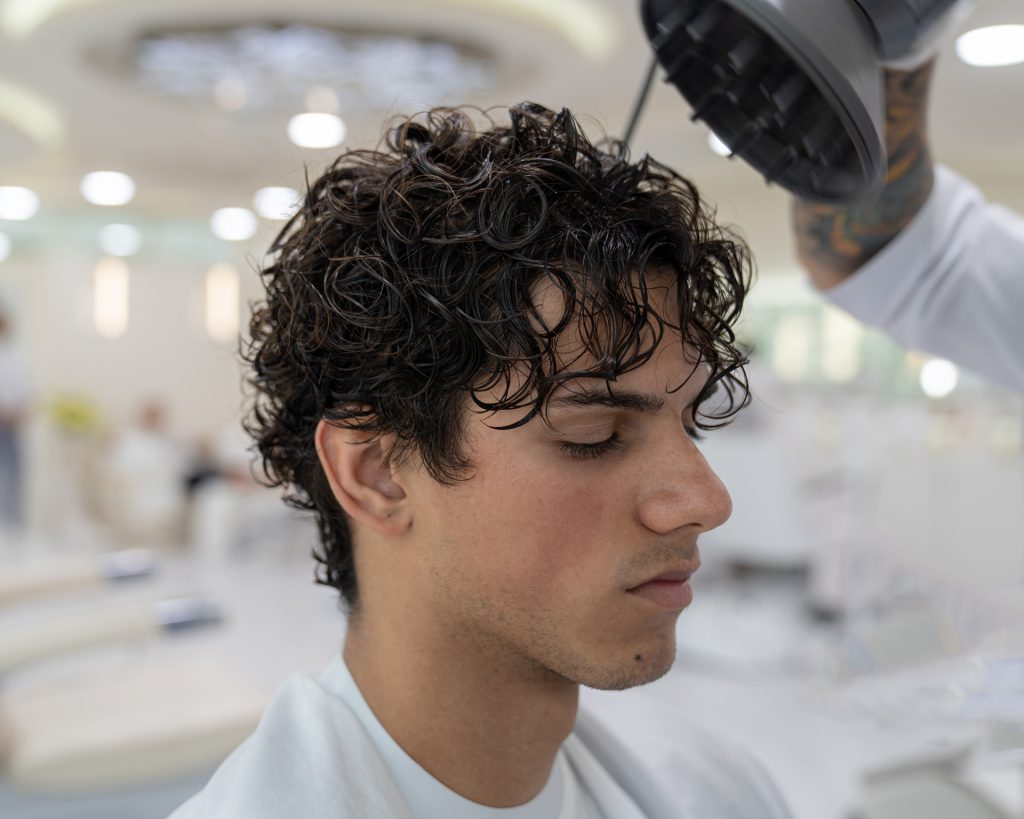
A newly permed curl is often styled before the client sees the final result. That styling can create definition, separation, shine and controlled volume. The perm itself creates the structural direction. Styling reveals it. The same perm can appear:
• soft and natural
• soft and natural
• polished and controlled
• textured and separated
• fuller and more voluminous
• tighter and more defined
• relaxed and less structured
The appearance changes according to cleansing, conditioning, product choice, drying method, brushing, humidity and the amount of manipulation. A client may believe that the curl has disappeared when the real problem is that the hair has been brushed out, weighed down with unsuitable product or dried without supporting the new direction. Understanding how to reveal the curl is therefore part of understanding the service itself.
Why some curls appear tighter or looser after the first wash
The first styled result is not always the permanent everyday appearance. Immediately after the service, the curl may appear particularly controlled because it has been professionally positioned and finished. After washing, the curl may settle into a softer or more natural form. This does not automatically mean that the perm has failed. The curl may also appear looser when:
• the hair is heavy
• the hair is heavy
• the natural structure is resistant
• unsuitable products are used
• the hair is brushed aggressively
• it is washed before the advised time
• it is exposed to excessive heat
• it is exposed to excessive heat
• the drying method stretches the pattern
• humidity changes the finish
A perm should therefore be judged after the client understands how the treated hair behaves outside the salon.
Longevity cannot be measured by one universal number
There is no single lifespan that applies to every perm. The treated lengths have been chemically changed, but the visible curl can soften or behave differently over time. Longevity is influenced by:
• the curl pattern selected
• the curl pattern selected
• natural hair structure
• hair length and weight
• porosity
• previous chemical history
• washing frequency
• water quality
• product use
• heat
• humidity
• swimming
• friction
• styling habits
• new growth
A tighter curl may remain visually noticeable for longer than a very soft wave. Long, heavy hair may relax more quickly under its own weight. New growth may also create a visible difference between the untreated roots and the permed lengths. The correct expectation is not that the hair will look permanently identical to the first-day finish. The correct expectation is that the treated hair carries a new structural direction that must still be understood, styled and maintained.
When a perm should be postponed or avoided
Perming should not proceed simply because the client is willing to accept the risk. The service may be unsuitable or require postponement when the hair or scalp shows signs that the chemical change cannot be carried responsibly. General concerns include:
• severe dryness or brittleness
• severe dryness or brittleness
• active breakage
• unstable elasticity
• heavily overprocessed hair
• recent bleaching or major lightening
• recent relaxing or chemical straightening
• repeated recent perming
• an unclear chemical history
• excessive shedding
• significant scalp irritation
• open cuts or damaged skin
• visible signs of possible infection
• unresolved scalp inflammation
• unresolved scalp inflammation
• a previous significant reaction to perming products
• respiratory sensitivity to strong chemical odour
• hair that is too short for the intended curl
• a requested result that requires more structural change than the hair can support
These conditions do not all carry the same meaning. Some may require recovery time. Some may require a different curl direction. Some may require a different service entirely. Others may need appropriate medical assessment before any cosmetic chemical service is considered. The purpose of identifying these concerns is not to make perming sound frightening. It is to separate a responsible transformation from a process that should not happen in the current condition.
A successful perm begins with the correct expectation
A good perm should not be judged only by how tight the curl appears when the client first looks in the mirror. It should be judged by whether:
• the curl suits the face and haircut
The result should feel intentional. It should not look like a curl pattern placed on the head without considering the person beneath it.
• the curl suits the face and haircut
• the shape works with the available density
• the hair remains manageable
• the client understands how to style it
• the result can be maintained in daily life
• the curl behaves correctly after washing
• the new texture supports the client's identity
• the condition remains appropriate for the change created
The result should feel intentional. It should not look like a curl pattern placed on the head without considering the person beneath it.
The SKILLS Perspective
At SKILLS, a perm is approached as a decision about structure, suitability and identity.
The curl must work with the haircut, face, beard, lifestyle and level of maintenance the client is prepared to carry.
The chemical process creates the change.
The thinking behind the direction determines whether that change makes sense.
The Method Behind the SKILLS Perm
The SKILLS perm method was developed by Mo Ebrahim around a principle that chemical change must be directed,
measured and supported from beginning to end.
The method begins by reading the person: the intended identity, haircut, face, natural texture, available length, curl
direction and the way the result will be styled and maintained.
But the method does not stop at choosing the right curl.
SKILLS has built its own perm protocol around the chemical service itself, using measured preparation, selected active ingredients, condition-supporting steps and controlled application according to the hair being treated. The sequence is not repeated mechanically for every client. It is adjusted around the hair's strength, porosity, chemical history, natural resistance and the curl direction being created.
SKILLS has built its own perm protocol around the chemical service itself, using measured preparation, selected active ingredients, condition-supporting steps and controlled application according to the hair being treated. The sequence is not repeated mechanically for every client. It is adjusted around the hair's strength, porosity, chemical history, natural resistance and the curl direction being created.
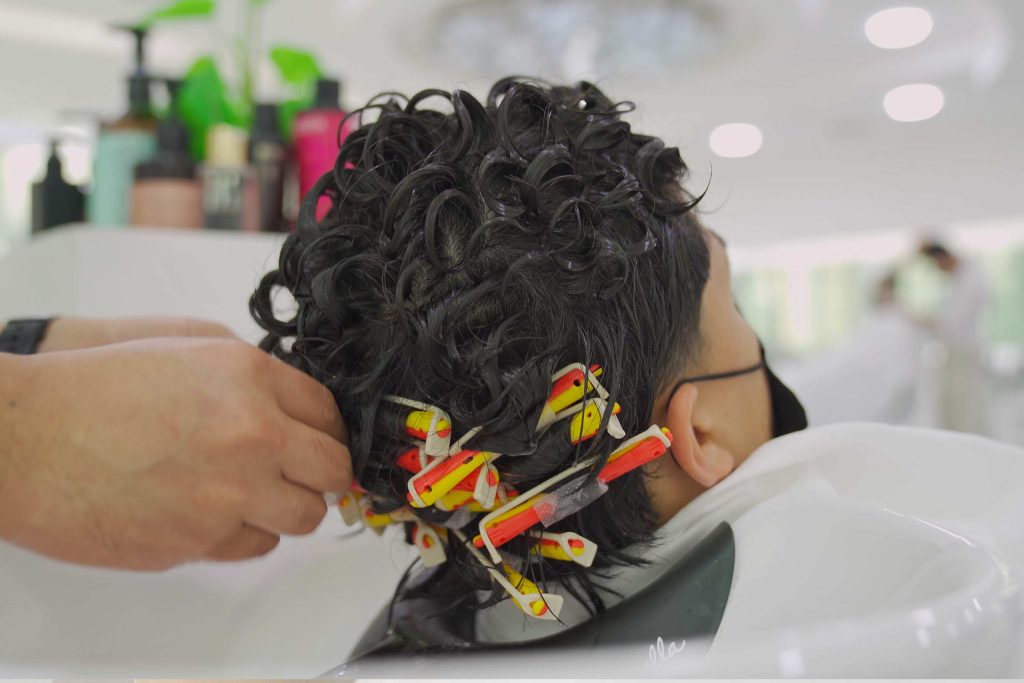
These additional steps are designed to reduce avoidable stress, support a gentler experience and give greater control over the condition and development of the curl throughout the process. The same level of attention continues after the chemical work through personalised styling education, aftercare direction and appropriate review of how the hair and scalp are responding.
This does not remove the chemical reality of perming or promise that every head of hair will react identically. It means the service is surrounded by a studied method rather than being reduced to solution, rods and processing time. Many places can perform a perm. The SKILLS difference is the complete system built around deciding the curl, controlling the chemical change and helping the client carry the result successfully afterward.
Arrange your consultation
A consultation allows the current hair, previous chemical history, intended curl and realistic maintenance to be
considered before the direction is confirmed.
Contact the SKILLS concierge team through WhatsApp or call the salon to discuss the result you are considering.
Founder's Method
For the deeper professional thinking behind chemical history, bond restructuring, suitability and knowing when structural
change should not happen, read Mo Ebrahim's Chemical Treatments Method.