SKILLS TRICHOLOGY METHOD
Men's Hair Shedding, Scalp Treatment and Post-Transplant Care in Dubai
Hair shedding does not begin with a serum.
Heavy flaking does not begin with a stronger shampoo.
Post-hair-transplant care does not begin with copying what worked for someone else.
It begins with understanding what the scalp is asking for.
Some men arrive because the hair is falling more than usual. Others are dealing with thick flakes, itching, dehydration,
dermatitis, psoriasis, fungal scalp concerns or a scalp that never settled after chemical services.
Some have completed a hair transplant and now need professional care. These are not ordinary cosmetic concerns. They require observation, selected active ingredients, disciplined home care and a direction built around the condition.
Some have completed a hair transplant and now need professional care. These are not ordinary cosmetic concerns. They require observation, selected active ingredients, disciplined home care and a direction built around the condition.
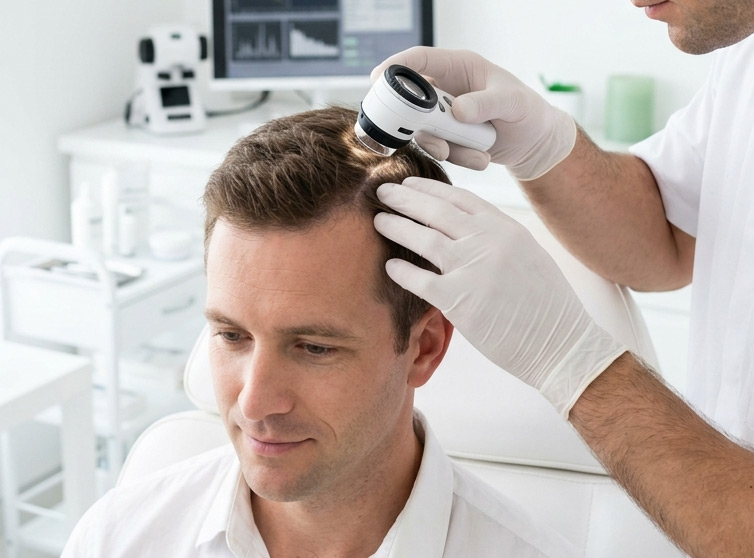
At SKILLS, this work is supported by professional trichology, the study of the hair and scalp. It allows us to understand the condition before deciding what the client needs. For several years, SKILLS has studied and refined this direction because these concerns cannot be solved through an ordinary scalp service. Today, SKILLS supports them through individual sessions, structured courses and concentrated home-care plans selected according to the case.
For several years, SKILLS has studied and refined this work because recurring shedding, heavy flaking, scalp instability and post-transplant concerns cannot be handled through an ordinary cosmetic service alone. Today, SKILLS supports suitable clients through individual sessions, structured treatment courses, selected professional active ingredients and concentrated home-care plans built according to the case.
What SKILLS Hair and Scalp Recovery Can Support
The SKILLS pathway may be suitable for men experiencing:
• excessive or recurring hair shedding
The client does not need to choose a treatment name. The concern is assessed first. Then the correct direction is selected.
• excessive or recurring hair shedding
• reduced visible density
• weak or fragile-looking hair
• post-chemical shedding or breakage
• heavy flaking or persistent dandruff
• dry, dehydrated, oily or congested scalp
• recurring itching, discomfort or sensitivity
• dermatitis-related scalp concerns
• psoriasis-related scalp concerns
• fungal scalp concerns
• post-hair-transplant scalp support
• scalp preparation before a planned transplant
The client does not need to choose a treatment name. The concern is assessed first. Then the correct direction is selected.
Japanese Head Spa, Cosmetic Scalp Care or Trichology?
The Japanese Head Spa has become one of the most visible scalp-care experiences in the beauty market.
Flowing water, steam, massage, oils, masks, aromatherapy and magnified scalp-camera images make the experience
highly attractive.
A Japanese Head Spa can provide genuine value when the client wants relaxation, professional cleansing and cosmetic
maintenance.
It may help refresh a generally stable scalp, remove uncomplicated surface buildup, provide temporary comfort and leave the hair feeling softer and better conditioned. That value should not be dismissed. But it should not be exaggerated. A relaxing scalp ritual cannot automatically identify why hair is shedding.
A scalp camera can enlarge what is visible, but the image alone cannot determine whether the client has hormonal thinning, breakage, dermatitis, psoriasis, fungal activity or another concern requiring medical assessment. Steam, massage and cosmetic masks may affect how the scalp feels after the service. They do not automatically control the biological reason behind progressive thinning or recurring excessive shedding.
A Japanese Head Spa is not the wrong service because it is cosmetic. It becomes the wrong service when cosmetic wellness is presented as diagnosis or hair-regrowth treatment.
It may help refresh a generally stable scalp, remove uncomplicated surface buildup, provide temporary comfort and leave the hair feeling softer and better conditioned. That value should not be dismissed. But it should not be exaggerated. A relaxing scalp ritual cannot automatically identify why hair is shedding.
A scalp camera can enlarge what is visible, but the image alone cannot determine whether the client has hormonal thinning, breakage, dermatitis, psoriasis, fungal activity or another concern requiring medical assessment. Steam, massage and cosmetic masks may affect how the scalp feels after the service. They do not automatically control the biological reason behind progressive thinning or recurring excessive shedding.
A Japanese Head Spa is not the wrong service because it is cosmetic. It becomes the wrong service when cosmetic wellness is presented as diagnosis or hair-regrowth treatment.
When an Ordinary Cosmetic Scalp Treatment Is Enough
Not every client needs trichology. Some clients have a generally healthy and comfortable scalp but experience:
• ordinary product buildup
In these cases, a cosmetic scalp treatment may be completely appropriate. The objective is to cleanse, refresh, hydrate and maintain the scalp without turning a straightforward concern into a complicated programme. At SKILLS, we do not turn every scalp service into trichology. But we also do not hide a recurring condition beneath a relaxing ritual. When itching, redness, thick scale, burning, heavy shedding or repeated instability continues to return, the concern has moved beyond ordinary cosmetic maintenance.
• ordinary product buildup
• temporary oiliness
• light surface flaking
• mild dehydration
• reduced scalp freshness
• the need for occasional professional maintenance
In these cases, a cosmetic scalp treatment may be completely appropriate. The objective is to cleanse, refresh, hydrate and maintain the scalp without turning a straightforward concern into a complicated programme. At SKILLS, we do not turn every scalp service into trichology. But we also do not hide a recurring condition beneath a relaxing ritual. When itching, redness, thick scale, burning, heavy shedding or repeated instability continues to return, the concern has moved beyond ordinary cosmetic maintenance.
Deep Conditioning, Deep-Infusion Masks and Nourishing Treatments
Deep conditioning, deep-infusion masks and nourishing treatments work primarily on the hair strand. They may be strongly advised when the hair feels:
• dry or rough
A deep mask cannot determine why the crown is becoming lighter. It cannot control recurring inflammation simply because the hair feels softer after the appointment. A client may need a deep-infusion treatment for chemically affected lengths while requiring a separate scalp direction for shedding, flaking or sensitivity. The hair strand and the scalp may need two different forms of care at the same time.
• dry or rough
• dull or difficult to manage
• stressed after colouring or bleaching
• depleted after perming or chemical straightening
• affected by repeated heat styling
• porous, tangled or lacking softness
• in need of additional flexibility, protection and shine
These treatments can be highly valuable after demanding chemical work.
Selected keratins, proteins, amino acids, lipids and conditioning ingredients may help improve softness, flexibility,
manageability and the appearance of chemically stressed hair.
They are professional boosters for the hair fibre.
But conditioning the strand does not explain why hair is shedding from the root.
A deep mask cannot determine why the crown is becoming lighter. It cannot control recurring inflammation simply because the hair feels softer after the appointment. A client may need a deep-infusion treatment for chemically affected lengths while requiring a separate scalp direction for shedding, flaking or sensitivity. The hair strand and the scalp may need two different forms of care at the same time.
Where Professional Trichology Begins
Trichology begins when the concern is no longer limited to relaxation, surface cleansing or the cosmetic condition of the hair. It begins when there is a pattern to understand. That pattern may include:
Professional trichology considers more than what can be seen during one appointment. The history matters. The starting point matters. The location and pattern of the shedding matter. The condition of the scalp matters. The client's chemical, medical, lifestyle and transplant history may all change the direction. The objective is not simply to apply a stronger product. The objective is to determine whether the client requires cosmetic maintenance, a structured professional protocol, medical collaboration or a combination of these directions.
• excessive or recurring shedding
• gradual reduction in visible density
• sudden diffuse shedding
• persistent itching, burning or sensitivity
• recurring heavy flakes or thick scale
• repeated oil imbalance or congestion
• visible redness or irritation
• unexplained breakage
• instability following chemical services
• concerns before or after a hair transplant
• a condition that returns after ordinary treatments
Professional trichology considers more than what can be seen during one appointment. The history matters. The starting point matters. The location and pattern of the shedding matter. The condition of the scalp matters. The client's chemical, medical, lifestyle and transplant history may all change the direction. The objective is not simply to apply a stronger product. The objective is to determine whether the client requires cosmetic maintenance, a structured professional protocol, medical collaboration or a combination of these directions.
Are SKILLS Trichology Actives the Same as Minoxidil or Finasteride?
No.
SKILLS does not present its professional trichology formulas as disguised minoxidil or finasteride.
They are different categories of intervention.
Minoxidil and finasteride are established medications commonly considered for suitable cases of androgenetic hair loss.
Professional trichology formulas may instead use selected botanical and cosmeceutical active ingredients chosen to support the scalp environment, oil balance, comfort, follicle surroundings, existing hair and pathways associated with progressive thinning. Some ingredients may be selected for their potential influence on biological pathways also discussed in relation to hormonal hair loss. That does not make them identical to medication.
The formulation is different. The concentration is different. The delivery is different. The regulatory classification is different. The available level of clinical evidence is also different. SKILLS does not need to manufacture an exaggerated comparison to make its work valuable. Our value comes from assessing the client properly, selecting the most responsible direction and observing how the individual case responds.
Professional trichology formulas may instead use selected botanical and cosmeceutical active ingredients chosen to support the scalp environment, oil balance, comfort, follicle surroundings, existing hair and pathways associated with progressive thinning. Some ingredients may be selected for their potential influence on biological pathways also discussed in relation to hormonal hair loss. That does not make them identical to medication.
The formulation is different. The concentration is different. The delivery is different. The regulatory classification is different. The available level of clinical evidence is also different. SKILLS does not need to manufacture an exaggerated comparison to make its work valuable. Our value comes from assessing the client properly, selecting the most responsible direction and observing how the individual case responds.
Where Minoxidil and Finasteride Fit
Minoxidil and finasteride may produce meaningful results for suitable clients.
But they are not automatic answers for every form of shedding.
A client whose hair is breaking after bleaching does not automatically need finasteride.
A client shedding after illness, severe stress, medication or rapid weight change may not have the same concern as a
client experiencing progressive male-pattern thinning.
A client with redness, burning, heavy scale or scalp inflammation should not simply cover the condition with another product before understanding what is happening. Medication also requires an informed decision. Minoxidil was first used as a blood-pressure medication before its hair-growth application was developed. Topical use may be well tolerated by many clients, but some can experience irritation, initial shedding, unwanted hair growth outside the intended area or other unwanted effects.
Finasteride can be effective for suitable androgenetic hair-loss cases, but oral use carries recognised sexual and psychological considerations. Topical application may reduce systemic exposure, but topical does not automatically mean completely without risk. This does not make either medication wrong. It means neither should be selected casually. The correct question is not: Which treatment is most famous? The correct question is: Which intervention is appropriate for this client's condition, history and level of need?
A client with redness, burning, heavy scale or scalp inflammation should not simply cover the condition with another product before understanding what is happening. Medication also requires an informed decision. Minoxidil was first used as a blood-pressure medication before its hair-growth application was developed. Topical use may be well tolerated by many clients, but some can experience irritation, initial shedding, unwanted hair growth outside the intended area or other unwanted effects.
Finasteride can be effective for suitable androgenetic hair-loss cases, but oral use carries recognised sexual and psychological considerations. Topical application may reduce systemic exposure, but topical does not automatically mean completely without risk. This does not make either medication wrong. It means neither should be selected casually. The correct question is not: Which treatment is most famous? The correct question is: Which intervention is appropriate for this client's condition, history and level of need?
Why SKILLS Chose to Study a Different Direction
The SKILLS position was not created because medication has no value.
It was created because medication had become the automatic answer given to many men before anyone had
established what kind of shedding they were experiencing, what condition the scalp was in or whether medication was
necessary at that stage.
From the founder's perspective, that was never enough.
Mo Ebrahim began studying professional trichology because he did not want the possibility of side effects to be treated as a minor detail. He also did not believe every client should immediately be pushed towards a medication-led pathway before the case had been properly understood. That concern led SKILLS towards a broader professional direction.
For damaged or chemically weakened hair strands, this may involve selected keratins, proteins, amino acids, lipids and conditioning actives. For the scalp and shedding direction, it may involve selected botanical and cosmeceutical active ingredients chosen according to the visible condition, history, tolerance and objective of the protocol. The purpose may be to support:
• scalp cleanliness and balance
Mo Ebrahim began studying professional trichology because he did not want the possibility of side effects to be treated as a minor detail. He also did not believe every client should immediately be pushed towards a medication-led pathway before the case had been properly understood. That concern led SKILLS towards a broader professional direction.
For damaged or chemically weakened hair strands, this may involve selected keratins, proteins, amino acids, lipids and conditioning actives. For the scalp and shedding direction, it may involve selected botanical and cosmeceutical active ingredients chosen according to the visible condition, history, tolerance and objective of the protocol. The purpose may be to support:
• scalp cleanliness and balance
• hydration and comfort
• excess oil control
• the follicle environment
• protection of the existing hair
• reduced avoidable breakage
• support during periods of excessive shedding
• pathways associated with progressive thinning
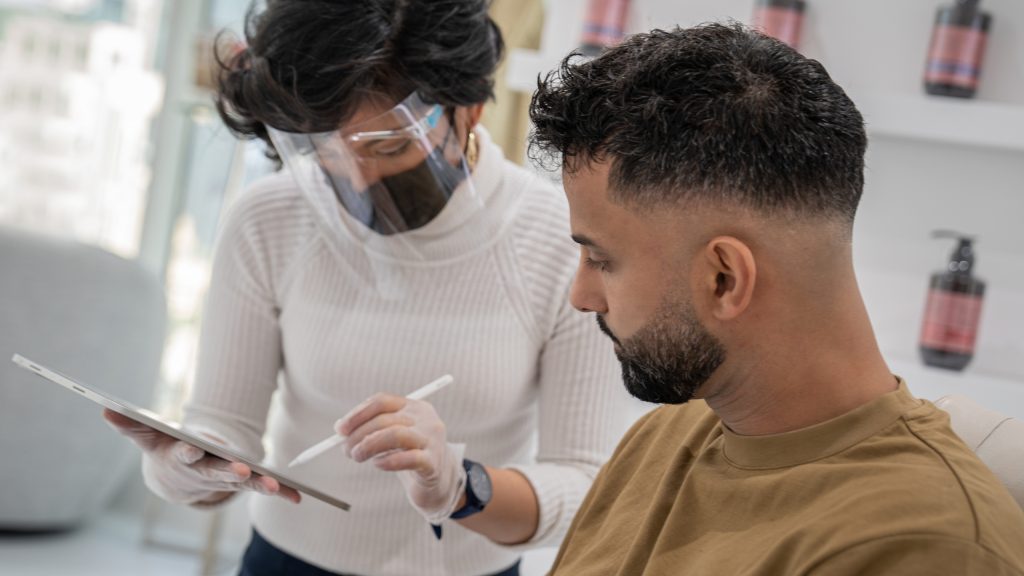
Suitable clients may begin with a professionally selected, lower-intervention direction while the condition and response
are observed.
Where that direction creates meaningful improvement, it may continue.
Where the pattern, severity or response indicates that medical treatment is required, SKILLS does not delay or oppose
it.
The client is directed appropriately. This is the founder's position:
SKILLS is not against medication. SKILLS is against medication becoming the automatic first answer before the cause, condition and level of intervention have been understood. The least-harm direction does not mean selecting the weakest treatment. It means avoiding unnecessary intervention while not withholding an appropriate one.
SKILLS is not against medication. SKILLS is against medication becoming the automatic first answer before the cause, condition and level of intervention have been understood. The least-harm direction does not mean selecting the weakest treatment. It means avoiding unnecessary intervention while not withholding an appropriate one.
Heavy Flaking, Dandruff and Scalp Dehydration
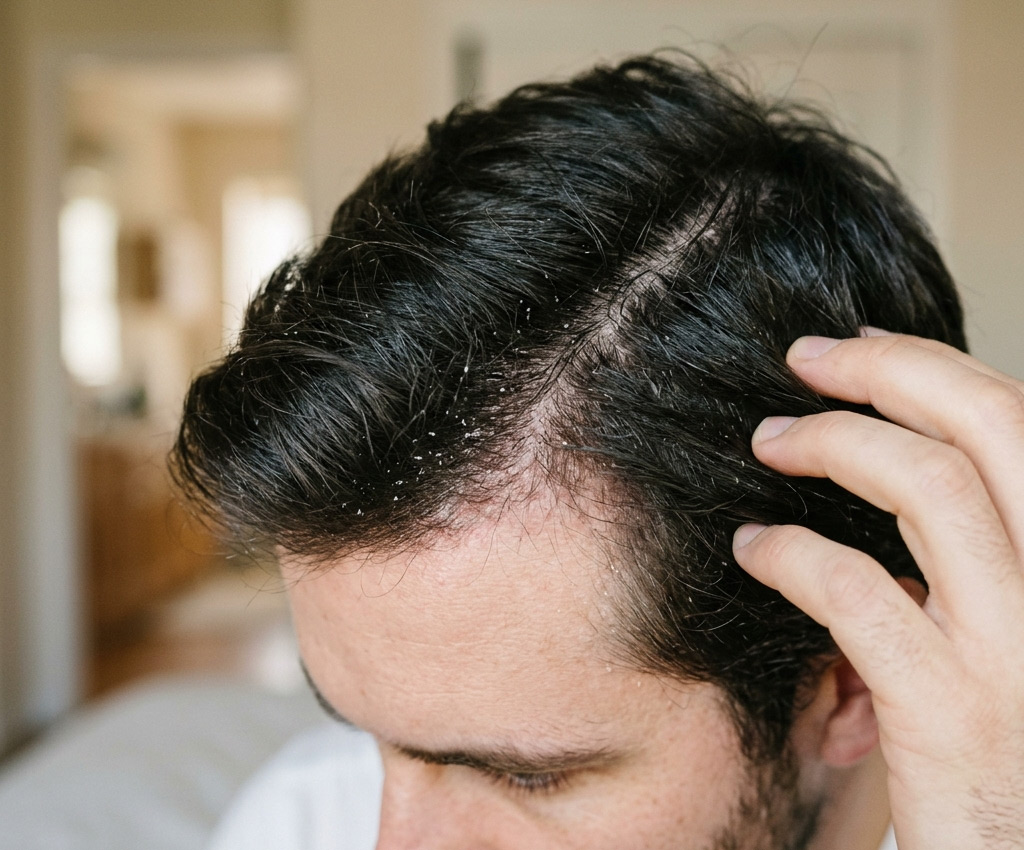
A client may call every white flake dandruff.
But heavy flaking can appear for different reasons.
The scalp may be dehydrated, congested with oil and buildup, irritated by unsuitable products or reacting to repeated
chemical work. It may also be connected to dermatitis, psoriasis or a fungal concern.
That difference matters.
A dry, dehydrated scalp should not be treated like an oily, congested scalp.
A scalp with thick scale should not be handled like light surface dryness. A sensitive scalp should not be overloaded with aggressive products simply because the client wants a fast result. SKILLS works with selected active ingredients and support combinations chosen around the visible condition, scalp tolerance and the response we need to create.
The goal may be to improve cleansing, soften and lift heavy buildup, support hydration, reduce visible flaking, calm discomfort, improve oil balance or prepare the scalp for a longer treatment direction. One session may create a strong visible difference. Longstanding or recurring concerns may require a full course and disciplined aftercare.
A scalp with thick scale should not be handled like light surface dryness. A sensitive scalp should not be overloaded with aggressive products simply because the client wants a fast result. SKILLS works with selected active ingredients and support combinations chosen around the visible condition, scalp tolerance and the response we need to create.
The goal may be to improve cleansing, soften and lift heavy buildup, support hydration, reduce visible flaking, calm discomfort, improve oil balance or prepare the scalp for a longer treatment direction. One session may create a strong visible difference. Longstanding or recurring concerns may require a full course and disciplined aftercare.
Dermatitis, Psoriasis and Fungal Scalp Concerns
Dermatitis, psoriasis and fungal scalp concerns can create different patterns of flaking, redness, irritation, discomfort, oil
imbalance, dryness and recurring instability.
SKILLS can work with these concerns through professional scalp-support protocols selected according to the client's
condition, history and current stage.
Where a client already has a confirmed diagnosis or is receiving medical treatment, our work can support the scalp
before, during or after that direction without interfering with the doctor's role.
Where diagnosis or prescription treatment is required, the client is directed to the appropriate doctor first. Once the medical side is controlled or clearance is given, SKILLS can continue with practical scalp care, cleansing support, hydration, maintenance and home routine. This is where trichology and dermatology work beside each other.
A dermatologist diagnoses and treats disease. A trichologist studies the hair and scalp, manages the support plan, monitors visible change and helps the client maintain the condition over time. The relationship is similar to a surgeon and a physiotherapist. They do not replace each other. They complete different parts of the same recovery journey.
Where diagnosis or prescription treatment is required, the client is directed to the appropriate doctor first. Once the medical side is controlled or clearance is given, SKILLS can continue with practical scalp care, cleansing support, hydration, maintenance and home routine. This is where trichology and dermatology work beside each other.
A dermatologist diagnoses and treats disease. A trichologist studies the hair and scalp, manages the support plan, monitors visible change and helps the client maintain the condition over time. The relationship is similar to a surgeon and a physiotherapist. They do not replace each other. They complete different parts of the same recovery journey.
Post-Hair-Transplant Scalp and Hair Support
A hair transplant is not the end of the process.
It is the beginning of a new stage of scalp and hair responsibility. After the transplant clinic confirms that professional scalp care may begin, SKILLS can support the client through the
next phase.
Post-hair-transplant support may include gentle scalp cleansing, management of visible buildup, support for dryness or
flaking, improved scalp comfort, care for the existing non-transplanted hair, structured home guidance and continued
observation.
The timing is never copied from another client. The transplant doctor's instructions come first because the doctor knows the surgical technique and recovery history. Once the client is ready, SKILLS carries the practical work outside the surgery itself. We can also support clients before a planned transplant by improving scalp cleanliness, identifying visible concerns to discuss with the doctor and helping the client enter the procedure with better scalp discipline. The transplant creates the surgical change. The care before and after helps the client protect the environment around it.
The timing is never copied from another client. The transplant doctor's instructions come first because the doctor knows the surgical technique and recovery history. Once the client is ready, SKILLS carries the practical work outside the surgery itself. We can also support clients before a planned transplant by improving scalp cleanliness, identifying visible concerns to discuss with the doctor and helping the client enter the procedure with better scalp discipline. The transplant creates the surgical change. The care before and after helps the client protect the environment around it.
One Session, Full Course or Home Protocol
Not every scalp concern needs the same commitment.
Some cases respond well to one professional session followed by concentrated aftercare.
Some require several in-salon sessions.
Others need a complete protocol supported by home applications for a number of months.
The correct number of sessions depends on severity, history, scalp condition and response over time.
A longer course is not automatically better. A shorter course is not automatically enough. The direction must fit the case. The client's role also matters. The strongest professional work can be weakened by inconsistent washing, scratching, uncontrolled oils, repeated chemicals, excessive heat, skipped home applications or stopping too early. Results are created by the treatment direction and the client's compliance working together.
A longer course is not automatically better. A shorter course is not automatically enough. The direction must fit the case. The client's role also matters. The strongest professional work can be weakened by inconsistent washing, scratching, uncontrolled oils, repeated chemicals, excessive heat, skipped home applications or stopping too early. Results are created by the treatment direction and the client's compliance working together.
What Results May Be Expected
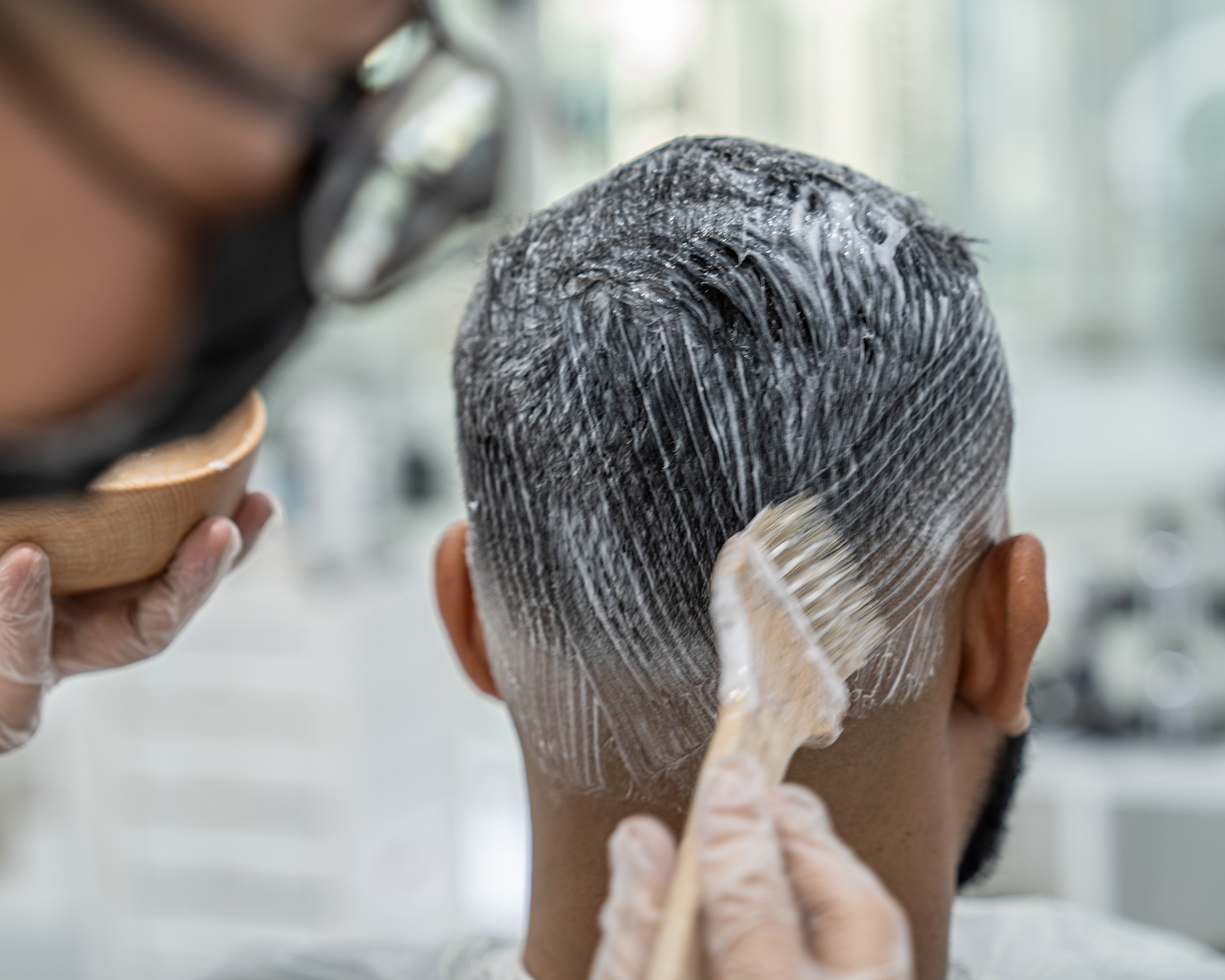
Where the condition is suitable and the client follows the guidance, SKILLS hair and scalp recovery may support:
Some clients may experience a significant visible improvement. Others may require longer support. The result depends on the starting condition, the concern behind it, the client's consistency and whether medical support is also required. The purpose is to give each suitable case the strongest responsible opportunity to improve.
• reduced visible flaking
• improved scalp cleanliness
• better hydration and comfort
• improved oil balance
• reduced buildup
• calmer-looking scalp condition
• better control of recurring dandruff
• stronger-looking and better-maintained existing hair
• reduced avoidable breakage
• better support during periods of excessive shedding
• improved scalp condition before or after a transplant
• clearer home-care discipline
Some clients may experience a significant visible improvement. Others may require longer support. The result depends on the starting condition, the concern behind it, the client's consistency and whether medical support is also required. The purpose is to give each suitable case the strongest responsible opportunity to improve.
Test Your Hair and Scalp Knowledge
Your hair feels dry after bleaching, but the scalp feels normal. What may you need?
A deep-conditioning or nourishing hair-strand treatment.
Your scalp is healthy, but you want cleansing, massage and relaxation. What may suit you?
A cosmetic scalp treatment or Japanese Head Spa experience.
Your flakes disappear briefly but repeatedly return with itching or redness. Is another spa treatment automatically enough?
No. The recurring pattern should be assessed.
Can a scalp camera alone diagnose the cause of hair loss?
No. It supports observation but does not replace history, assessment or medical diagnosis.
Is the hair shedding from the root or breaking through the strand?
The correct direction depends on knowing the difference.
Did the shedding begin suddenly or develop gradually in a recognisable pattern?
These may require different pathways.
Are you using minoxidil or finasteride after assessment, or because someone online recommended it?
A popular treatment is not automatically the correct treatment for every cause.
How do you know whether you need cosmetic care, trichology or medical treatment?
When the concern is recurring, worsening, uncomfortable or connected to shedding and density change, begin with assessment. The client does not need to diagnose himself. He only needs to explain truthfully what is happening.
The SKILLS Perspective
At SKILLS, scalp treatment is not a quick wash with a treatment name attached to it.
It is not one product used for every client.
It is not cosmetic theatre.
The scalp is read first.
The condition is understood.
Then the session, course and home direction are built around what should change.
This is the difference between applying something and treating with purpose.
Many places can place a product on the scalp.
The SKILLS difference is knowing whether the client needs one session, a complete course, several months of home support, medical collaboration or a different direction entirely. We do not compete with doctors. We work on the professional side that doctors do not replace, just as we respect the medical side that we cannot replace.
The SKILLS difference is knowing whether the client needs one session, a complete course, several months of home support, medical collaboration or a different direction entirely. We do not compete with doctors. We work on the professional side that doctors do not replace, just as we respect the medical side that we cannot replace.
Arrange Your Consultation
The first appointment allows SKILLS to understand the shedding pattern, scalp condition, flaking, sensitivity, chemical
history, transplant history and the result the client is trying to achieve. From there, the correct direction is explained clearly.
It may be one session. It may be a structured course. It may include concentrated home care for several months. It may require medical support before we proceed. The client does not need to choose the protocol. He only needs to begin with the truth about what he is experiencing. Contact the SKILLS concierge team through WhatsApp or call the salon to arrange your hair and scalp consultation.
It may be one session. It may be a structured course. It may include concentrated home care for several months. It may require medical support before we proceed. The client does not need to choose the protocol. He only needs to begin with the truth about what he is experiencing. Contact the SKILLS concierge team through WhatsApp or call the salon to arrange your hair and scalp consultation.
Founder's Method
For the deeper professional thinking behind studying the scalp before selecting treatment, supporting the client
alongside medical care and knowing when one session is not enough, read Mo Ebrahim's Trichology Method.